 Gordon Setter
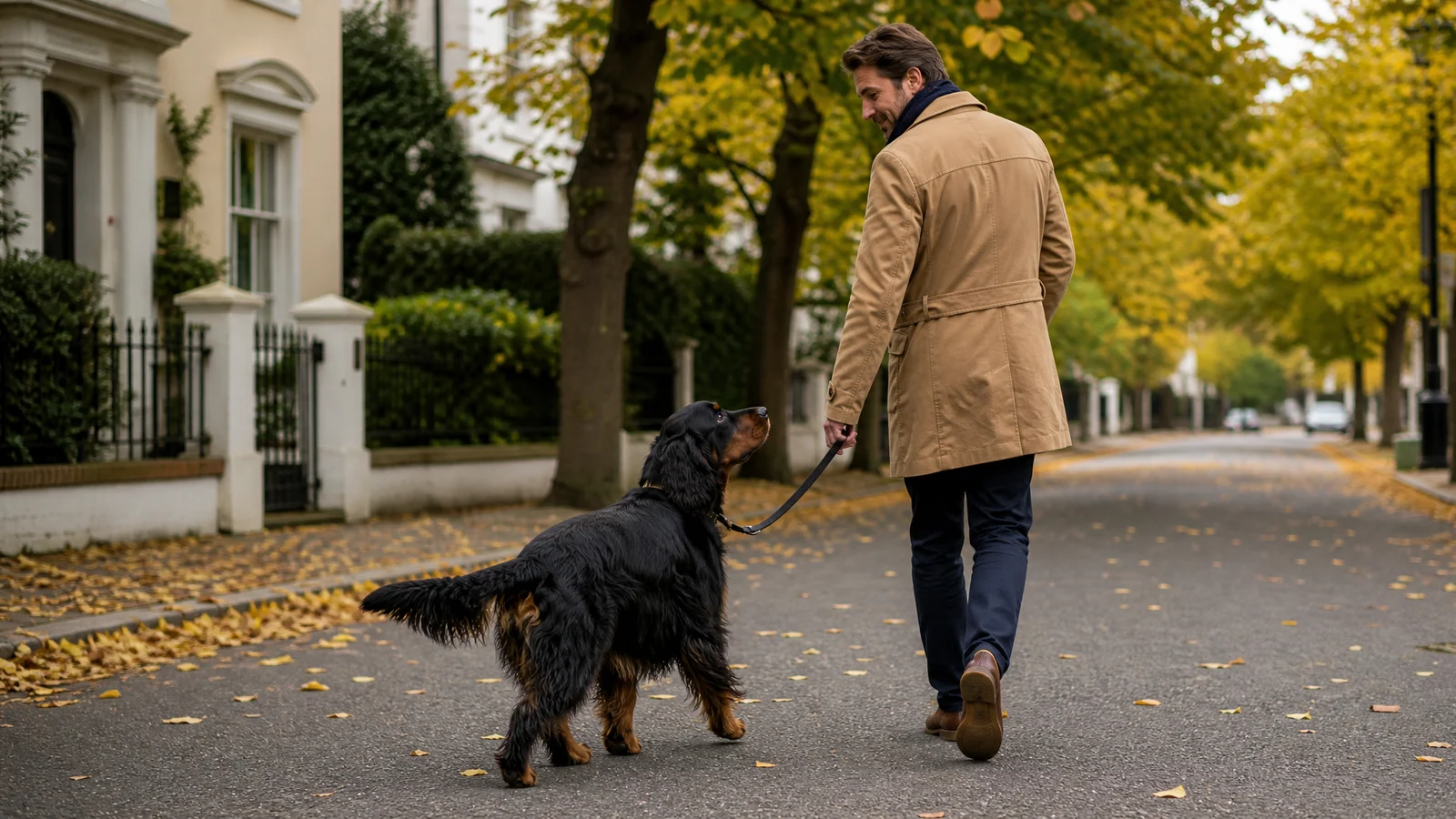
Leash training a Gordon Setter starts the week a puppy comes home and does not finish for a long time, often well past the first birthday. The adult body weighs somewhere between 45 and 80 pounds, and the breed matures slowly, so the same skill has to be rebuilt as the dog grows taller, stronger and more curious.
Gordons often learn the mechanics quickly. The real work is focus, because a driven, easily distracted dog with their nose down will not check in on their own. Behavior and training in this one breed is our whole focus, and we plan every walk around that fact.
We'll walk you through the age-by-age timeline, then rewards, gear, long line spaces, a daily routine and fixes for pulling and lunging at birds.
Gordon Setter Leash Timeline
Leash skills arrive in layers, and the layers follow how Gordons grow. According to breed history, the Duke would not shoot over his setters until they were 5 years old, because the dogs were very wild when young and slow in maturing. Plan the same way: the behavior is taught early, but reliability is built across a long adolescence and settles in adulthood.
The Puppy Stage
Start the week the puppy arrives, indoors, with the gear itself. Let them sniff the collar and leash, pair each with a treat, then clip the leash on and let it trail for a minute during play. The only goal is that the leash predicts good things. Early socialization and puppy classes are recommended for Gordon puppies, so use outings to show them the world from a comfortable distance while you feed treats.
Puppies are light, so pulling does not hurt yet, and that is the trap. A habit that costs nothing to ignore at this size becomes a shoulder-wrenching habit later. Keep sessions brief, reward every moment the leash hangs in a loose curve, and expect fast learning of the mechanics with very little distance.
The Adolescent Stage
Adolescence is where many Gordon owners decide training has failed. The dog is taller, bolder and easily distracted, and the polite walking from a few months earlier seems to vanish. This is normal for a breed said to stay puppy-like for life. Gordons also do not respond well to heavy-handed obedience, so answer the setbacks with patience and better pay.
Lower the difficulty instead. Go back to quiet places, shorten sessions, pay more often and use a long line for freedom so you are not fighting every walk. Progress through this stage is measured in months, and the backsliding passes.
The Adult Stage
A full-grown Gordon stands 23 to 27 inches at the withers and weighs 45 to 80 pounds depending on sex, and the standard makes them the heaviest of the setters. That mass is exactly why loose-leash walking has to become dependable.
Dogs who were paid consistently usually walk well in familiar places by now, while birds, squirrels and strange dogs still test them. Keep paying and keep management in place. At this age, loose-leash walking is maintained rather than finished.
Leash Rewards Beyond Treats
Treat rewards the way an employer thinks about pay. Small wages delivered often keep behavior steady, and an occasional bonus keeps motivation high. For a Gordon, the pay comes in three forms: food, your voice and the chance to sniff. Each has a job, and the skill you are really buying is attention near interesting things, which you reward deliberately instead of hoping the dog will offer it.
Food for Attention
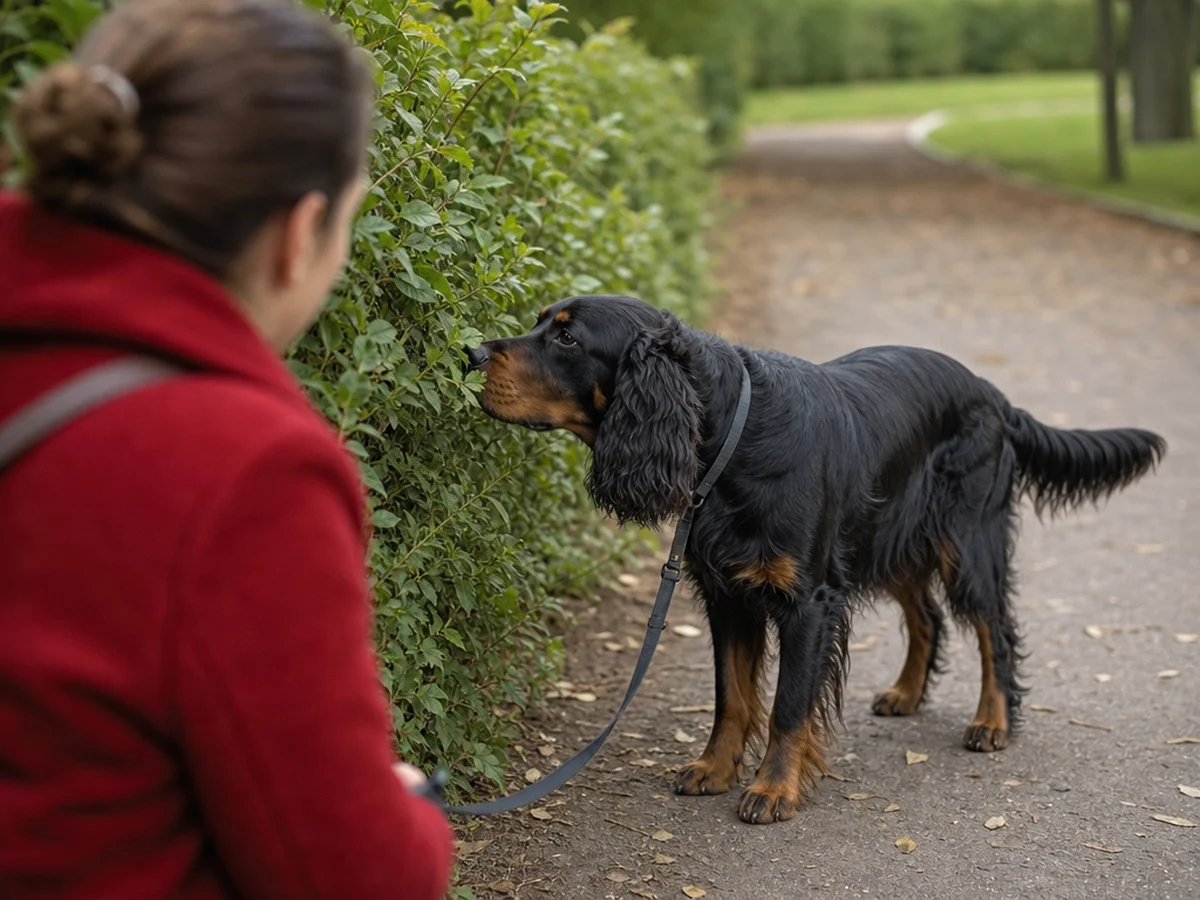
Gordons are often food motivated, which hands you a ready lever. Use tiny, soft, smelly treats that can be swallowed quickly, and deliver them low beside your leg so the dog's head returns to your side. Pay when they glance at you, when the leash is slack and when they turn away from a distraction. Plain kibble often loses outdoors, so save your best treats for the hardest places.
Praise and Marker Words
A marker word such as yes tells the dog the exact instant they earned the reward, and food follows. Praise alone is thin pay beside the smells of an open field, so treat your voice as an accent rather than the paycheck. Keep it calm, because an excited voice can wind up a driven dog right when you need them thinking.
Sniff Breaks as the Big Paycheck
For a dog with their nose to the ground, sniffing is the bonus that beats nearly any treat, so use it on purpose. After a stretch of loose leash, say a release cue such as go sniff and let them explore on a slack leash. The deal becomes clear: a loose leash earns the smell. Over time, lengthen the stretch you ask for before you release.
Pulling toward a smell must never earn it. Stand still, wait for slack, then release them right there. Sniffing you control is worth more than sniffing you fight over.
Gordon Setter Leash Gear Choices
A Gordon between 45 and 80 pounds can generate real force, so gear should make training comfortable for both ends of the leash. Gear manages the problem while rewards teach the answer, and the right pieces are simple.
- A flat collar that fits snugly enough not to slip over the head, carrying an ID tag, is the everyday baseline.
- A front-clip harness suits a strong puller, because the chest attachment turns them back toward you instead of letting them lean in. It is a management tool, not a training method.
- A standard-length leash in nylon or leather, wide enough to grip comfortably and with a secure clasp, gives you clear feedback about tension. Leather softens with use and is kind to your hands.
- A treat pouch worn at your hip gets food to the dog within a second, which is the timing rewards depend on.
Choose a non-retractable leash every time. A retractable one teaches that pulling makes the leash longer, and its thin cord gives you little control when a Gordon sprints after a bird. While a young dog is still growing, recheck how the collar and harness sit every few weeks, and keep up regular vet visits so any change in how they move on walks gets looked at early.
Long-Line Spaces for Leash Freedom
A loose leash is only half of a good walk. Gordons need room to move and sniff, and a long line is how you give it safely. The short leash means structure and the long line means freedom, and the dog learns which gear means which game.
The parent club says Gordons are never allowed to roam freely, because the nose goes to the ground and the hunting instinct can lead them after a bird or squirrel across a busy highway. Many owners of dogs who sprint after birds and small animals rely on management rather than recall, using a secure, non-retractable leash anywhere outside a fence. Recall may be pretty good in other settings and still turn stubborn when something is flying.
Treat recall as a bonus, never as your safety system. Here is how to use a long line well:
- Pick a safe, quiet space such as an empty field or a fenced area away from roads, and clip the line to a harness.
- Use the same words each time you clip it on, such as free time, so the dog learns the switch.
- Walk behind and keep the line free of tangles. Never wrap it around your hand or legs.
- Call the dog now and then and pay with a treat at your side, so checking in stays worth it.
- When it is time to go, give your cue, reward, and return to the short leash for the walk home.
When the line runs out, stand still rather than hauling back. The dog learns that reaching the end means waiting, a rehearsal of the same lesson as a loose leash.
The Daily Leash Routine
A routine works because repeating the same pattern every day gives you more chances to reward the behavior you want. The aim is to mix structured walking, sniff breaks and decompression into a pattern you can repeat every day. Many owners find these dogs enjoy hikes and walks but are equally content to be lazy, so steady, moderate activity beats constant stimulation.
Before the Walk
Begin with a calm potty stop and a little easy play or sniffing in the yard, enough to take the edge off without exhausting the dog. Common advice says to wear a dog out first so they will walk nicely, but a tired Gordon is still a distractible one. Practice focus at the start, while they can think. Gear up, then pay a few treats for attention at the door so the walk begins with focus rather than a rush.
During the Walk
Think of the walk as a repeating pattern of work and bonus, adjusted to what your dog can manage that day:
- Walk a stretch on a loose leash while paying often for slack and for glances at you.
- Pick a safe spot, say your release cue and let them sniff on a slack leash.
- Call them back to your side with a treat when the sniff is done, then start the next stretch.
- Change direction or pace whenever attention drifts, so the dog learns to keep track of you.
- Lengthen the work stretches gradually as focus improves.
After the Walk
Decompression means giving the dog time to come down: a quiet sniff in the yard, water, a chew, then rest. Owners commonly report that energy and stubbornness turn into problems mainly when training and exercise are lacking, while those who give steady activity describe a manageable, relaxed dog. Settling after a walk is itself a skill worth rewarding. A walk that ends in rest teaches that excitement has an off switch.
Leash Pulling and Lunging at Birds
Pulling is steady leaning, while lunging is a sudden surge, usually set off by a bird, squirrel, bicycle or other dog. We have trained this breed for many years, and the pattern holds: prevention does most of the work, because a dog fixated on a target is hard to redirect.
Prevention
Scan ahead for wires, bushes and open grass where birds gather, and keep the leash short and your treats ready before you reach them. Find the distance at which your dog notices the trigger but can still take food, and pay there. Gordons tend to tolerate strangers rather than seek their attention, so greetings with unknown people and dogs can be optional. Walk past, pay for calm, and keep moving.
Interrupting a Lunge
If a surge starts, use a cheerful cue such as their name, turn away to build distance and pay when they follow. For ordinary pulling, stop walking when they pull and simply wait for the lead to slacken instead of hauling back. Plant your feet, hold the leash with both hands and keep it close to your body, since a big dog can easily pull you off balance.
Recovery After a Blowup
After a lunge, move away, let the dog breathe and sniff, and resume only once they accept a treat. If they become agitated whenever they feel restricted on the leash, Battersea calls this leash frustration. Work at a greater distance, keep sessions short and note which triggers set it off. If reactions are intense, ask a qualified reward-based trainer for help. Each blowup is information about where to start the next session.
Where Gordon Setter Leash Skills Go Next
A loose leash on a Gordon is not a switch you flip. It is built from paid sniff breaks that reward slack, long line freedom that gives the nose real work, and patience through a slow adolescence. Hold both halves and the nose-down intensity that makes pulling so tempting becomes something you can direct, month after month, rather than fight.
Owners usually ask a few things next, and these articles pick up each one:
- If focus slips beyond walks, common Gordon Setter behavior problems traces the instinct driving each one.
- If you wonder how much of this is temperament, are Gordons easy to train answers the trainability questions.
- If a new puppy is on the way, potty training a Gordon puppy covers the first routine at home.
- If you are planning alone time, Gordon Setter crate training and separation anxiety shows how to build calm rest.
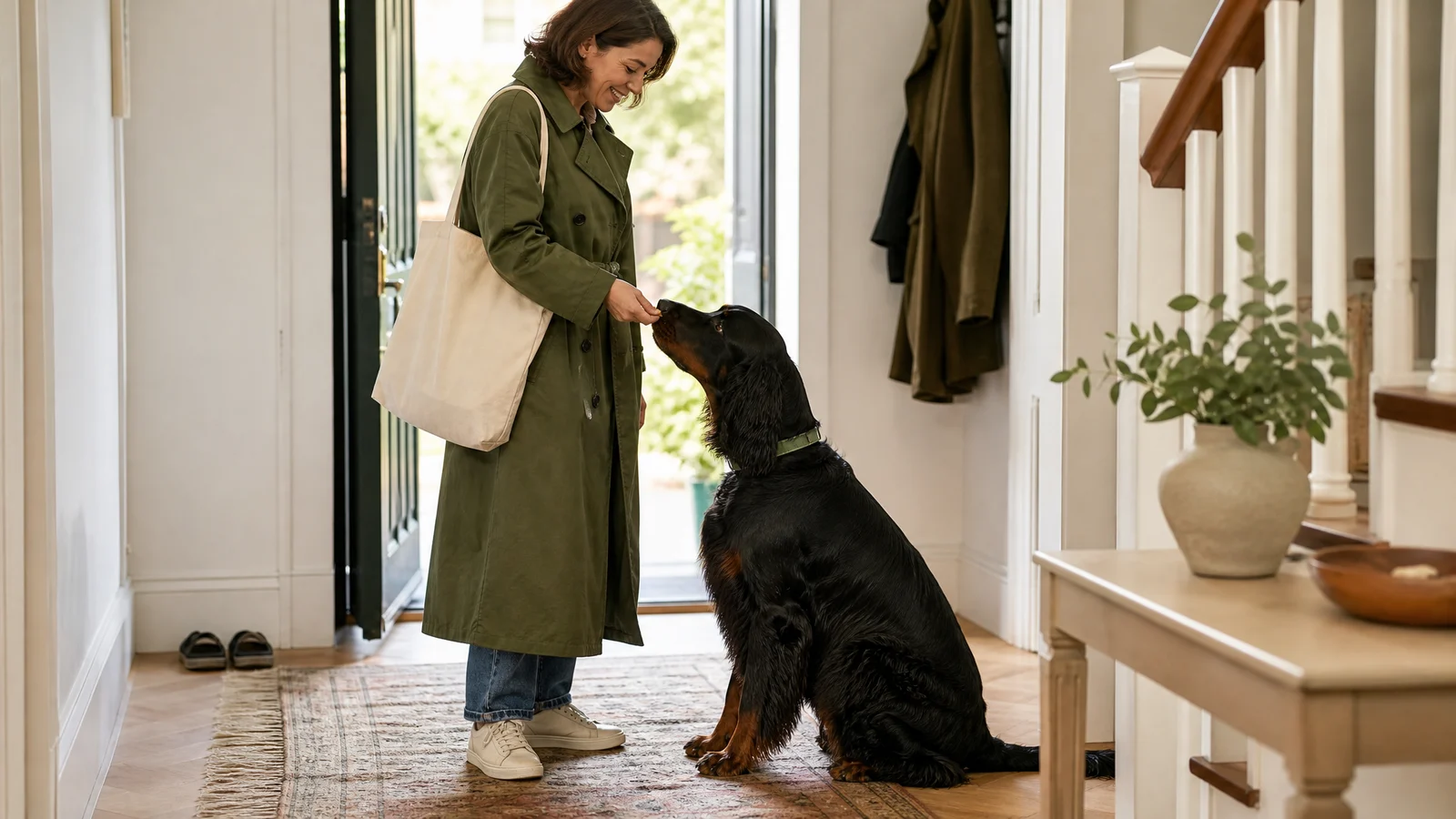 BehaviorSocializing a Gordon Setter With Kids, Dogs and Strangers
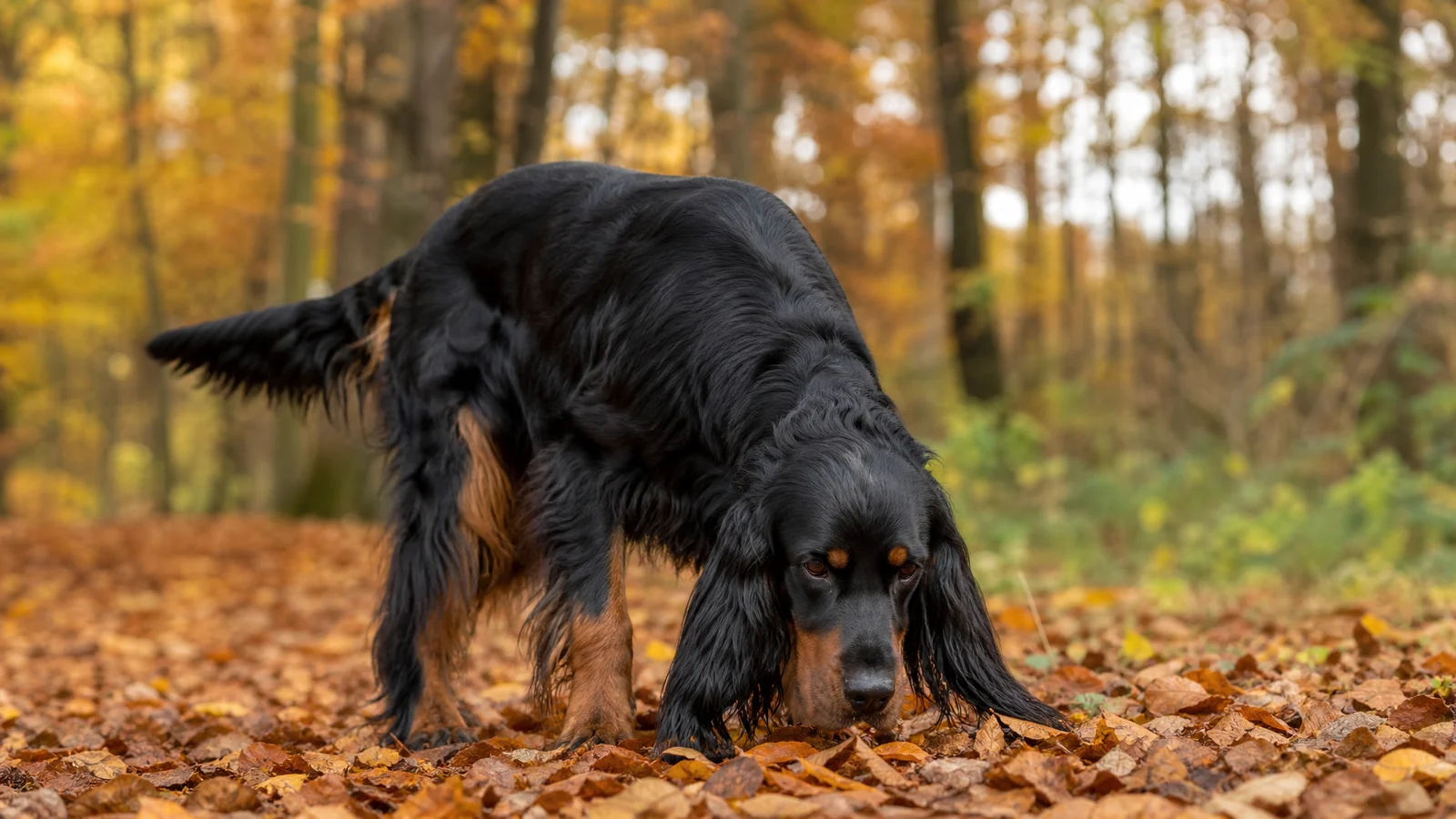 Exercise and jobsNose Work and Tracking for Gordon Setters
 CareGrooming a Gordon Setter: Feathering, Trimming and Handling