 Gordon Setter
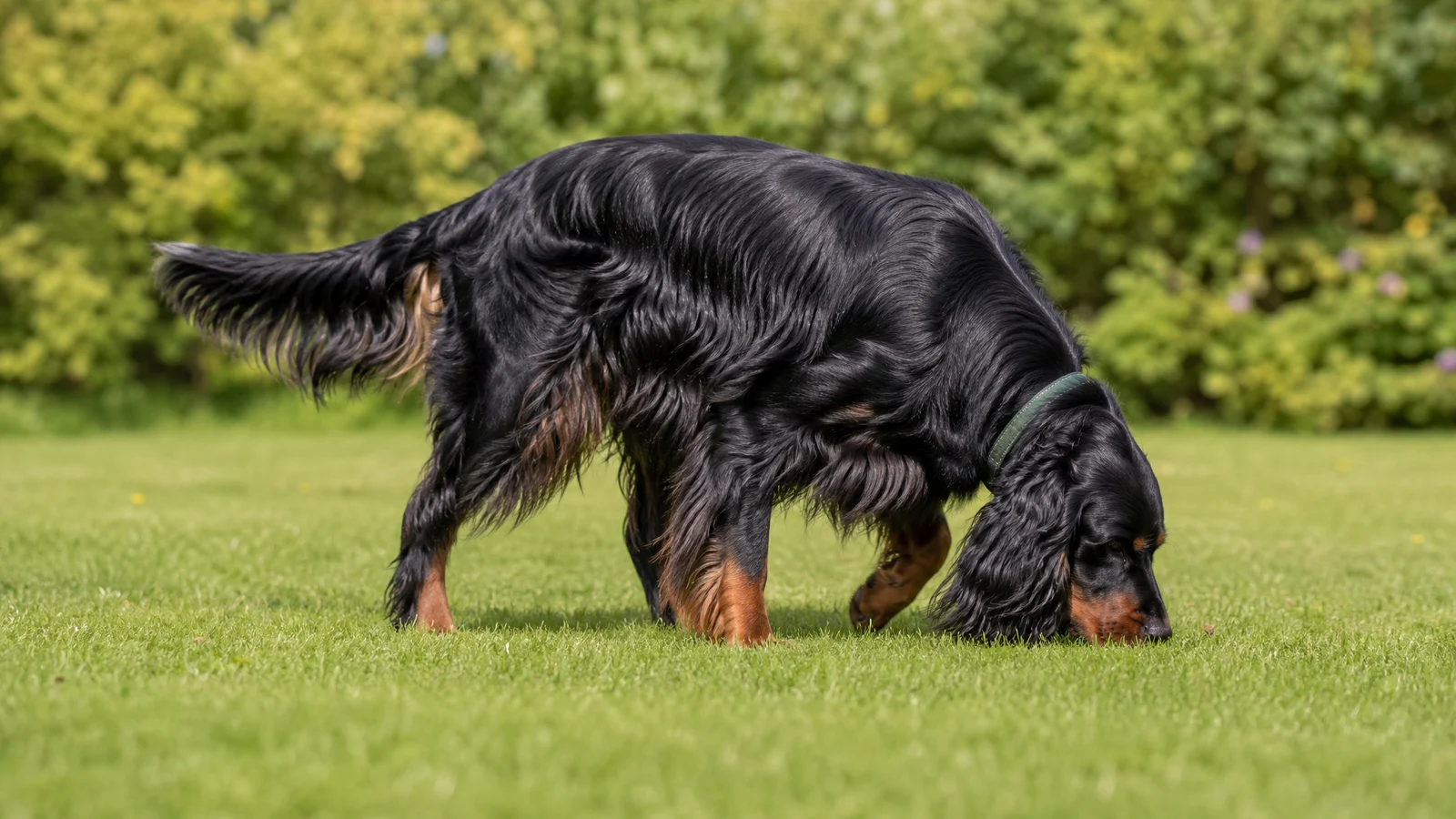
Most Gordon Setter behavior problems come from the nose, bird drive, unspent energy and slow maturing, not from defiance. A dog bred to work scent for hours brings that equipment into your living room, your yard and every walk, and the result can pass for disobedience when they are simply doing what they were built for.
This article looks at the complaints owners raise most often, from tuned-out recalls to window howls and shredded cushions, so you can name the instinct behind each symptom and start the matching fix this week. We have trained this breed for many years, and our verdict holds steady: treat the source and the symptom fades, treat only the symptom and it resurfaces somewhere else.
Handled badly, these habits cost you furniture, safe walks and patience. Handled well, they leave you with a devoted, quick-learning companion.
Gordon Setter Behavior Problems Start With the Nose
Gordons first started to hunt game birds almost 200 years ago, and the setter's name came from a dog who located a bird and sat or lay down to show the hunter where it was. That is all the history you need. What matters is what it left behind: a nose that outranks your voice, a drive that locks onto movement, and an engine that wants a job.
Notice what is missing from that list. Stubbornness gets blamed constantly, and the breed is often described as stubborn yet soft and loving. But owners mostly describe dogs who learn fast and then get pulled off task by something more interesting. Focus is the challenge, not ability. Treat it that way and most complaints shrink.
Match the symptom to its source before choosing a fix. This table is the rest of the article in miniature.
| What you see or hear | Usual source | First fix |
|---|---|---|
| Ignores you mid-walk | Nose down, scent outranks your voice | Pay for attention, use sniffing as the reward |
| Lunges or bolts at birds and squirrels | Bird drive | Secure leash and fenced space, then redirect |
| Talks, whines, howls at the window | Alert, social, under-occupied | Limit the view, reward quiet |
| Chews, digs, paces | Spare energy and an idle nose | Scent games, food puzzles, real chews |
| Jumps and clowns well past puppyhood | Slow maturing | Management, patience, short sessions |
Gordons are highly intelligent, so every fix below works better when kept brief and varied. They also do not respond well to heavy-handed obedience, which is one more reason everything here runs on rewards. If you want the foundations first, our complete Gordon Setter training guide covers them.
Selective Hearing as a Gordon Setter Behavior Problem
Your Gordon hears you fine. With the nose down on a fresh trail, their brain simply ranks your message below the scent. Many owners report that verbal recall is pretty good in other circumstances, then falls apart mid-sniff. A scent-priority explanation predicts exactly that pattern. A defiance theory does not.
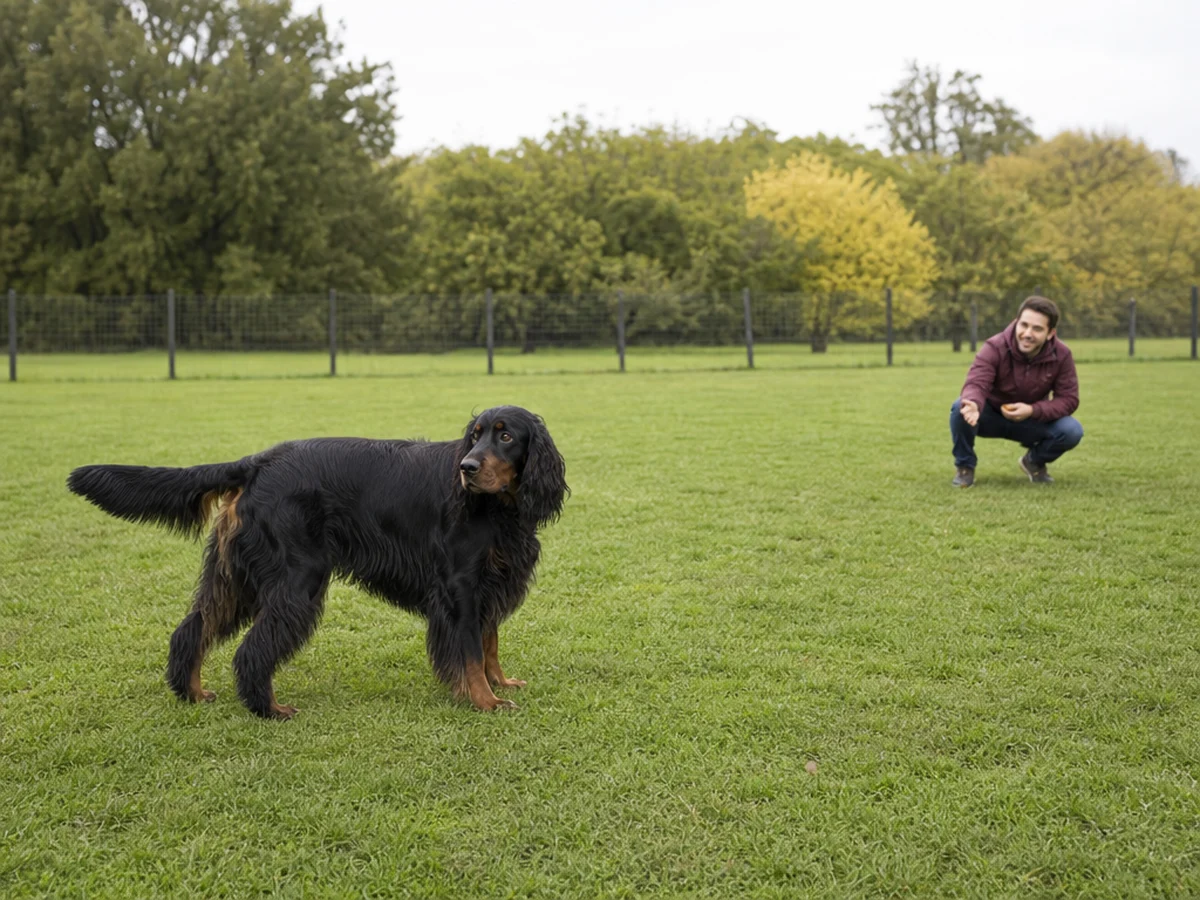
The common advice is to repeat the cue until the dog responds. Don't. Every repeat teaches that your word is background noise.
A better plan makes you the best thing on the trail and turns the nose into the paycheck instead of the enemy. Owners and breeders alike find Gordons food motivated, which hands you a ready lever.
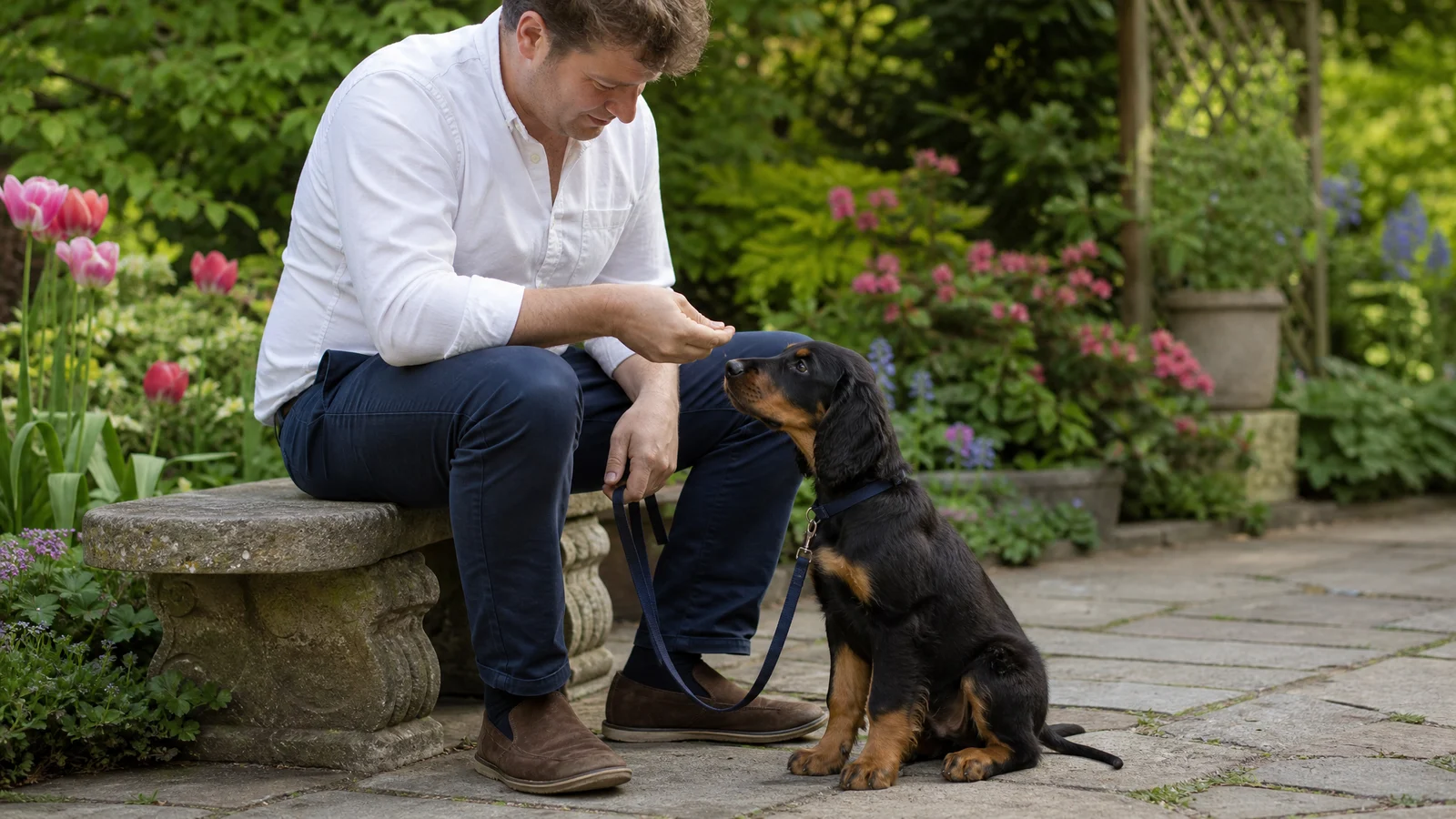
- Pay for attention. Any time your dog glances at you unprompted, hand over a tiny treat, first indoors and then in the yard.
- Say the recall word once, and only when you expect success. Celebrate the arrival.
- Make sniffing the bonus. After a happy return, release with a phrase like "go sniff" so coming back never ends the fun.
- Outdoors, use a long line and begin far enough from the distraction that your dog is still happily eating. Close the gap over many sessions.
- Refresh the skill now and then. It holds up when training stays consistent, not when it is taught once and assumed finished.
Where owners gave durations, they described multi-year efforts. Short daily sessions are good general practice, so keep each one brief and happy and keep showing up. Our Gordon Setter recall plan lays out the full progression.
Bird-Chasing Behavior Problems and Sudden Bolts
A Gordon who spots a bird or squirrel can go from standing to full sprint before you finish their name. They tend to keep the nose to the ground, and Gordons should never roam freely because that instinct can pull them across a busy highway after prey.
The popular claim is that a good recall solves this. It helps, but it is not a safety system. Owners whose dogs sprint after birds and small animals rely on management, not recall alone, and keep a non-retractable leash on them anywhere outside a fenced area.
Nor should you take comfort in a standard describing a dog not as speedy as some other pointing breeds. Slower than the fastest is still faster than you.
Manage the Setup First
Outside a fenced area, keep your dog on a fixed-length leash or a long line clipped to a harness. Walk your fence line for gaps and low spots. Treat off-leash freedom as something earned in planned, secure places, never something you hope will work out.
The bolt is rarely aggression. It is drive, and the breed is generally good natured. If pulling and lunging on walks is the daily version of the same problem, our guide to Gordon Setter leash training picks it up from there.
Then Redirect the Fixation
Watch for the freeze and stare that come before the lunge. Mark and reward that moment of noticing while the bird is still far off, then reward again when your dog turns to you. After many repetitions, a bird overhead becomes the cue to check in.
Keep your distance generous so your dog can still eat, and shrink it gradually. A handful of treats tossed into the grass after each check-in gives the nose a legitimate job.
Talking and Whining Behavior Problems in Gordon Setters
Many Gordons are great talkers and develop a vocabulary with different tones. Most households hear the same handful of sounds, and each one is asking for something different.
- A chatty, rising greeting means the family is home and your dog is celebrating. This one needs nothing beyond calm hellos.
- A sharp warning bark at the door or window announces strangers. Gordons are devoted to their household and not overly friendly to people they do not know, so the alert is natural.
- A whine usually asks for something, such as attention, a walk or an opened door, and it grows whenever it works.
- A window howl comes from a dog with too much view and too little to do.
The popular advice is to ignore all noise until it stops. That is half right. Ignoring works on demand whining, but a warning bark deserves acknowledgment, or your dog will escalate until you look.
Say "thank you" once, then send your dog to a mat and pay for staying there. Reward quiet moments before the whining starts, so quiet becomes the thing that earns your attention.
Frosted film or a closed curtain cuts the triggers. A dog with a daily scent job also has less spare breath for commentary. If strangers set off the alerting, our article on socializing a Gordon Setter covers building calm around visitors.
Chewing, Digging and Pacing Behavior Problems
A Gordon with nothing to do invents jobs. Cushions get dissected, the yard gets excavated and the hallway gets worn thin by pacing. Look at the order of events: the destruction follows the empty hours, not the other way around.
The usual advice is to run the dog more. For this breed that is the weaker half of the answer. Plain miles build fitness, while sniffing and thinking use the faculty these dogs were built around. A tired body with an unemployed nose still finds trouble.
Start by noticing when the trouble happens, then fill that slot with something the nose can do.
| When it happens | What is missing | What to supply |
|---|---|---|
| Right after you leave or while you work | A calm, rewarding thing to do alone | A real chew or food puzzle, offered only at these times |
| Late afternoon pacing | Mental effort, not just distance | Treats scattered in the grass or hidden around a room |
| Digging in the yard | A search with a payoff | Buried-in-plain-sight treats in one chosen spot, plus company outside |
| Chewing furniture when you are home | Variety and attention | Rotated toys and a few brief training games through the day |
Gordons are equally at home as companions, obedience and agility competitors, and show dogs, so structured outlets are not a luxury. Regional Gordon clubs run events that can give a bright, driven dog a goal beyond the backyard.
If your dog grabs a forbidden item and runs, resist the chase. Resource guarding is typically based in anxiety, and a scramble feeds it. Trade for a treat instead and keep it boring.
When chewing or pacing appears suddenly in a dog who was settled, mention it at your next regular vet visit, since pain and illness can change behavior.
Gordon Setter Jumping and Clowning in Slow Maturity
Gordons stay puppy-like long after other breeds settle. History says the Duke would not shoot over his setters until they were 5 years old, because they were very wild when young and slow in maturing. Your Gordon at two, leaping at guests and zooming through the kitchen, is on schedule, not broken.
Expect a long adolescence and plan for patience. Gordons do best with gentle, reward-based teaching, and some owners who assumed the breed's sensitivity was hype found it genuine. Keep sessions upbeat and end each one on a win.
Management does the heavy lifting, and greetings deserve a script:
- Use gates and clear counters so the wrong choice is hard.
- Teach a sit-to-greet: four paws down, then hello, paid every time.
- Trade mouthy play for a toy, and give attention while the toy is in their mouth.
- Reward calm lying down on their own, because that is the behavior you want more of.
Gordons are devoted to household members and tend to do well with children, especially when introduced young. A bouncy adolescent still needs supervision around small kids, and children must learn to respect the dog's space. If teasing persists, a Gordon will tend to walk away rather than growl, so give them somewhere to go.
The payoff is real. Short daily training sessions, kept up for years rather than weeks, are what turn a bouncy adolescent into a steady companion. Slow maturing is a long project, and it rewards the people who stay with it.
Pick One Behavior Problem and Start a Scent Job
Every symptom above leads back to the same few sources: a nose that wants work, a drive that wants an outlet, an engine that wants to burn and a mind that matures slowly. That is good news, because you do not need a whole menu of plans. You need one, started tonight.
Choose the single problem that disrupts your household most, whether that is the howling, the bolting, the chewing or the ignored cue. Then give your Gordon a ten-minute scent job tonight: hide small treats around a room or sprinkle them across the lawn, release with a "find it" word and let the nose work. Repeat tomorrow, then add the matching fix from the section above.
Ten minutes of purposeful sniffing is a small step, but it speaks the language this breed was built to understand, and every other fix grows from there.
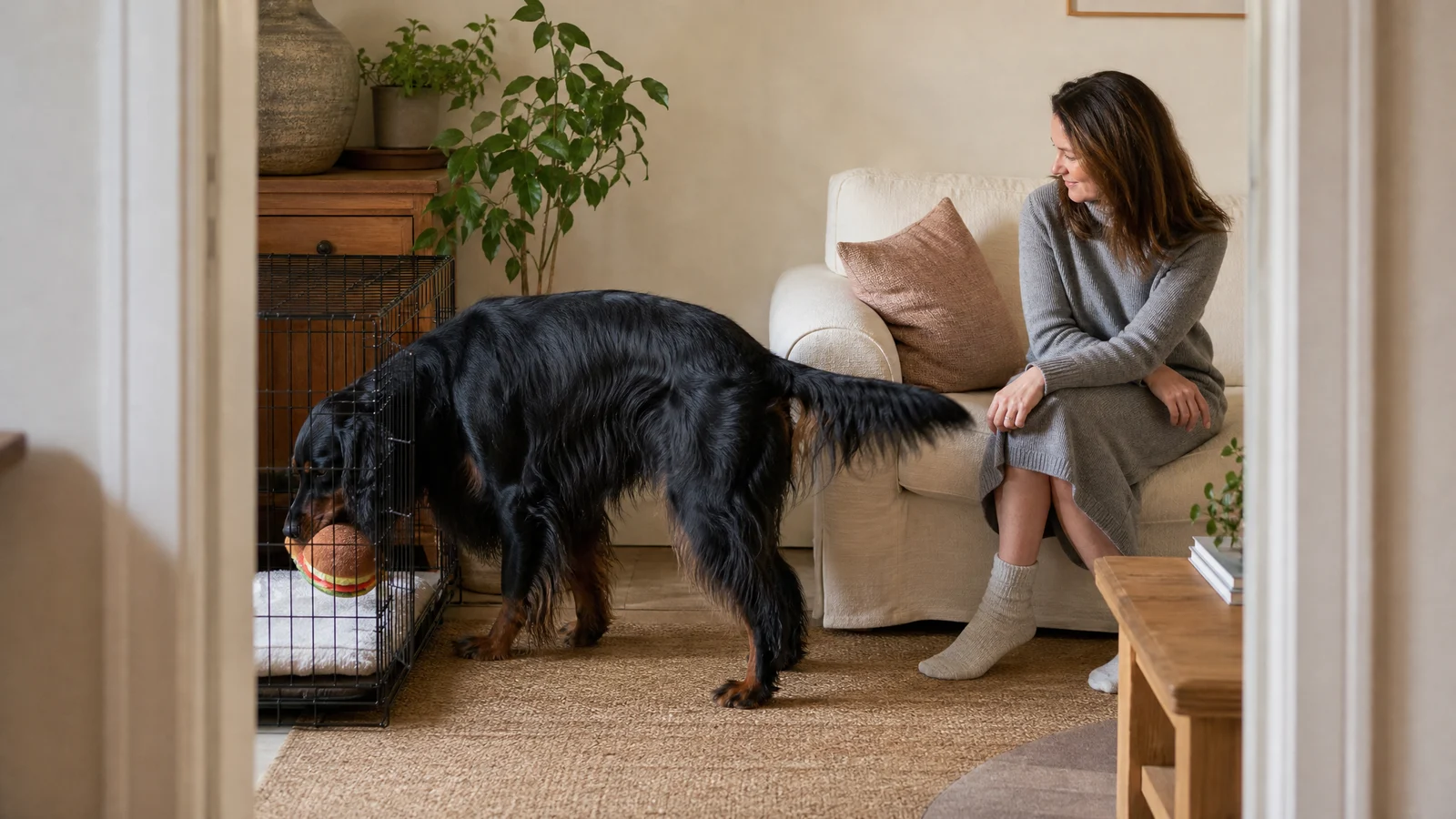 Training basicsCrate Training a Gordon Setter and Preventing Separation Anxiety
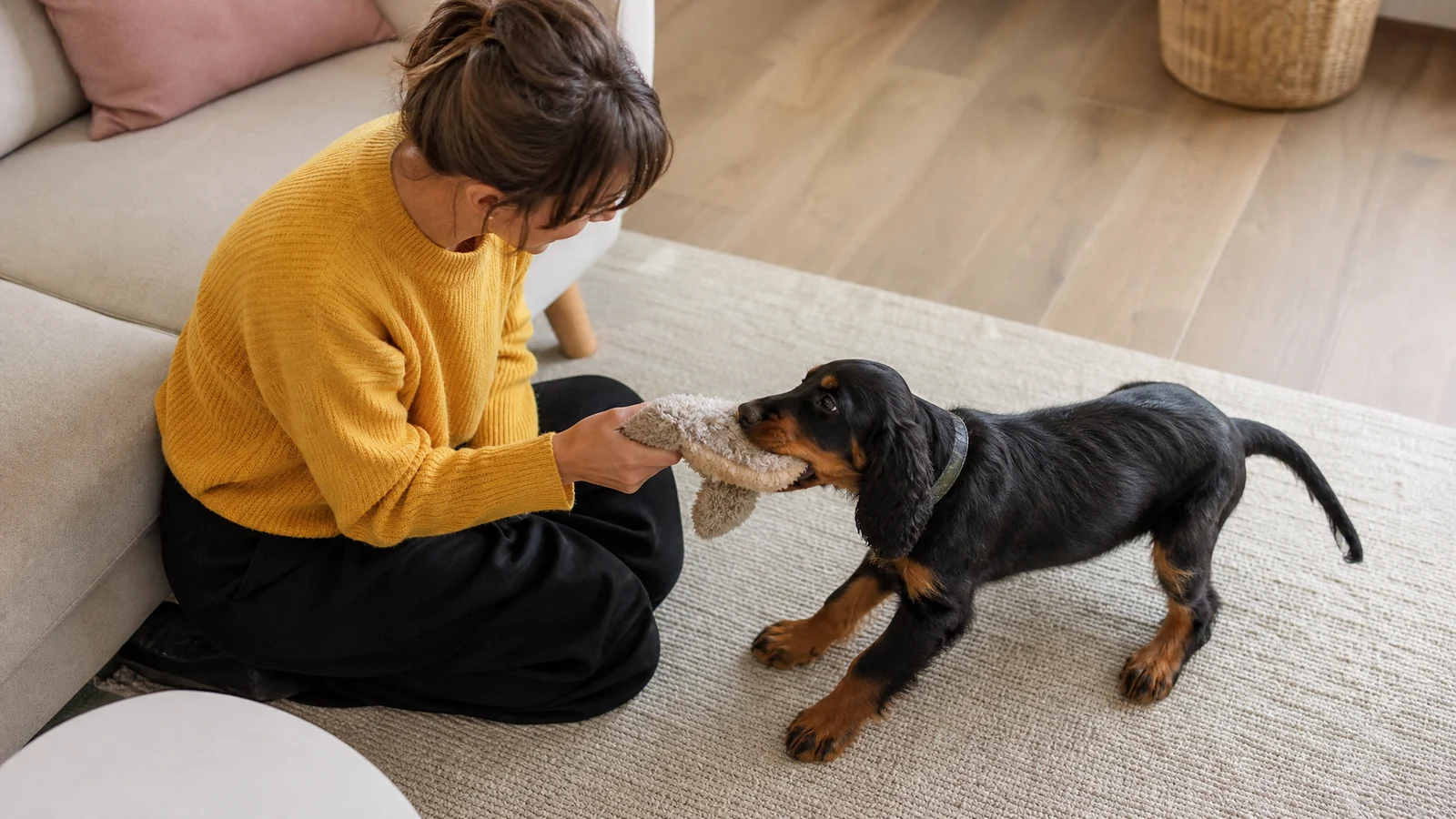 Puppy trainingGordon Setter Puppy Biting, Chewing and Wild Puppy Energy
 Puppy trainingGordon Setter Puppy Training Timeline: 8 Weeks to 2 Years