 Gordon Setter
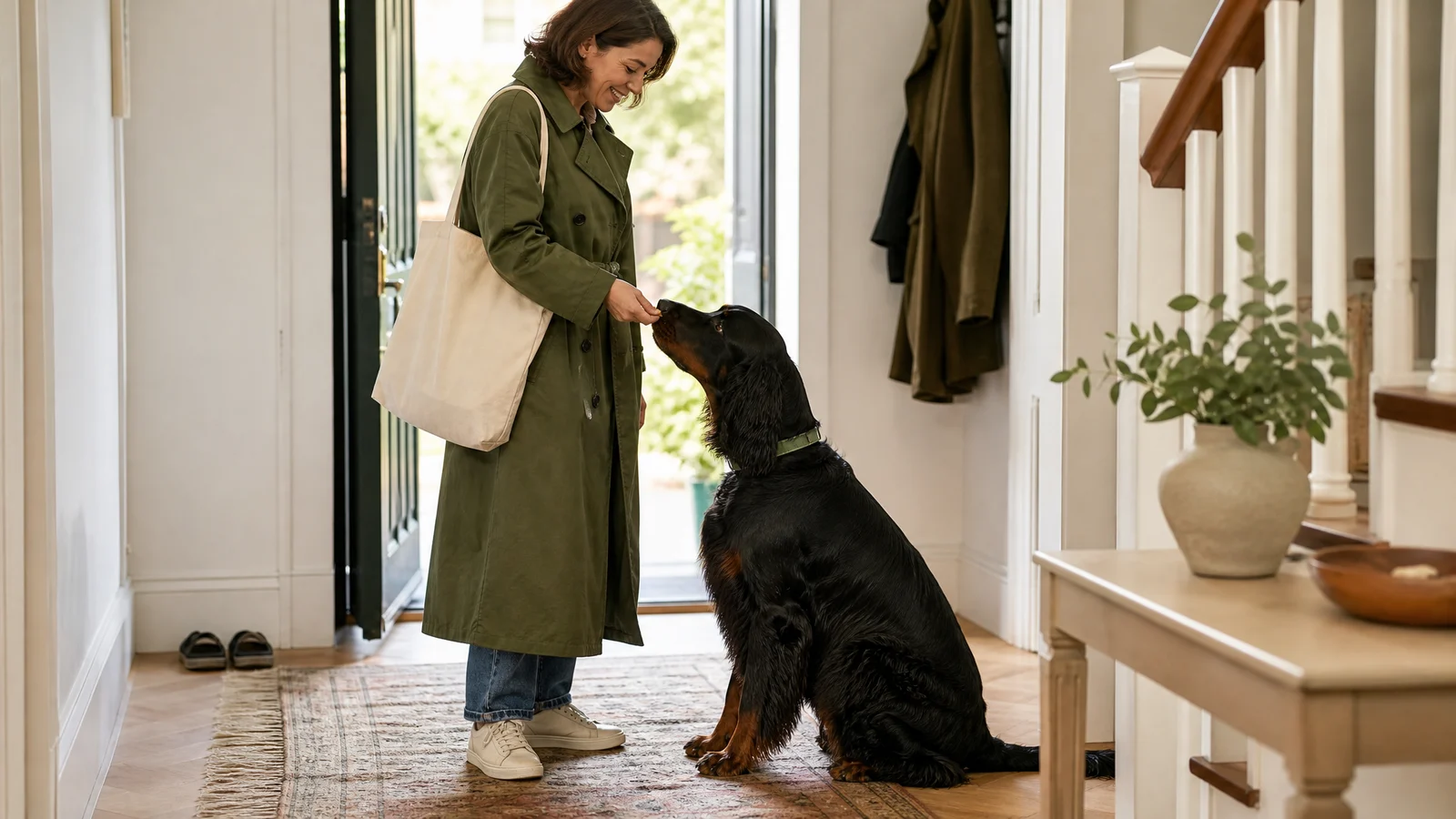
A guest crouches with an outstretched hand, and your Gordon Setter glances at it, steps neatly out of reach and settles beside your chair. The guest laughs awkwardly. You start to wonder whether your dog is unfriendly.
They are not. Gordons are devoted to their own household but tend to tolerate attention from unknown people rather than seek it, and their openness to strangers is rated 3 of 5, right in the middle. Socializing this breed means building calm acceptance and quiet confidence, not manufacturing a social butterfly.
Handled badly, that reserve can harden into worry. Handled well, it becomes a steady, deeply affectionate companionship. Read on for four household case files: a walk-up apartment, a home with young children, a house with a resident dog, and an owner away at work all day. Gordon behavior and training is our specialty, and these are the situations that shape the plan most.
Socializing in a Walk-Up Apartment With Hallway Neighbors
An apartment building puts more strangers into your dog's day than a quiet suburban street does, and they arrive at very close range. Stairwells, elevators and narrow corridors leave little room to step aside, which matters for a dog who puts up with strangers rather than courting them. The breed's adaptability rating is 4 of 5, so apartment life can suit a Gordon well when you manage the space and reward calm.
Energy is the other half of the picture, because the breed sits at 5 of 5. A Gordon who has not had a long, nose-down walk will hurtle at every door with their feet racing. Knowing why dogs pull helps here, since excitement, curiosity and habit all play a part, and a stairwell offers plenty of each.
Stairwells and Elevators
When you hear a door open below, pause on the landing and step to the wall. Turn your dog to face you and reward each relaxed glance at the neighbor going by. In the elevator, let others board first, ask for a sit at your side and hold a treat between your fingers so your dog's attention stays with you.
Corridors reward patience. If a neighbor approaches with groceries or a stroller, wait at the corner and give them room. A dog who can create distance rarely feels the need to do anything more dramatic, and you will see the tension drain from their shoulders.
Hallway Greetings and Door Noise
Neighbors who want to say hello can stand sideways, keep their hands low and let your Gordon choose. If your dog steps away, treat that as a complete and polite answer and drop a treat where they stand. Choice builds confidence in a dog who tolerates strangers rather than seeks them.
Many Gordons are great talkers and develop a vocabulary of tones, including one for warning of strangers. With a watchdog rating of 4 of 5, footsteps outside your door will draw comment. Thank them quietly, ask for a settle on a mat and reward the silence that follows.
Will a Gordon Setter Tolerate Toddler Chaos?
Often yes, with the right setup. The breed's parent club calls children and Gordons a good combination, especially when the dog meets children young, and says Gordons tend to show strong protective instincts toward their young charges. The breed is rated 3 of 5 with young children, labeled "With Supervision," and that is an honest summary for a house full of small people.
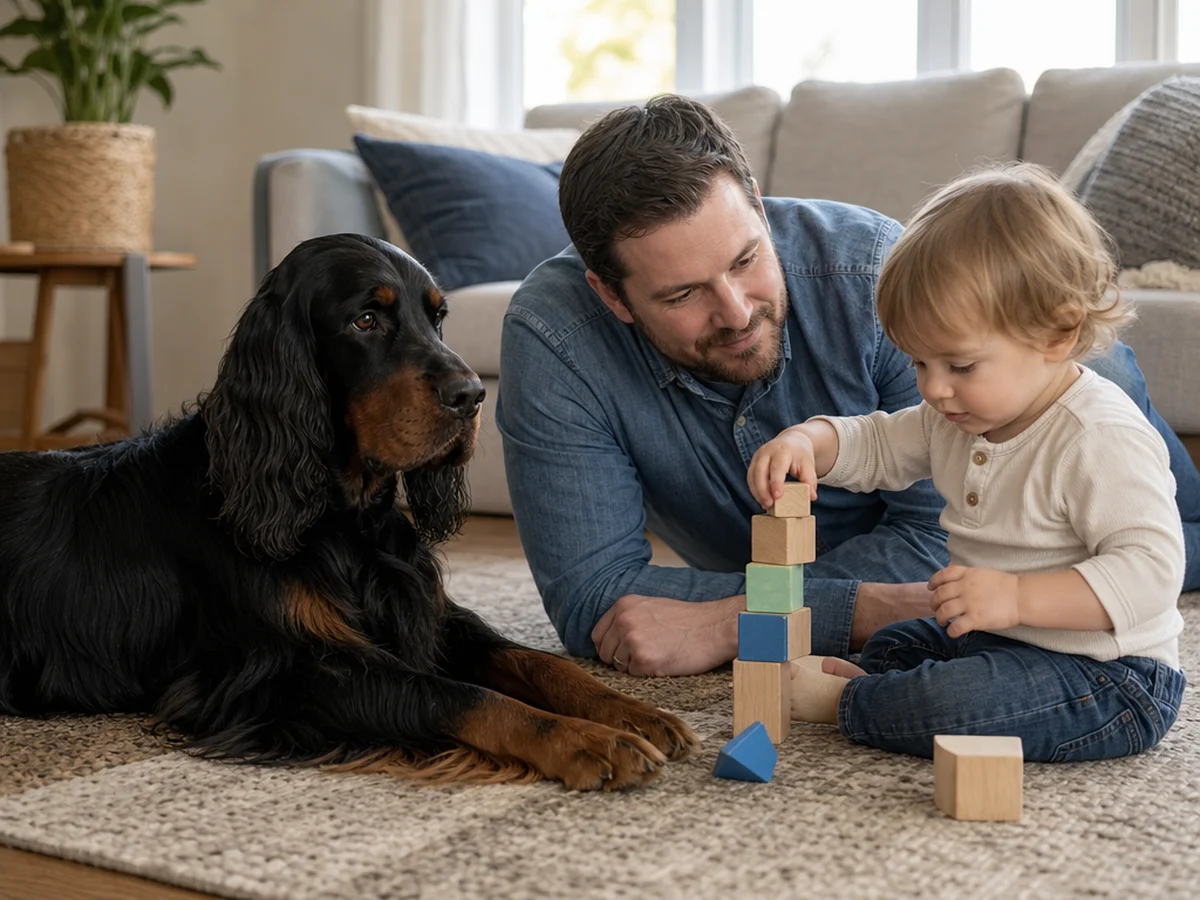
A young Gordon is big, bouncy and slow to mature. The old story goes that the Duke would not shoot over his setters until they were 5 years old, because they were so wild when young. A toddler can be knocked flat by enthusiasm alone, so plan for a long, boisterous adolescence rather than a settled dog by their first birthday.
The second trait is a gift with a condition attached. If a child keeps on teasing, a Gordon will tend to remove themselves from the child's reach rather than growl. That only works when the dog has somewhere to go and the adults notice that they went.
House Rules for the Living Room
These rules keep both sides comfortable, and children can learn them early:
- Whenever a small child and the dog are in the same room, stay close enough to reach them both in a step. If no adult can watch, put a gate or a leash between them.
- Children never hug, climb on, chase or corner the dog, because the dog is a household member with rights of their own.
- Children drop treats on the floor or ask for a sit instead of reaching over the dog's head.
- Food, chews and favorite toys stay out of play sessions and away from small hands.
- Quiet moments get the praise, so a Gordon who lies calmly beside a child on the floor earns a treat.
An Exit Your Gordon Can Use
A gated room, pen or bed in a quiet corner gives your dog the walk-away option the breed prefers. Tell children that when the dog goes there, play is over. Behavior guidance also supports a reward-based "go away" cue, which shows the dog that leaving is always allowed, so they never feel trapped and drift toward growling or snapping.
Protective instincts are not a job to hand a Gordon. The adult is the lookout, and the dog is a family member who deserves to rest. Reward relaxed behavior near the children and keep early encounters brief, ending while everyone is still happy.
Socializing the Resident Dog and the New Setter
Breed ratings for getting along with other dogs also sit at 3 of 5, again meaning "With Supervision." Gordons are moderately playful, so do not count on instant best friends or nonstop wrestling. Plan on gradual, supervised introductions from day one, and treat that as ordinary breed management rather than a flaw in your dog.
Whether a Gordon puppy joins an adult dog or an adult Gordon meets a newcomer, the approach stays the same. A puppy in the mix brings normal fear periods, the first often falling between 8 and 11 weeks and a second returning in adolescence, from about 6 months. Continue the introductions, and follow the puppy's lead on how fast to go.
Your resident dog matters as much as the newcomer. They had the couch, the routine and your attention first, so protect those while the new dog settles in.
First Meetings on Neutral Ground
Choose a space neither dog calls their own, and bring a second handler so each dog has a person. Work through the steps in order, and slow down if either dog stiffens or stares:
- Walk both dogs on loose leashes in the same direction, with a wide lane of space between them.
- Reward each dog whenever they notice the other and stay relaxed, then inch closer across several sessions.
- Allow brief sniffs on slack leashes, then call your dog away and reward the turn.
- Move to a fenced yard once both dogs look loose and easy, keeping the first sessions short.
- Pick up bones, toys and bowls before heading home together.
Sharing the House Afterward
Feed the dogs apart, give each a bed of their own and use a gate for breaks. Your resident dog keeps their favorite spots and gets one-on-one time with you too. A Gordon lives to be near their family, so a newcomer may crowd you for attention, and sharing it evenly heads off squabbles.
Keep playtime in a fenced yard and outings on a leash. Gordons put their noses to the ground, and a squirrel or bird can lead them straight across a busy road, so free roaming is never an option. If you see hard stares or growling that does not settle, separate the dogs and bring in a reward-based trainer.
Can Socializing Survive an Office Schedule?
It can, because socializing runs on short, planned moments rather than long hours. Gordons are closely bonded and live to be with their people, yet they are fine being alone when the family is away. The real hazard is a dog who meets you at the door with unspent energy and a mind that rates 4 of 5 for needing a job.
So your workday plan has two halves. Use mornings and evenings for exercise and focused practice, and save bigger social outings for the weekend. Keep each session small enough that your dog finishes it relaxed.
Weekday Mornings and Evenings
Take a sniffing walk before work along quiet routes, and let your dog glimpse a person or another dog at a comfortable distance. Mark and reward calm looks, then move on before anything becomes too much. In the evening, a few minutes of mat work and name response, followed by an easy stroll, keeps the skills fresh.
If a walker or sitter visits at midday, keep the circle of helpers small and familiar. A Gordon who tolerates rather than seeks new people does better with the same few faces than with a rotating cast.
Weekends and the Long Game
Use the weekend for outings you can plan, adding one new thing at a time:
- A visit from a calm friend who ignores the dog until they wander over.
- A leashed walk somewhere new, watching people from a distance.
- A meeting with a steady, friendly dog, using the neutral-ground steps above.
- A true rest day, because downtime is part of how dogs learn.
Do not stop when the puppy months end. Behavior experts advise socializing after three months, and for a breed this slow to mature the work runs for years. If a puppy shows real fear, ask your veterinarian for guidance, and keep regular vet visits on the calendar either way.
Next Questions on Gordon Setter Strangers, Kids and Dogs
Will your Gordon become more outgoing with age? Expect polite acceptance rather than a dog who greets everyone with delight, and keep socializing through the long, slow growing-up this breed is known for. Reserve is part of the breed, and respecting it is the whole strategy.
When does reserve become a problem? Watch for persistent fear, hiding, stiffness or growling that stays put even when you add distance and treats. Our look at Gordon Setter behavior problems covers what drives each one, and your vet can help if you suspect pain or another health cause.
Should every visitor get to pet your dog? No. Ask guests to ignore your Gordon at first and let the dog make the approach, and accept a step away as a perfectly good answer.
Can children and your Gordon be left alone together? No. Supervision is the rating, a retreat spot is the safety net, and teaching children to respect the dog matters as much as any training the dog gets.
The thread through every case file is the same. Gordons are loyal, intelligent and sensitive, so socialize them at their own pace, reward calm and give them room to say no. A dog who learns that the world is safe and that stepping away is always allowed becomes the steady companion this breed is known for.
 Exercise and jobsNose Work and Tracking for Gordon Setters
 CareGrooming a Gordon Setter: Feathering, Trimming and Handling
 BehaviorWhy Gordon Setters Raid Kitchen Counters and What to Teach Instead