 Gordon Setter
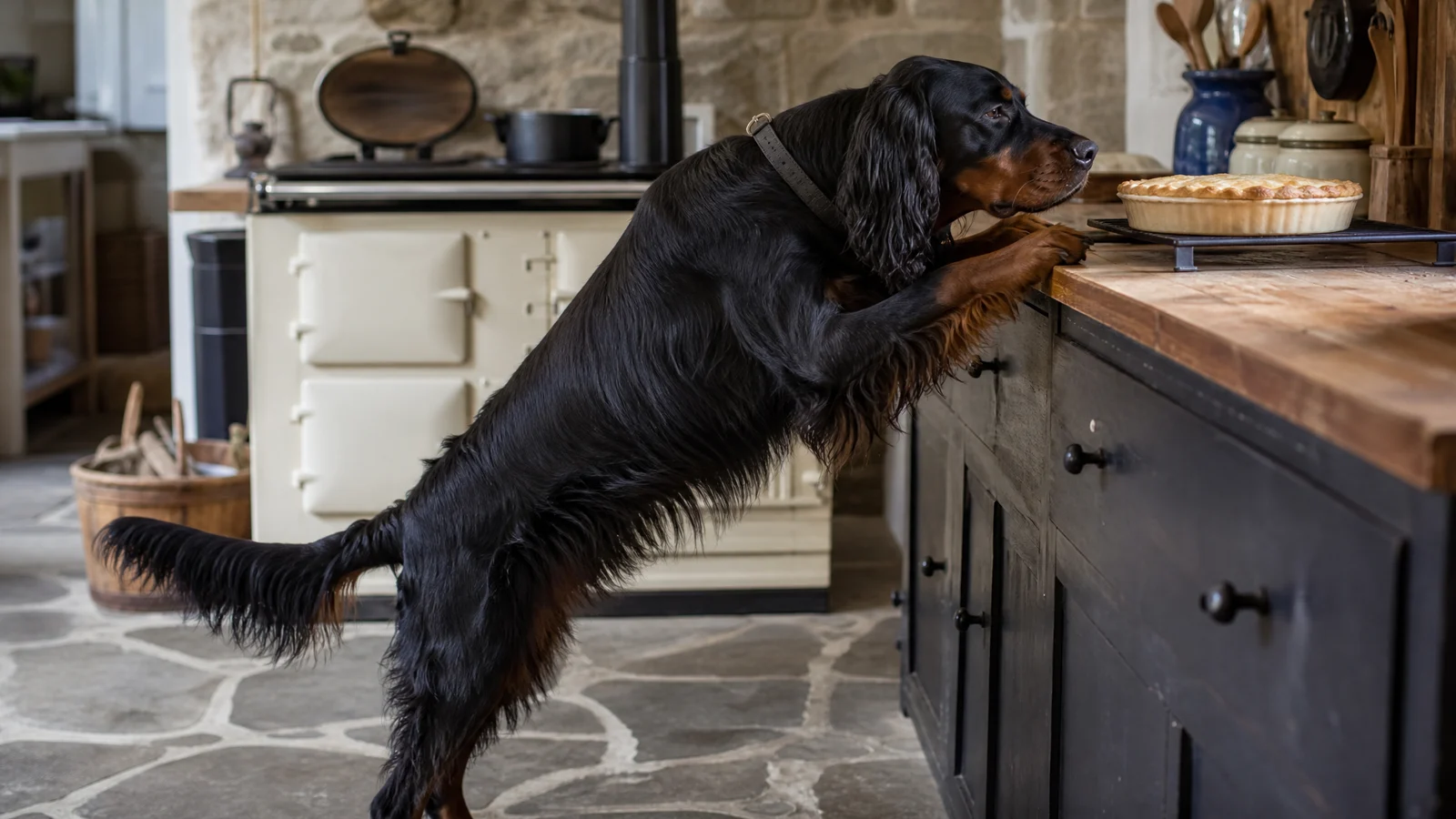
One forgotten sandwich can teach a Gordon Setter more about counter surfing than several interrupted attempts teach about staying down. The reward arrives immediately, smells powerful and appears at the dog's natural head height. Scolding after the food is gone cannot undo that result, and a keen nose will keep checking the place where it worked.
In this guide, you will run food preparation as a kitchen shift with a clear opening, a mat job, separate leave-it practice and a release. The first task is removing every payoff. The training then gives the dog useful work while people cook, serves food and clean up, without testing manners against an unsafe or irresistible counter.
Prevent Gordon Setter Counter-Surfing Payoffs
Training begins when nobody is cooking. Clear food, dirty dishes, wrappers and used towels from every reachable surface, including islands and dining tables. Push appliances and utensils away from the edge. Secure trash, compost and grocery bags. A gate or closed door should prevent access whenever an adult cannot actively supervise.
Dogs Trust jumping guidance explains that finding food on a worktop can reinforce the behavior. Make the environment stop paying before expecting a replacement to compete. This is not giving up on training. It creates the conditions in which the new kitchen routine can actually win.
- Clear the worktop before the dog enters, including crumbs and food-scented packaging.
- Put a lidded food bin or closed cabinet near the preparation area for quick storage.
- Move chairs and stools that give easier access to a table or island.
- Use a physical barrier during deliveries, parties and other periods when the normal system will break down.
Do not stage a tempting plate to see whether the dog understands. That test risks another large reward and may expose the dog to hot food, bones, toxic ingredients or sharp utensils. Practice with the real counter clear and the dog's own rewards delivered on the floor.
Audit the less obvious surfaces too. A Gordon Setter may reach a windowsill, coffee table or open dishwasher without placing paws on a counter. Use the same rule: if a surface can pay the dog, clear or block it before the shift begins. We recommend walking the room at the dog's head height once, because the reachable picture looks different from there.
A Gordon Setter Counter-Surfing Boundary
Choose the line that separates cooking traffic from the dog's station. It might be the doorway, the far edge of an island or a strip of floor several feet from the worktop. Make it easy to see and wide enough that the dog can lie down without blocking a path. Place a nonslip mat on the household side.

Walk toward the line with the dog on a loose leash. The instant all four paws remain on the household side, mark and place a reward there. Step away, approach again and repeat. The lesson is location, not a long stay. Release after a few seconds and leave the kitchen together.
Crossing the Boundary Calmly
If the Gordon crosses, quietly guide the dog out and reduce the difficulty. Add a gate, move the mat farther away or practice without food activity. Avoid pushing the chest or arguing at the boundary. Physical conflict can make the kitchen more exciting and still fails to explain which floor position earns reinforcement.
Humane World training guidance pairs prevention with a grounded alternative. Reward at the position you want to keep. Feeding beside the counter after calling the dog away can accidentally preserve the return route, while reinforcement on the household side makes the boundary itself useful.
Practice entry and exit as well as staying out. Invite the dog across when the kitchen is clear, walk through without stopping at a surface and leave together. This prevents the boundary from becoming a place where the dog strains forward until someone eventually gives in.
Mat Duty for Counter-Surfing Prevention
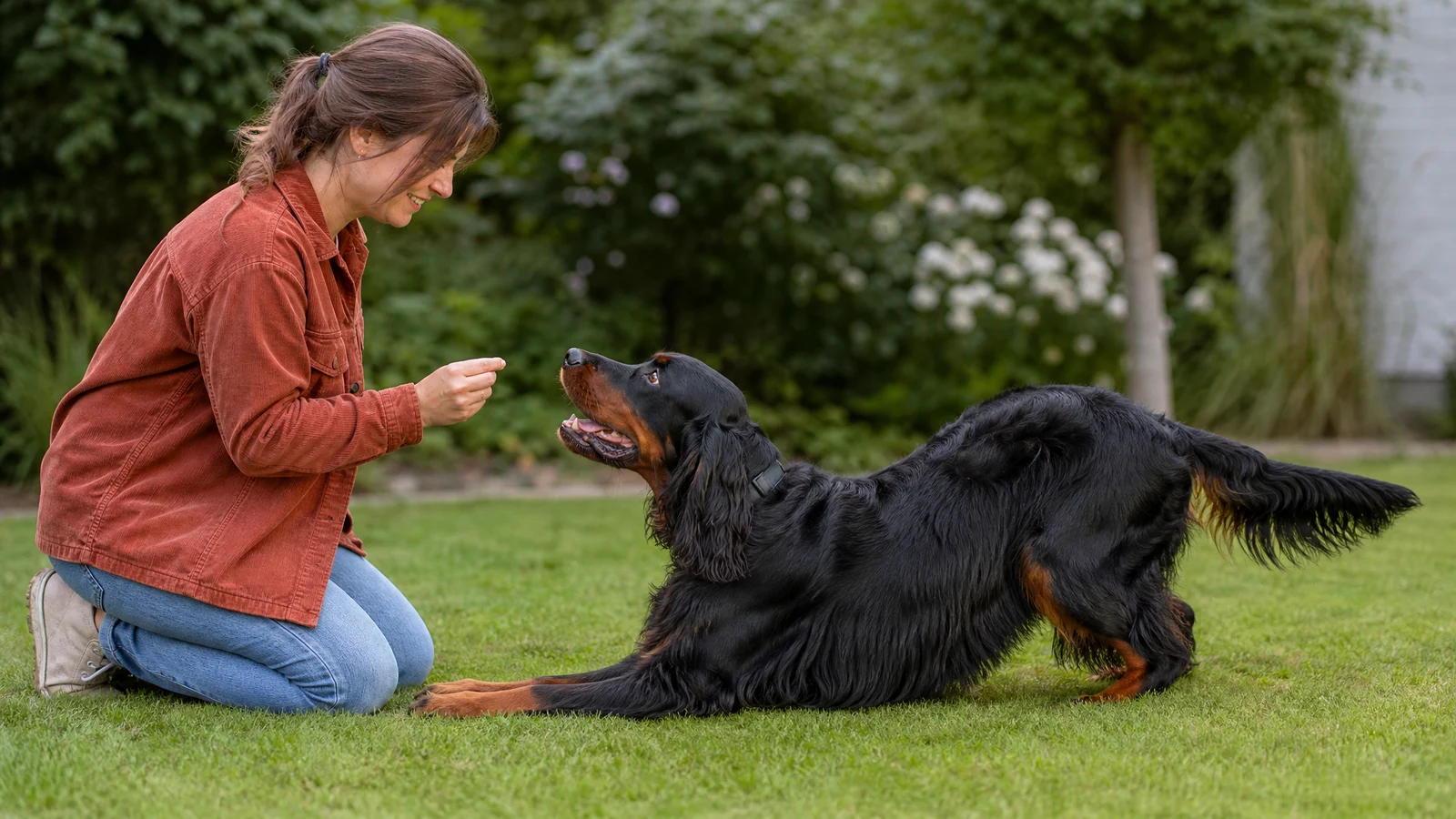
The mat becomes the dog's job during a kitchen shift, but it should first earn value in a quiet room. Place it down, mark any voluntary step onto it and deliver the reward between the front paws. After several repetitions, wait for four paws, then for a sit or down the dog offers comfortably.
Dogs Trust settle training builds calm behavior gradually around distractions. Reward small signs of settling, including a shifted hip, softer muscles or a head lowering. Do not repeat “stay” while the dog grows tense. Quiet reinforcement should make remaining there an understandable choice.
Add duration in uneven, manageable intervals: two seconds, four seconds, one second and then five. Sometimes release after a very easy repetition. Carry the mat to the kitchen boundary only when the dog can find it promptly and remain while you take a few steps away.
This work complements the site's guide to Gordon Setter behavior. It channels food-seeking and household curiosity into a known position without treating the dog's persistence as a character flaw.
Use several small rewards from the dog's planned food rather than one large payment at the end. The handler should be able to reach the mat without stepping over the dog or carrying hot cookware. If reward delivery disrupts cooking, change the station before increasing duration.
The broader Gordon Setter training guide explains markers and rewards used across household skills. Keep the same marker here so the kitchen location changes while the teaching language stays familiar.
Counter Activity in Gradual Layers
Meal preparation contains many different cues: cabinet doors, chopping sounds, food odor, people turning and plates moving toward the table. Add them separately so a mistake tells you what to simplify. Start with clean hands and an empty counter, reward mat duty and close the shift before cooking begins.
Movement Without Food
Stand at the counter for a second, return to the mat and reward. Next, open one cabinet, lift an empty bowl or take two steps along the worktop. Vary the easy action instead of building one long sequence. If the dog leaves, block access, reset and make the next movement smaller.
Food Behind Secure Management
When empty-counter movement is easy, set a closed food box near the rear wall. Reward the dog on the mat before the nose rises toward it. Later, handle one low-value ingredient for a few seconds. The dog should never reach the food if the mat response fails.
A Short Real Kitchen Shift
Prepare one simple item while another adult manages rewards or a gate protects the workspace. Pay often enough that the dog can succeed, then release before impatience grows. A chew or food toy may support settling, but use it only if it is safe for this dog and does not create guarding around people passing.
Increase one feature next time: food odor, movement, duration or another person. A busy family dinner is not the next step after an empty counter. The useful progression preserves the same boundary and mat job while one part of ordinary life becomes more realistic.
Add cleanup as its own layer. Clearing plates, opening the trash and loading a dishwasher may be more difficult than chopping because smells move closer to the floor. Use a gate for unavoidable access points and return to short mat intervals instead of assuming the hardest part ended when dinner was served.
Leave It as Counter-Surfing Backup
Leave it is an emergency support, not permission to keep food within reach. Begin with a piece of food covered by your closed hand. Wait without correcting. When the dog pulls the nose away, mark and reward from the other hand. The covered item never becomes the prize.
Move to food under a shoe, then food on the floor behind a barrier. Add the cue only when the dog is already turning away reliably. Practice with safe, low-value items and finish by picking them up. AVSAB's humane training statement supports reinforcing alternatives and arranging the environment rather than relying on pain or intimidation.
In the kitchen, say the cue once only if you are close enough to prevent access. Mark the turn and direct the dog to the mat for a better reward. Repeated shouting from across the room teaches that the first several cues do not matter and leaves the counter available throughout the argument.
Maintain routine veterinary care. New or intensified food seeking, scavenging or appetite deserves a conversation with your veterinarian, especially when it appears with weight, thirst, digestion, health or behavior changes.
Generalize leave it to a dropped napkin, an empty food carton and a closed grocery bag while each item remains physically protected. Reward the turn toward you, then remove the item. The cue should create safe disengagement, not a standoff in which the dog waits for the handler to look away.
After a Counter-Surfing Mistake
If the dog reaches the counter, protect safety first. Block access without grabbing at the mouth, switch off heat and remove dangerous items. When something harmful may have been swallowed, write down the item and call the veterinarian or an animal poison helpline without delay. Do not wait for symptoms to decide whether a known toxin matters.
After a harmless attempt, avoid turning recovery into a chase. Call the dog away once, scatter several rewards on the safe side of the boundary and secure the room. Then audit the setup:
- What item or odor drew the dog toward the counter?
- Which barrier, supervision step or storage rule was missing?
- Had the mat interval become longer than the dog had practiced?
- What easier version can the next kitchen shift repeat successfully?
Do not compensate by drilling leave it beside the same food. Restore prevention and practice a known mat step later, after everyone has settled. The repair should reduce the chance of another payoff, not make the kitchen the site of a prolonged confrontation.
Share the audit with every person who uses the room. A child leaving a snack, a visitor moving the gate or one adult rewarding from the counter can change the result. Keep the rule simple enough to follow: surfaces clear, barrier set, dog released only after the room is safe.
The Gordon Setter Counter-Surfing Shift Ends
A clear ending keeps the mat from becoming an indefinite demand. When food is stored and surfaces are safe, return to the dog, deliver one final reward and say a release cue. Walk out together or offer a calm activity elsewhere. Pick up the mat if its presence is meant to signal active kitchen duty.
Track the part that still needs work: opening a cabinet, waiting during chopping, another person entering or the final cleanup. Gordon Setter counter surfing improves when every shift removes the old payoff and rehearses one realistic layer of the new job. The goal is a household routine that survives ordinary cooking, not one perfect test against a sandwich left at nose height.
When progress stalls, shorten the shift before changing the cue. Two successful minutes while a person assembles a snack can teach more than twenty minutes of repeated departures from the mat. Build the household's consistency first, then let duration grow around a routine the dog already understands.
 BehaviorStopping a Gordon Setter From Jumping Up and Counter Surfing
 Training basicsAre Gordon Setters Easy to Train? Temperament and Trainability FAQ
 BehaviorCommon Gordon Setter Behavior Problems and the Instinct Behind Each