 Gordon Setter
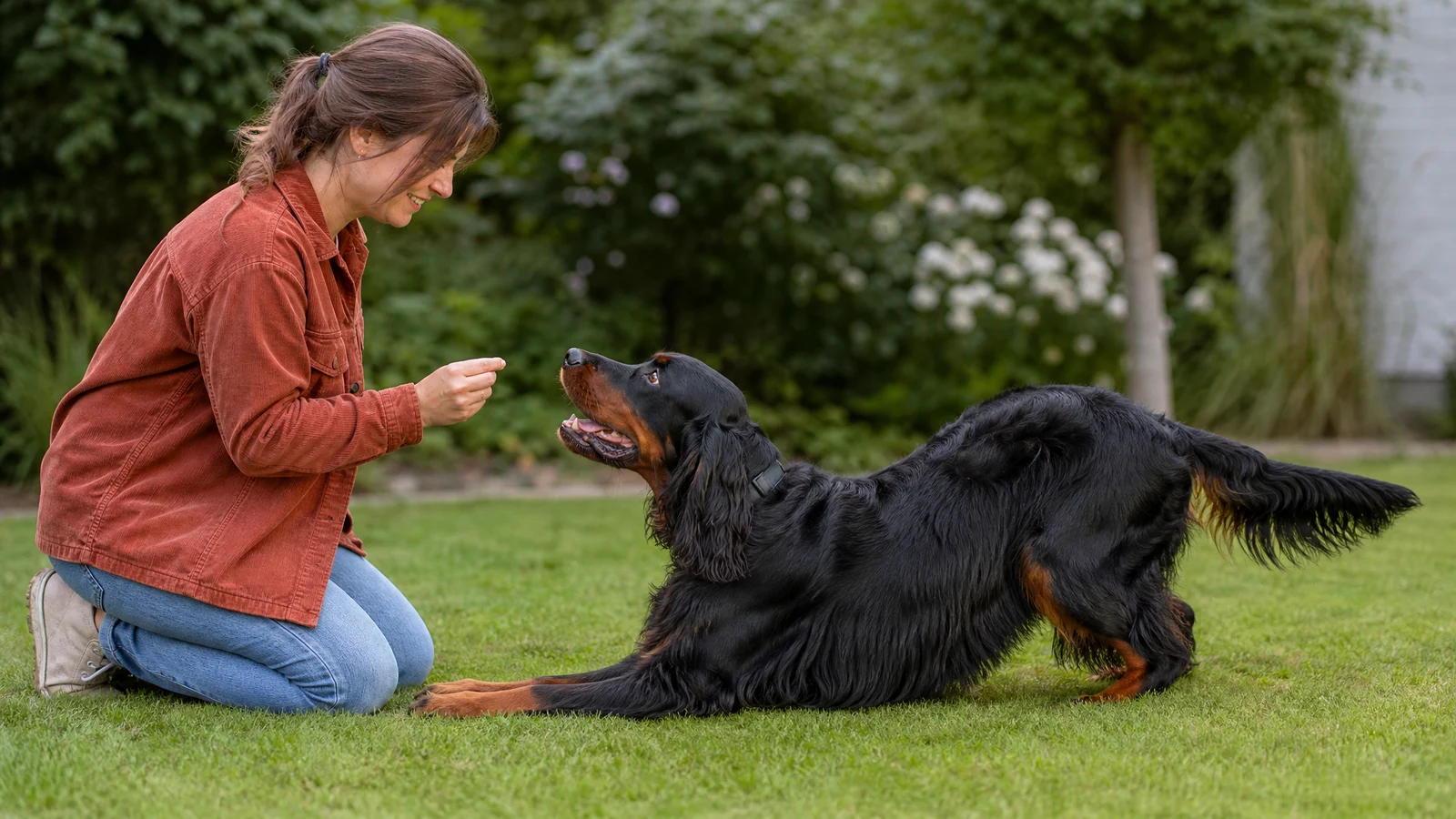
Owners describe the same afternoon again and again. A Gordon Setter nails sit in the kitchen on the first try, earns a cheer, then walks onto the sidewalk and behaves as if the word has never been spoken in their presence.
Nothing is broken, and nobody is being defied. This is the breed's temperament at work: quick to learn, easily pulled off by a good smell, and slow to grow up. Handled well, you get an affectionate dog who is happy to nap after a hike. Handled badly, you get a big, energetic one who has gone selectively deaf.
Below, you'll find the recurring owner reports grouped by theme, including trainability, late maturity, children, strangers and daily routines, plus the signs that tell you when to keep going and when to call in a professional.
What Owners Say About Gordon Setter Temperament
Talk to enough Gordon owners and the same themes keep coming back: affectionate, sensitive, busy and slow to settle. The affection is the easy one. Gordons bond closely with their family, want to be wherever you are, and are still fine on their own when everyone is out. They adapt to many kinds of homes as long as they are sure of your love, so a modest house with company beats a huge yard with none.
The other themes are where the advice comes in. Sensitive means they do not respond well to heavy-handed obedience, while proper technique lets young Gordons be trained without breaking their spirit. Busy means real mental work on top of exercise. Slow to settle means the lanky, loopy phase runs long, and we will get to that shortly.
The most useful pattern is about handling. Energy and stubbornness become problems when training and exercise are missing, and owners who supply both describe a manageable, even relaxed dog who loves a hike and is equally content to be lazy afterward. Experienced people in the breed describe Gordons as a handful at times but wonderful family dogs. Both halves of that sentence are accurate.
That same handling point is why a Gordon is a demanding first dog. The breed is generally good natured, so temper is not the issue. The issue is a large, energetic, strong-minded dog living with people who hope the dog will raise themselves. That plan has a poor record.
Temperament and Trainability Reports That Seem to Contradict
The AKC rates Gordon trainability 5 of 5, eager to please, and then calls the same dog stubborn. Both are true, which is irritating but useful. Gordons are very smart, learn quickly and live to please their person. They also hold firm views on when a lesson applies, and the kitchen and the sidewalk are, in their minds, different lessons.
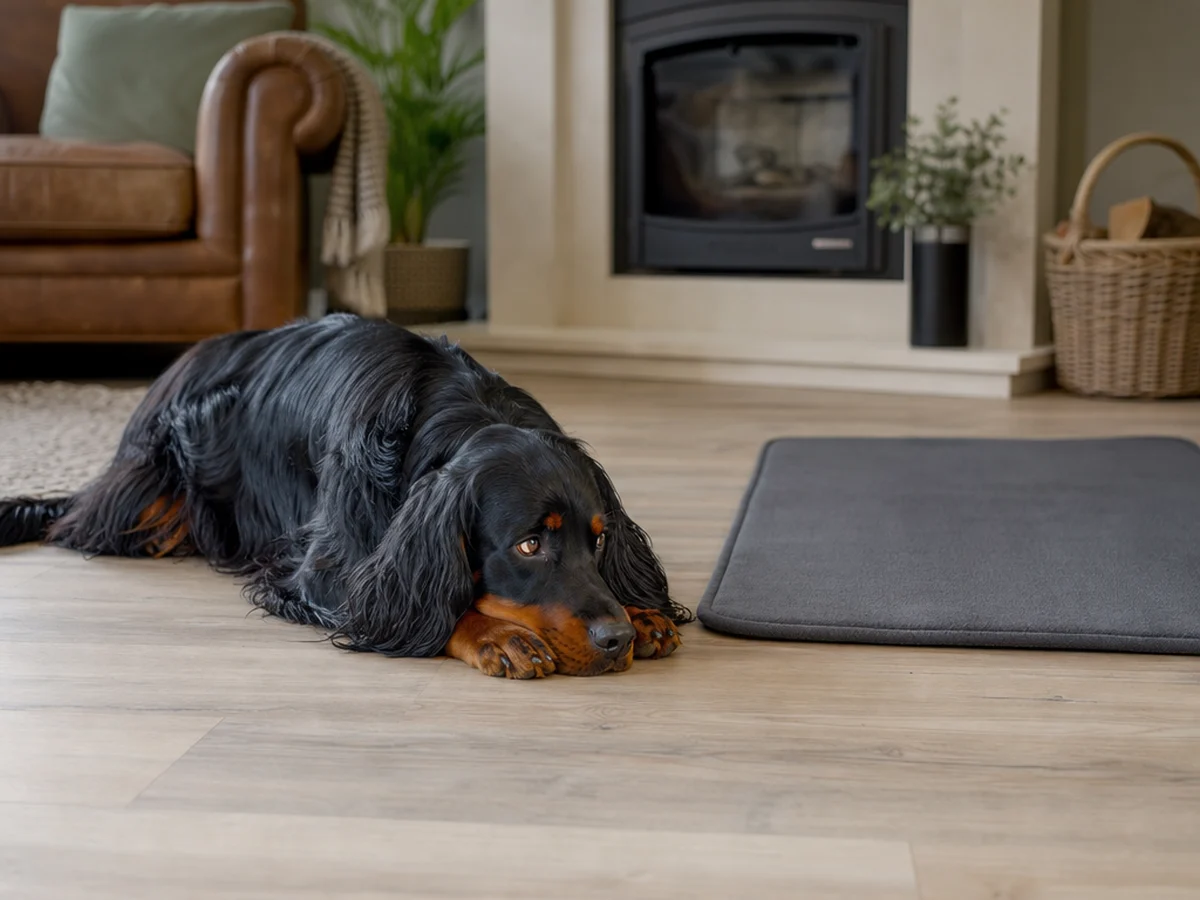
Learns Fast
Fast learning is the part owners rarely dispute. A Gordon learns quickly, and the breed standard describes a dog both intelligent and capable. The catch is that quick learners also pick up the wrong lessons quickly, such as that jumping gets attention or that the sofa is open to all. Reward what you like the moment it happens and the good habits arrive just as fast.
Skills do not stay finished, though. Owners who have trained Gordons successfully describe a multi-year effort with regular refreshers, not a lesson taught once and filed away. A Gordon with lovely manners in autumn will cheerfully test every one of them on the first warm day full of new smells. Plan refreshers the way you plan grooming.
Listens Selectively
Owners describe Gordons as very trainable and also very distractable and driven, which means the work is rarely teaching sit. It is teaching sit while the whole yard smells fascinating. The dog who nailed the cue in the kitchen did not forget it on the sidewalk. Nothing in the kitchen was competing with you, and the sidewalk is nothing but competition.
So train in layers. Get the behavior solid in the kitchen, then the hallway, then the porch, then the yard, and only then the street. Each time the setting gets harder, pay better and ask for less. A marker word the instant they get it right tells them which choice earned the treat.
Recall is usually strongest where distractions are low and weakest where the world is most interesting. We have trained this breed for many years, and the pattern holds: Gordons are rarely refusing, they are busy. Build focus around interesting things and the selective deafness shrinks.
Will a Gordon Setter Stay Puppy-Like for Years?
In behavior, often yes. The old line is that a Gordon would stay a puppy forever, and anyone living with an adolescent on a sunny morning gets the joke. History agrees: the Duke who favored the breed would not shoot over his setters until they were 5 years old, because they were very wild when young and slow in maturing.
Adolescence adds a twist. Studies on adolescent dogs show they are less likely to follow their owners' commands, and the loss of obedience seems to apply to owners rather than other people. So your Gordon may sit politely for a stranger and ignore you completely. That is a phase, not a verdict on your training, and in this breed the phase is long.
Some people advise waiting until a Gordon calms down before starting serious work. That gets it backward. The lanky, loopy adolescent is exactly the dog who needs steady habits, so keep sessions short, keep paying, and when a rough patch hits, drop each cue back a step and rebuild. Expect your Gordon to grow up on their own schedule, which is later than yours.
Pacing matters more than speed. Add one new thing at a time, keep everything else easy, and take the win when a cue holds in a new room. Early socialization and puppy classes are worth doing because they give a late bloomer a head start on manners. Plan for years of puppy-like exuberance, and enjoy the days when your Gordon settles early.
Temperament at Home With Family and Children
Gordons are family dogs by temperament, devoted to their household and happiest in the middle of it. The real questions are about size, exuberance and company, so it helps to look at young children and busy households separately.
Young Children
Children and Gordons are a good combination, especially when the dog meets children young, and Gordons tend to show protective instincts toward their young charges. A Gordon is also big and bouncy, and small children get knocked flat by enthusiasm, not malice. Supervise play, and teach kids to respect the dog's rights as a household member.
Teasing deserves a plan. A Gordon who is pestered will usually remove themselves from the child's reach instead of growling, which is polite and also hides the warning from adults who are not watching. Give them a retreat spot the children never enter, and reward them for using it. A dog who keeps leaving the room is giving you information.
Busy Households
Gordons want company, so a house where everyone vanishes all day suits them badly. They are fine alone when the family is away, but fine is not the same as thrilled, and a bored Gordon invents hobbies. A good walk before you leave and a chew waiting afterward can help keep the peace.
A busy household can be a plus, as long as someone owns the routine. Let each person take a turn running the exercise and practice, and have everyone use the same cues and rules. A Gordon who hears a different word for off from every family member learns, reasonably, that off is a suggestion.
How Do Gordon Setters Treat Strangers?
Gordons tend to be devoted to their household but not overly friendly to strangers, and they tend to tolerate attention from people they do not know rather than seeking it. If you wanted a dog who greets every delivery driver like a cousin back from sea, a Gordon will disappoint you politely. Many are great talkers, with one tone for greeting the family and another for warning of strangers.
Set up guests so the dog gets a vote. Ask visitors to ignore your Gordon at first, let them offer a sniff only if the dog wants one, and scatter treats on the floor so arrivals predict good things. A mat away from the door gives them something to do besides hover. Forcing a pat on a dog who is merely tolerating a stranger is how tolerance turns into avoidance.
Socialization matters for a reserved breed, but the goal is different. Aim for a Gordon who stays unbothered by new people, hats, bicycles and unfamiliar voices, not one who must adore each of them. Keep exposures short and rewarded. At the doorbell, pay for quiet after a bark or two, since announcing the visitor is simply how the breed says hello.
Training Habits That Suit This Temperament
Everything above points the same way: short, upbeat sessions, steady routines and plenty of outlets for energy. Here is how that looks in an ordinary week with a Gordon.
Session Design
Keep sessions short and end them on a win. Gordons are sensitive, and your mood travels down the leash: frustration makes them bounce harder or check out. Small treats, real praise and a sense of humor beat grinding through one more repetition. Mix the exercises up, since a bright dog repeating the same drill gets bored fast.
When a cue falls apart, assume it was too hard for the setting, not that they are plotting against you. Make it easier, move somewhere quieter, and reward the version they get right. If they are frantic and bouncing, a calm pause or stopping play for a moment resets things without drama. With this breed, patience is not a nice extra. It is the method.
Recall deserves its own slot in the week. Gordons tend to put their noses to the ground, and the hunting instinct can send them after a bird or squirrel across a busy highway, which is why the breed should never roam freely. Practice calling in boring places, use a long line in unfenced spaces, and keep true off-leash time to secure, fenced areas.
Daily Structure
A steady day does half the training for you. Build in a real walk or run, a sniff-heavy outing, a short training session and a place to settle, at roughly the same times. Gordons need real exercise and real mental work, so a lap around the block does not cover it. Scent games and a few cues practiced mid-walk count as both.
Teach the settling part on purpose. Reward a dog lying on a mat while the household carries on, then pay less often as the habit firms up. Owners report Gordons who love hiking and walks yet are content to be lazy, so you do not need to keep them constantly engaged once their needs are met. Exercise alone is no cure, though. A long run builds fitness in a dog who still ignores you.
Reading the Signs of Your Gordon Setter's Progress
Because Gordons mature slowly, progress shows up in small things long before big ones. The pattern across owner reports is simple: an energetic, bright, attached dog becomes a manageable, relaxed companion when they get both exercise and patient, consistent training. Skip either and the energy finds its own outlet. These signs tell you it is working.
- They check in with you on walks without being asked, even briefly, when something interesting turns up.
- Cues from the kitchen start appearing in the hallway, on the porch and in the yard, even if you still pay well for them.
- Recovery after excitement gets faster, so door-bouncing and barking settle sooner than last month.
- Greetings get calmer, and they take a mat or simply watch a guest instead of hovering or spinning.
- They settle after exercise and enjoy a lazy afternoon without needing constant entertainment.
- Rough adolescent patches pass faster when you drop back a step and rebuild.
Regular vet visits belong on the calendar either way, and a sudden change in behavior deserves an exam before anyone blames training, since pain or illness can look like disobedience. Ask a trainer or behaviorist who uses reward-based methods for help if you see any of these.
- Growling, snapping or stiffening toward family members or guests, or fear of strangers that grows despite careful, rewarded exposure.
- Guarding of food, toys or spaces that tightens up instead of easing.
- A sudden shift in a dog who normally responds well, especially alongside changes in appetite or movement.
- Scuffles or reactivity with other dogs who do not improve with distance and rewards.
- Panic when alone, such as nonstop barking or frantic escape attempts, well past the early settling-in period.
- Bolting after scents in ways that put them in danger even with good management.
- Progress that stalls after a long stretch of consistent, reward-based work, when an outside eye can spot what you cannot.
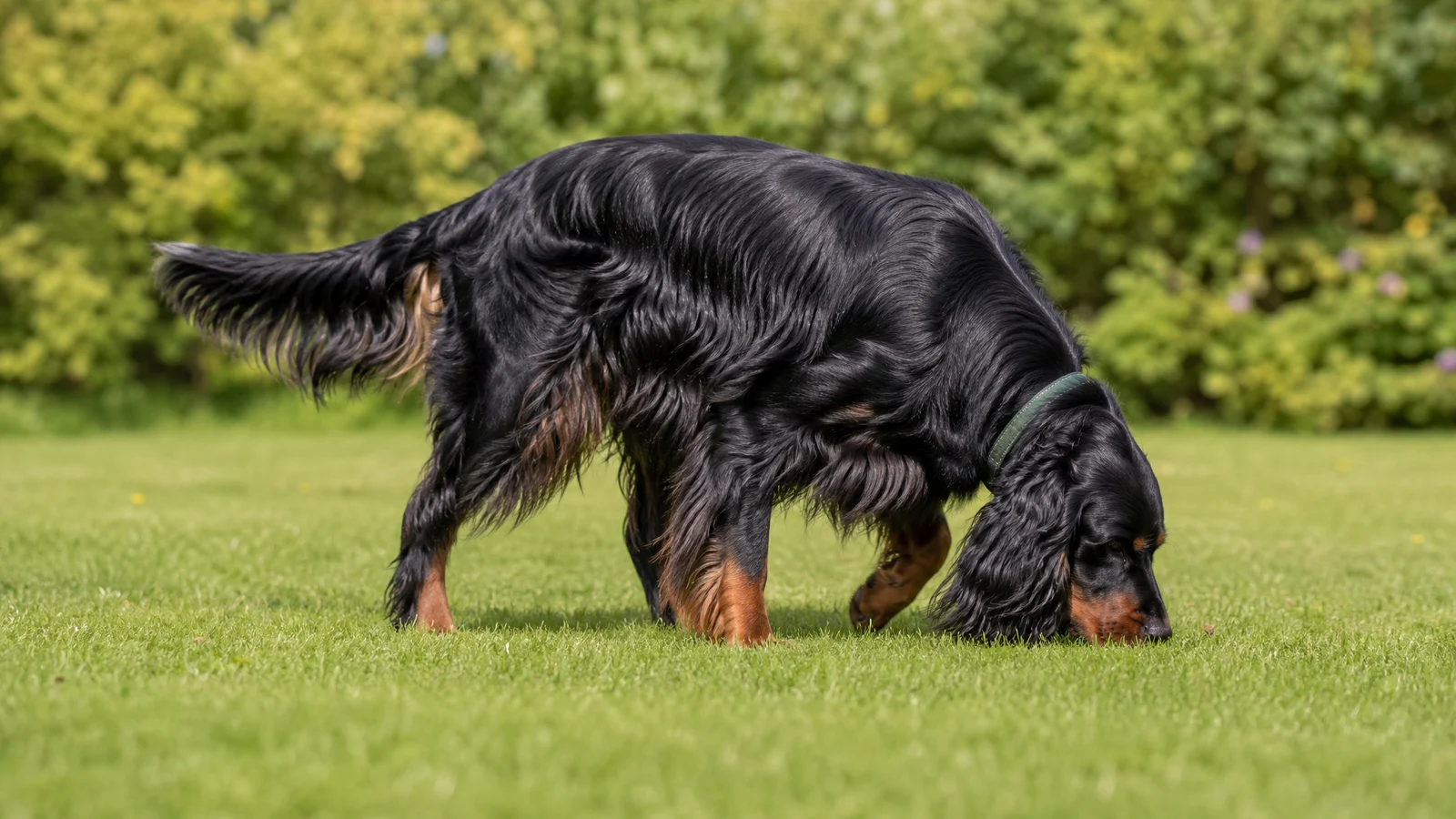 BehaviorCommon Gordon Setter Behavior Problems and the Instinct Behind Each
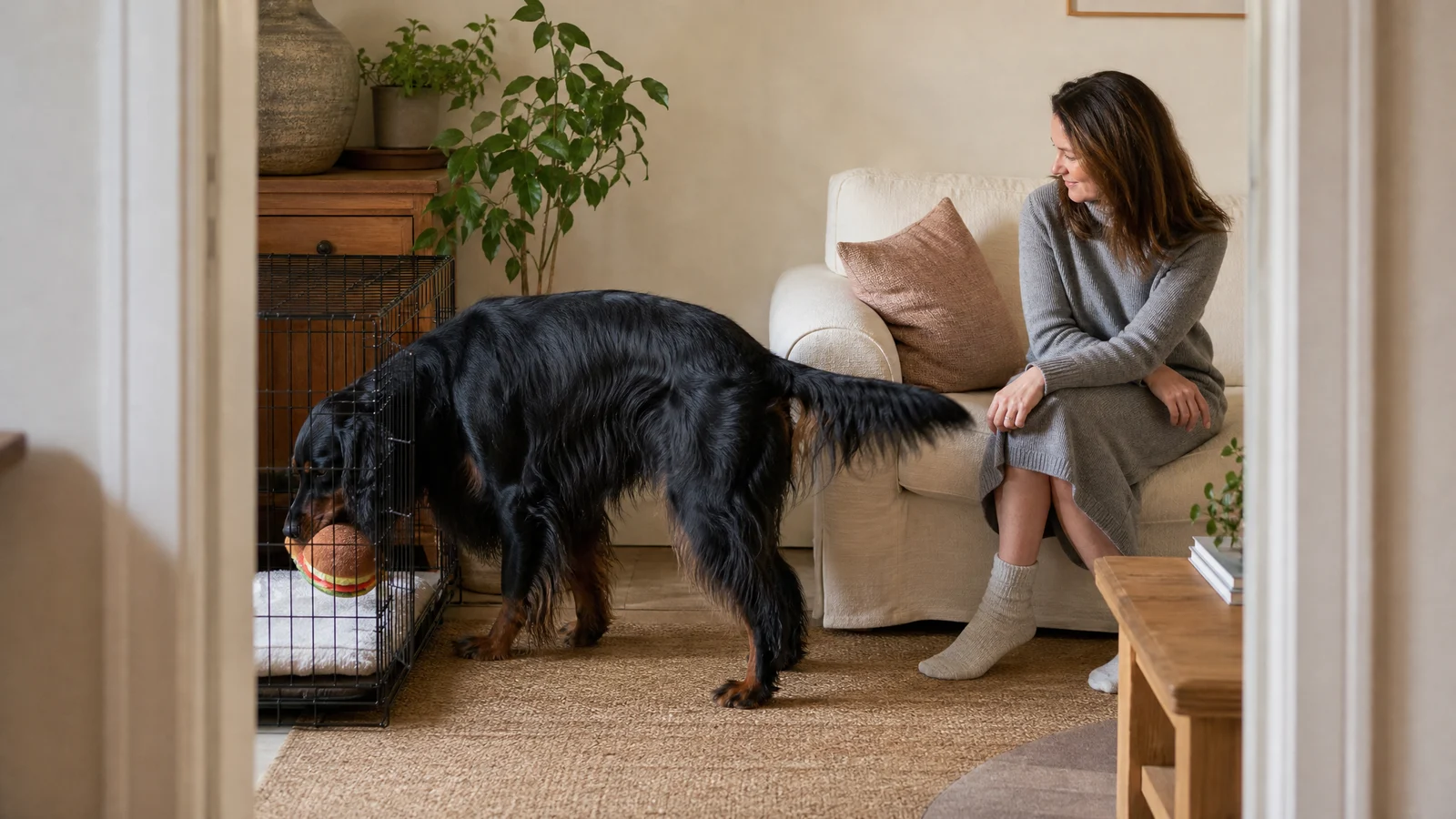 Training basicsCrate Training a Gordon Setter and Preventing Separation Anxiety
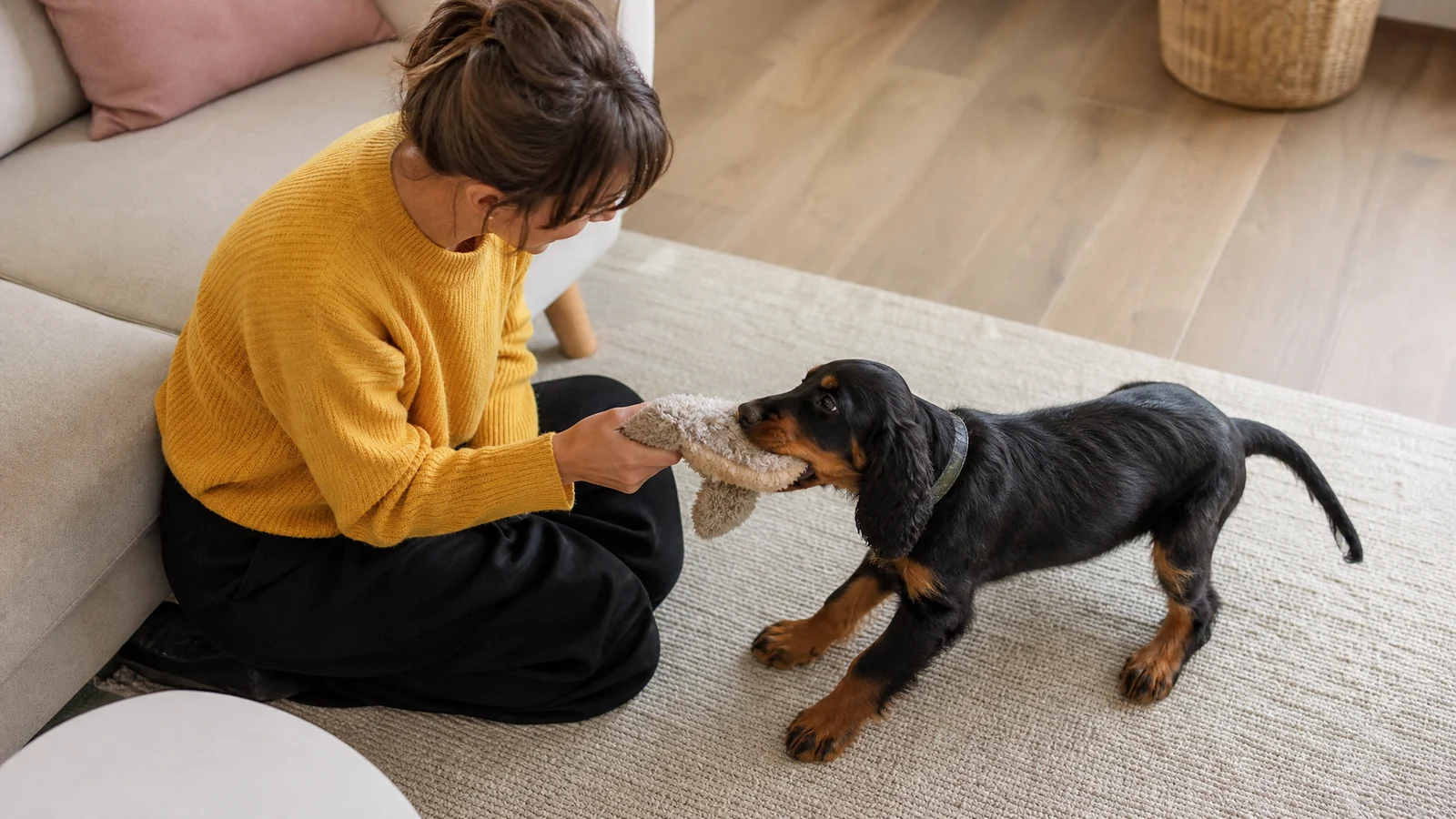 Puppy trainingGordon Setter Puppy Biting, Chewing and Wild Puppy Energy