 Gordon Setter
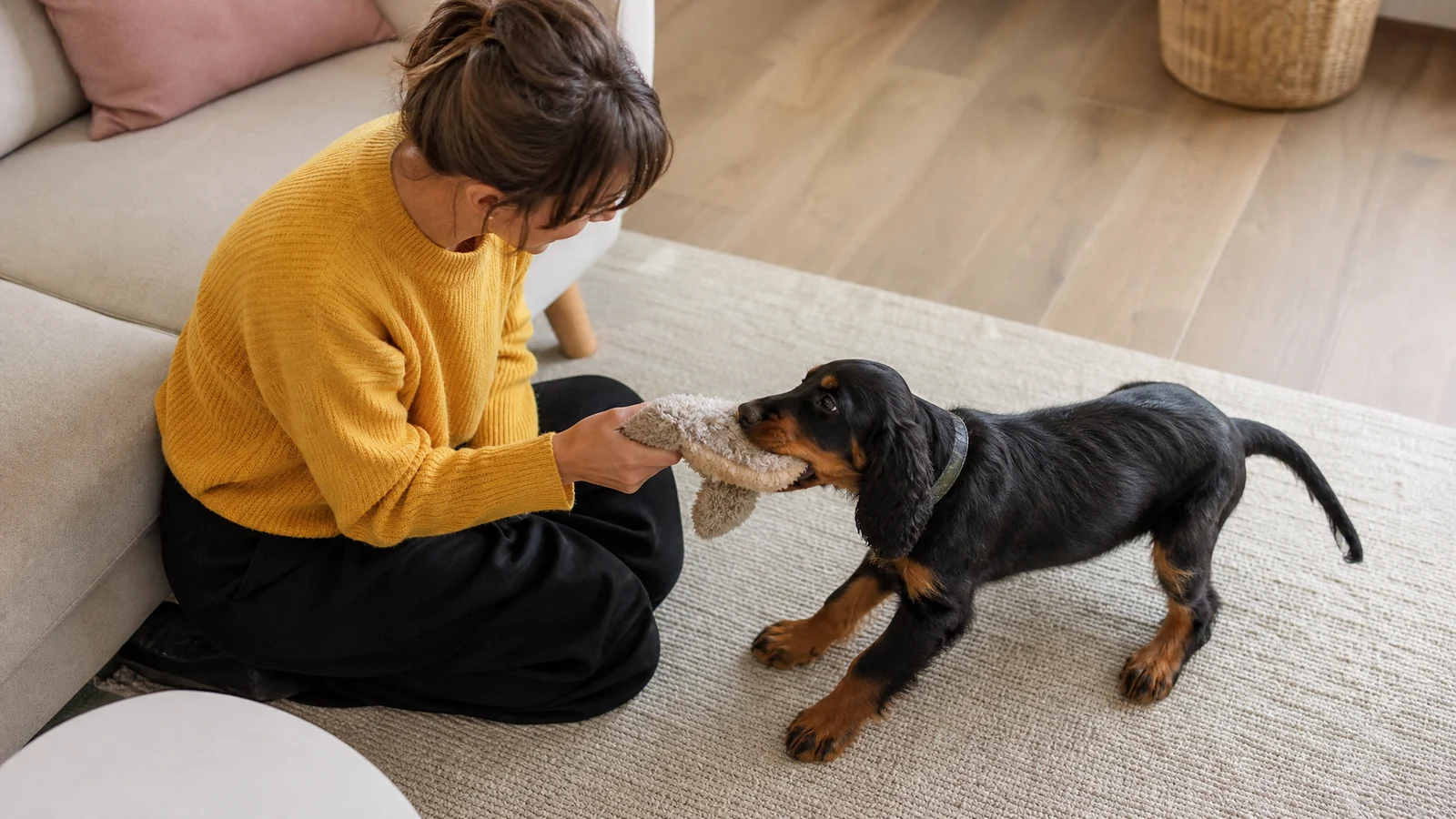
Ordinary puppy advice says to wait out the mouthing, say no and trust the puppy to grow out of it. With a Gordon Setter, that falls short. The breed scores 5 of 5 for energy, and a puppy with that much fuel barely hears a "no" once they are wound up. Here, meeting the puppy's energy comes first, and the mouth needs a job before it needs a rule.
Below, you'll find how an ordinary day sets up biting, how to arrange your rooms, and why a Gordon Setter puppy mouths so much. We also cover chew outlets, calm-down routines, a way to end play before the teeth land and the body cues that show up right before a bite. We have spent many years working with Gordons, and one thing holds up: a puppy whose energy is met stays far gentler with their teeth. The full training guide is here when you want the bigger view.
Your Gordon Setter Puppy Training Day
Biting follows a schedule, so start with the shape of an ordinary day in your home.
Where Biting Peaks
Gordon Setters are closely bonded to their family and live to be with you. That means the hottest moments come around people: you walk in the door, guests arrive, the kids race through the kitchen. Greeting excitement is the classic launch point for teeth on sleeves, hands and pant legs.
Many puppies mouth more when they are over-stimulated, tired or struggling to cope, and that can happen late in the day, which is why the hour before dinner can feel like living with a small shark. A puppy who has been busy all day does not always wind down. Very often they wind up.
Building the Day Around Those Windows
Put a walk, a sniffing session and a short training game ahead of each busy period. Follow it with a nap in a pen or crate. Spend part of their daily food in puzzle toys so even breakfast burns energy and gives the mouth something to do.
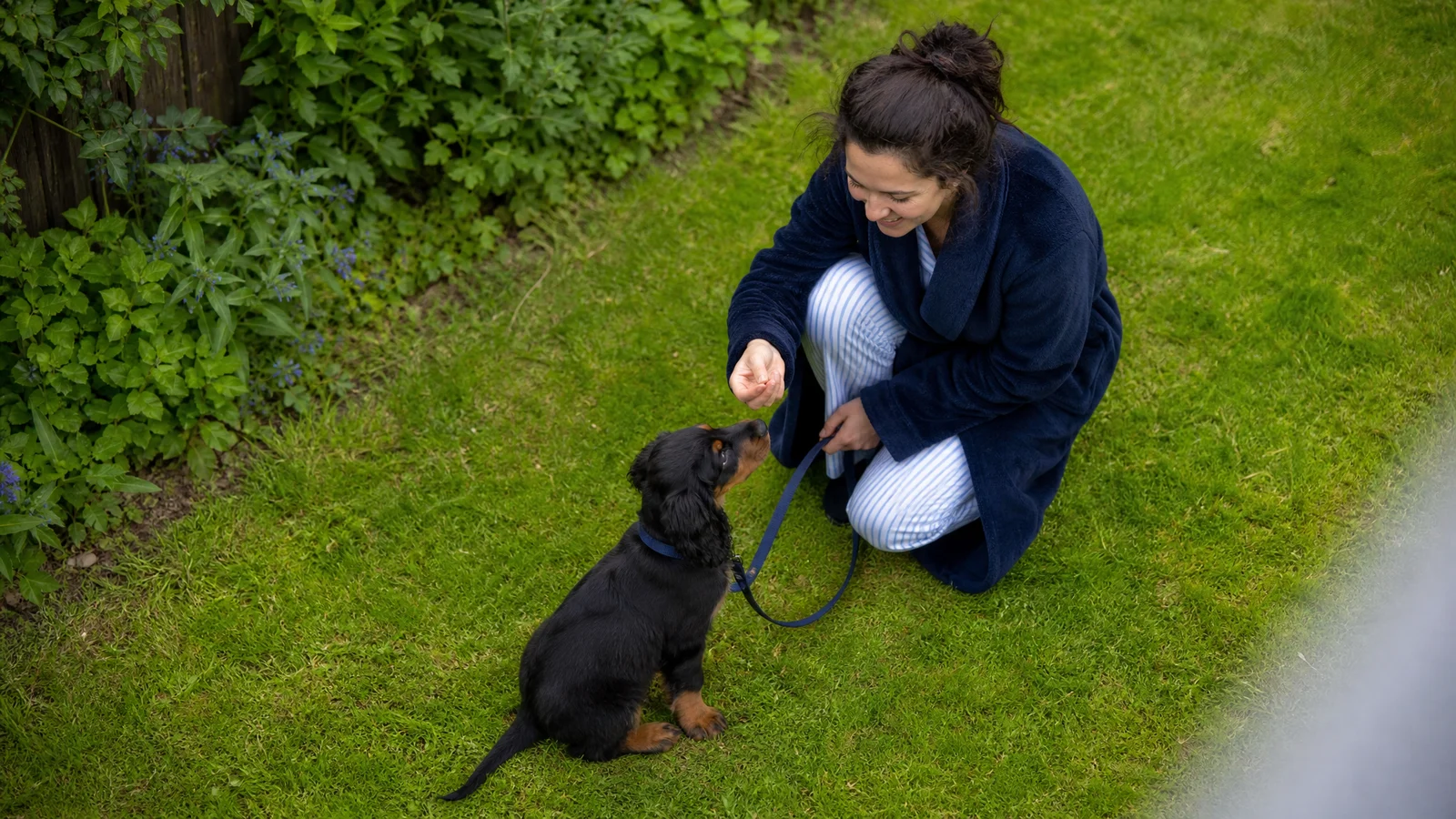
Keep greetings calm. Sit on the floor, let the puppy come to you and reward every moment all four paws stay down.
For a few days, jot down when the nipping flares. The same windows will repeat, and each one becomes your cue to schedule exercise, a chew and a nap just ahead of it.
House Layout for Puppy Training and Chewing
Narrow in from the day to the rooms. Every chance to bite the wrong thing is a rehearsal, so remove the rehearsals and make the right choices the easy ones.
Zones, Gates and Pens
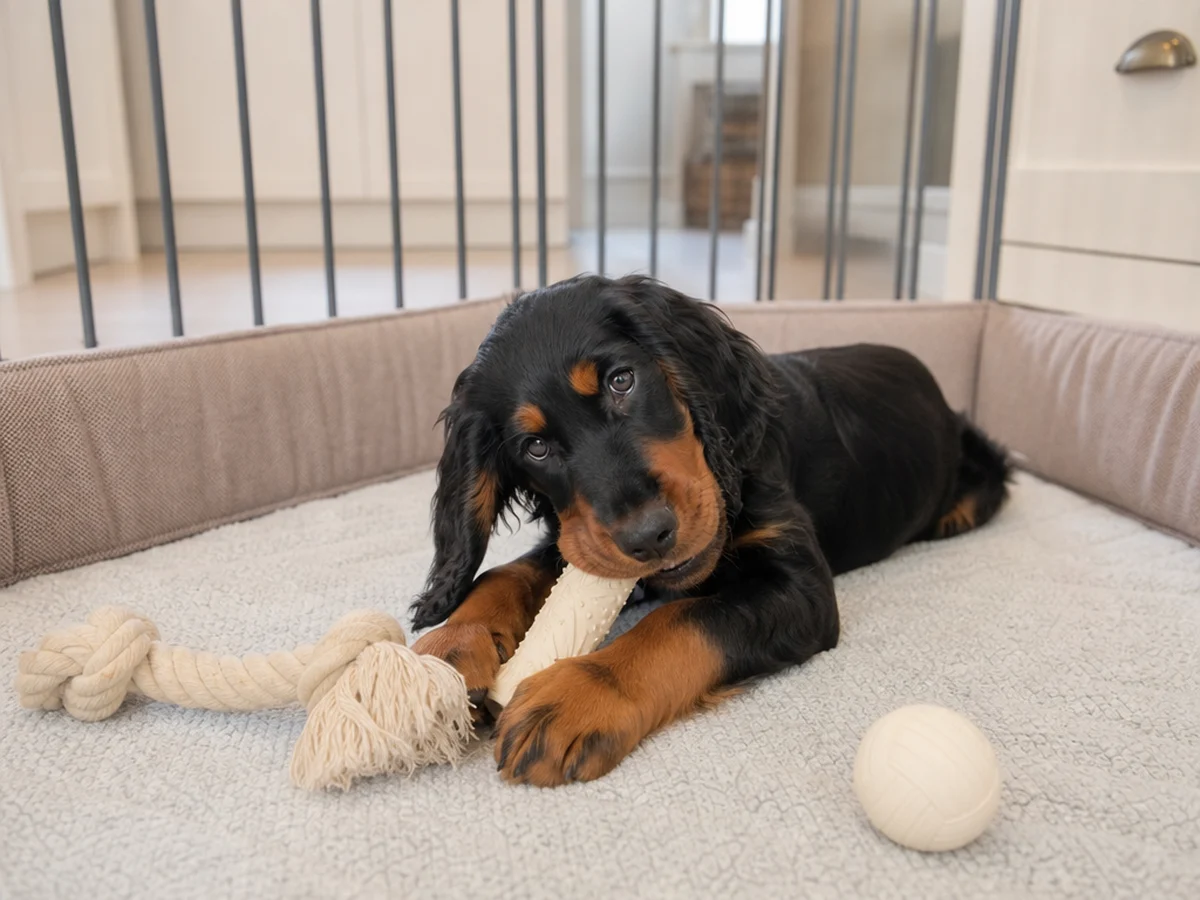
Set up a puppy zone in the room where your family actually lives. A people-loving breed does best when they can see you, so a pen or gated corner in the living area beats a distant utility room. Add a washable mat, a water bowl and a few chew items, and rotate the toys so they stay interesting.
Close off kitchens, stairs and any room with shoes, cords or tempting furniture legs using baby gates. Pick up kids' toys and put socks in a hamper. A Gordon Setter is athletic and quick, so anything on a low shelf counts as a toy.
Visitors and the Yard
Gordons are devoted to their household but not overly friendly to strangers, and they tend to tolerate attention from unknown people rather than seek it. Before guests arrive, settle the puppy in the pen with a stuffed chew. Let them come out and say hello on their own terms once the doorway excitement drops.
Outside, use a fenced yard and a leash rather than free roaming. The breed tends to follow a scent with the nose down and never look up.
When Chewing Means Something Else
Notice when the chewing happens. Chewing that occurs mostly or only when you are out, along with whining, barking, pacing or house soiling, is a different problem from ordinary teething. Chewing only when alone is a pattern to raise with your vet.
Why Does a Gordon Setter Puppy Mouth Everything?
Now move to the dog. Puppies explore with their mouths, play with them, soothe sore gums with them and use them to get away from handling they dislike. Chewing itself is natural development, and most dogs like to chew all their lives. You are not removing the urge. You are steering it.
Energy and Brainpower Together
What makes a Gordon Setter puppy intense is the combination. They are athletic and outdoorsy, bold and confident, with mental stimulation needs of 4 of 5 on top of that top energy score. Playfulness is only moderate for the breed, so much of the frantic biting is not a wish for non-stop games. It is unspent energy and unspent brainpower looking for a target, and your hands, sleeves and couch are the nearest ones.
A Slow Grower With a Quick Mind
The breed also matures slowly. The parent club tells how the Duke would not shoot over his setters until they were 5 years old, because they were very wild when young. You are living with the modern version: a clever puppy in a growing, adult-sized body, with a long adolescence ahead.
The good news is trainability. Gordons are smart, learn quickly and live to please, though they can be stubborn and do not respond well to heavy-handed obedience. Gentle, reward-based methods protect the spirit that makes them so rewarding, and a strong-minded puppy stays cheerful through plenty of practice.
Chew Outlets and Calm-Down Routines in Puppy Training
This is where most of your daily work happens. Give the mouth plenty of legal targets, then teach a routine that carries a puppy from wild to calm. The outlets are the supply, and the routine is the brake.
Good Chew Outlets
- A frozen rubber toy can soothe sore teething gums, and supervision matters so no pieces get swallowed.
- Stuffed hollow toys keep a bright mind busy for a good stretch, especially when they make up part of a meal.
- Rope, soft fabric and rubber toys of different textures let you swap in something new the moment the puppy reaches for the wrong thing.
- Sniff mats and scatter feeding use the nose, which gives a puppy mental effort on top of physical exercise.
- Rotate toys weekly. A toy the puppy has not seen in days is worth more than a brand-new one.
A Simple Calm-Down Routine
Start before the puppy is truly overtired, not after. Done the same way each day, the routine becomes a signal the puppy learns to relax into.
- Walk the puppy to their pen or mat in a calm, quiet voice.
- Hand them a chew and let the mouth settle into a steady rhythm.
- Drop a treat on the mat each time they lie down or soften their body.
- Stay close and quiet for a few minutes, then leave once they are resting.
- Let them sleep. A well-timed nap prevents more problems than any lesson.
Practice it when the puppy is only a little keyed up, so the routine already means something on the evenings you really need it.
How Do You End Play in Puppy Training?
You end it early, while the puppy is still having fun. Play that stops at a high point teaches that calm is how the fun comes back. Play that runs until the teeth land teaches that teeth make everything louder.
Spotting Rising Arousal
Keep sessions short and use toys, not hands. Watch for faster movements, a higher-pitched voice, lunging at clothing and a puppy who keeps grabbing even after you stop moving. Those are signs of arousal climbing.
Stop before they peak. Stand up, drop a handful of treats on the floor for sniffing and let the puppy come down.
Ending the Game Gracefully
If the puppy stays wired, use a calm interrupt: a cheerful marker word, a chew tossed to the mat and a short break in the pen. A time-out is not punishment. It is a quiet room for a brain that has run out of gas.
End on your terms, with a treat scatter. Over time the puppy learns that the end of play is a pleasant event and stops fighting it. If they quit the game and wander off, let them go.
Children need the same plan. A Gordon Setter will tend to remove themselves from a teasing child rather than growl, which sounds gentle but can hide stress. The breed is rated for young children with supervision, so teach kids to stop play when the puppy picks up a chew and to let the dog walk away.
Body Cues Right Before a Puppy Bites
Now zoom in on the smallest detail: the moment just before a bite. A mouth rarely lands without warning, and if you learn the signs, you can act before the teeth do. Your puppy's version will be personal, but these are the usual signals:
- The body goes stiff, then bouncy, with fast, jerky movement.
- The eyes lock on your hand, sleeve or pant leg.
- The mouth opens a little, often with a quick lunge or a play bow right before.
- Some puppies go very still just before they dive in.
When you see it, act in that instant. Say your marker word in a calm voice, slide a chew toy into the open mouth and move your hands away. The puppy earns a reward for taking the toy, which is the opposite of what a bite earns.
If you miss the cue and the teeth land, stop the game. Stand up, leave the room or step behind a gate for a brief pause, then return and start again calmly. Repeat it the same way each time, and the puppy learns that teeth end the fun and a toy keeps it going.
A Gordon Setter's Mouth Settles Slowly, Not Never
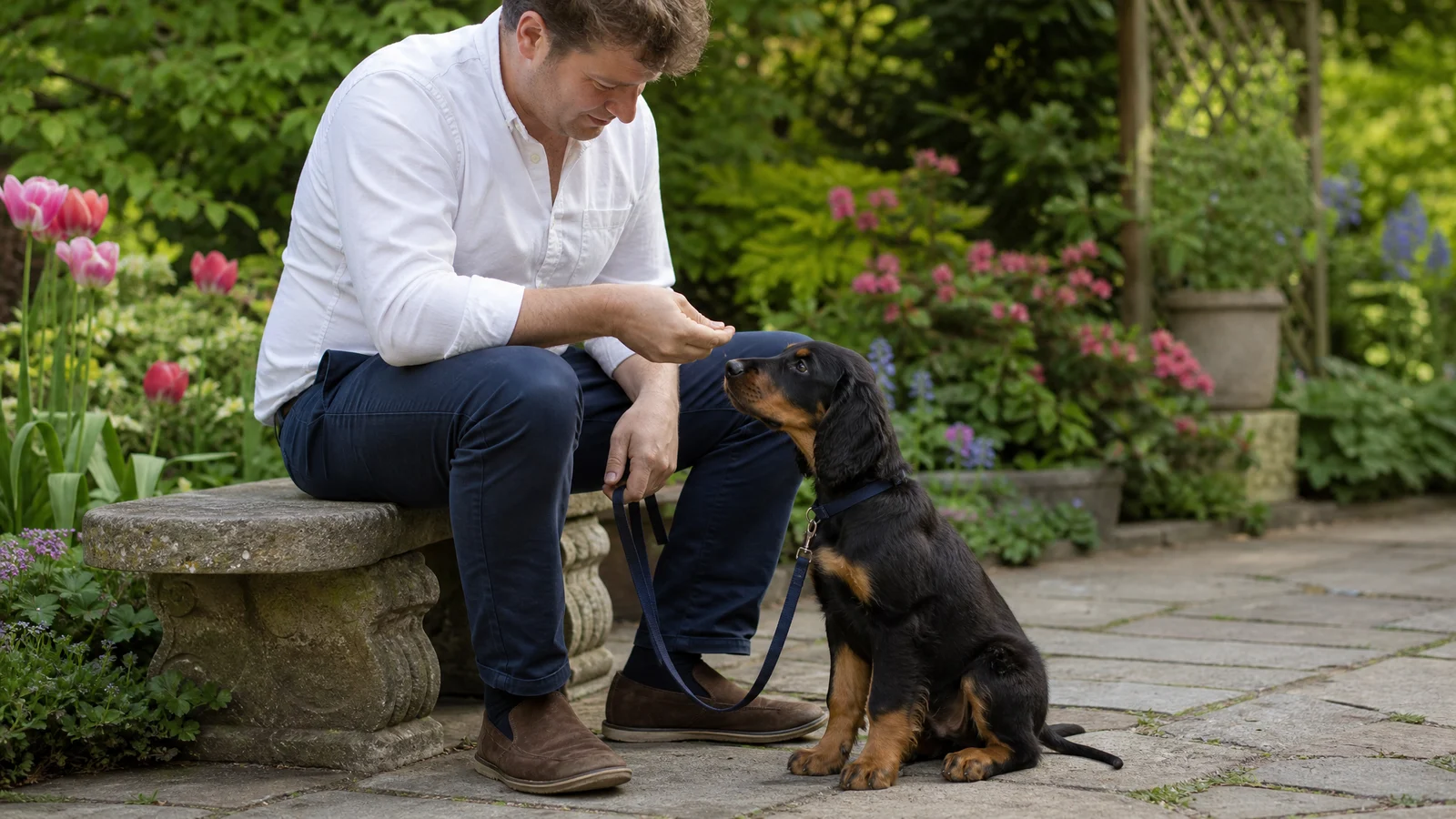
Expect biting to ease gradually, not vanish overnight. As the adult teeth come in and your routines take hold, the sharp, frantic mouthing fades. A slowly maturing breed keeps a puppy-like side for a long time, and the Gordon Setter puppy training timeline shows how that unfolds month by month.
Chewing and a busy mouth will linger well past the biting stage. A mature Gordon Setter will still carry toys, mouth your hand in greeting and reach for something to chew when bored. That is normal for the breed, and it is why a good chew is a lifelong habit and not just a puppy tool. Adolescence may also bring a few bad weeks, so do not read a bumpy stretch as failure.
Keep up regular vet visits so any sudden change, such as more chewing when you are away or a dog who seems uncomfortable, gets a proper look. Most of the time it is simply energy, and the answer is the same one that works now: plenty of exercise, sniffing and thinking work, plus a good chew for downtime.
So plan for the long haul. A Gordon Setter whose body and brain are well exercised bites less, chews the right things and grows into the steady, affectionate companion the breed is known for. Stay patient and consistent, because the long adolescence ends in a dog well worth the wait.
 Puppy trainingGordon Setter Puppy Training Timeline: 8 Weeks to 2 Years
 Training basicsRecall for a Gordon Setter: Birds, Squirrels and the Nose
 Training basicsHow to Potty Train a Gordon Setter Puppy