 Gordon Setter
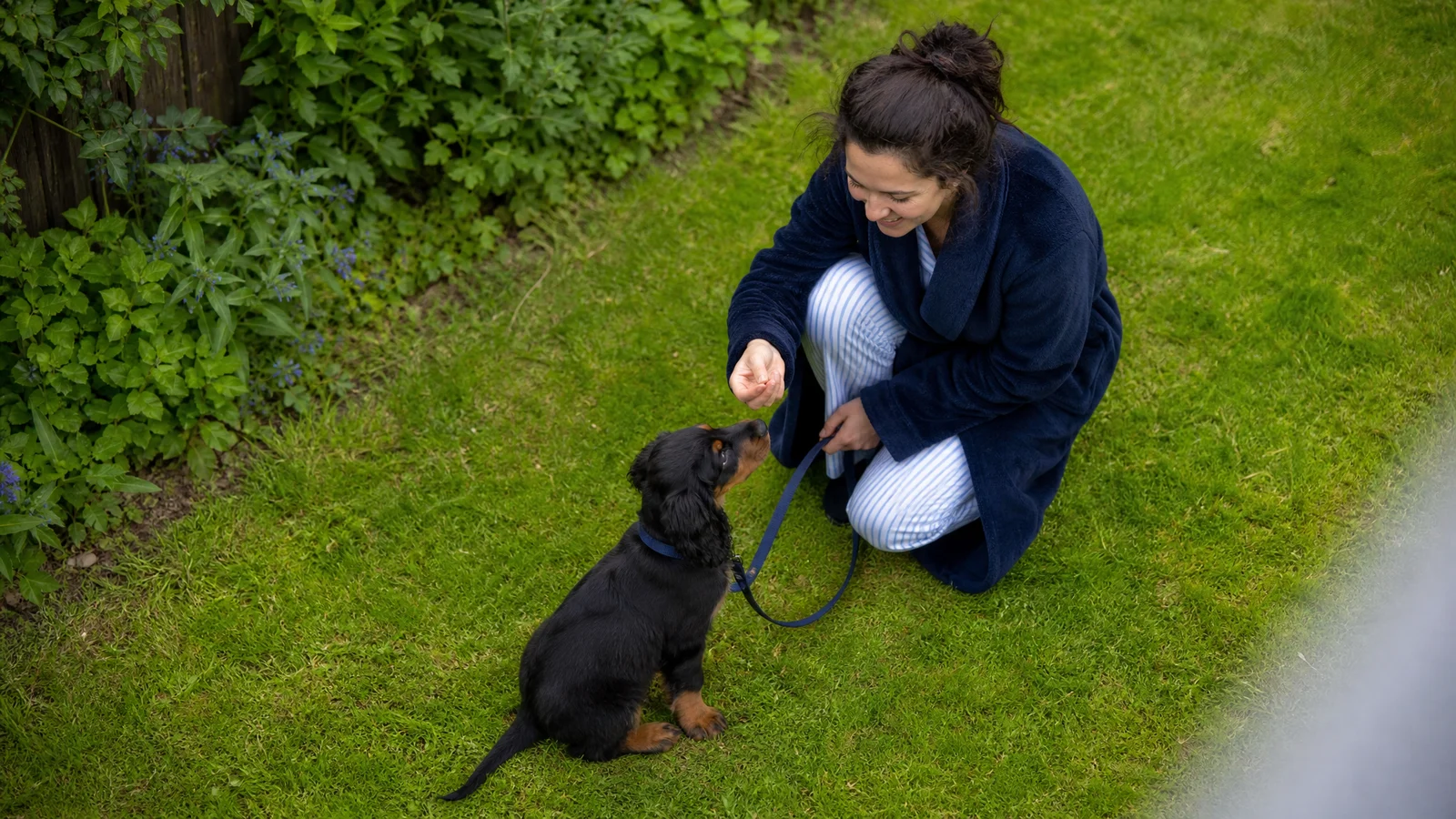
The standard advice is simple: pick a fixed schedule, carry the puppy out often, reward every success, and expect a clean dog within a few months. Gordon Setter owners tend to report something different with a large, slow-maturing puppy. One day the puppy seems to have it figured out, and the next they leave a puddle behind the sofa.
Our focus is the behavior and training of this one breed, and the plan below holds up, though it runs on the dog's calendar rather than yours. Done patiently, it gives you a close, relaxed companion who doesn't cost you your floors.
In this article, we'll go through the routine for the first weeks, the habit-building months, the long supervised stretch of a late-maturing puppy, nights and adolescent setbacks, and what a reliable adult looks like.
Eight to Twelve Weeks Sets the Potty Training Routine
The first weeks at home are about building a small, predictable world in which the right answer is easy to find. Everything here is reward-based, which suits a breed the parent club says can be trained without breaking their spirit and that does not respond well to heavy-handed obedience. Your job is to make one spot, one cue and one kind of reward feel like the obvious way the day works.
Choosing the Spot and the Cue
Pick one place outside and walk your puppy to it on a leash every time, then stand quietly while they investigate. A Gordon puppy is led by the nose, so the sniffing is part of the job rather than a delay, and the cue word works best when you say it once, softly, as the sniffing settles into circling.
The reward has to land while the puppy is still finishing. Praise or a treat right away teaches the connection, whereas a treat handed over at the front door teaches only that coming inside is pleasant. Save play and the fun part of the walk for afterward, so each trip has a clear beginning, middle and end.
Building the Daily Schedule
Young puppies need to go at fairly predictable moments, and a schedule built around those moments does most of the teaching for you. Take your puppy out at these times:
- First thing in the morning, before you check your phone or start the coffee.
- Right after every nap, since puppies often need to go within moments of waking.
- After meals and after a long drink of water.
- After play or a training session, when excitement tends to catch up with the bladder.
- Before being crated or left alone, and again as the last thing at night.
Keep meals at set times, because regular meals make regular breaks easier to predict. A crate with a divider keeps the sleeping space snug, and our guide to crate training and separation anxiety shows how to make it a comfortable den. Keep your voice low and warm, since a quiet marker word and a gentle stroke usually land better with this soft-natured breed than a squealing celebration.
Months Three to Four Build Potty Habits
By now most puppies have enjoyed enough successful trips that the routine feels familiar, and this is exactly when owners are tempted to relax. The better move is to keep the schedule and rewards where they are while you start reading the puppy. Circling, a sudden nose-to-floor search, drifting toward the door or a certain restless look usually appears moments before an accident, and noticing it lets you get outside first.

Many Gordons are talkers, and some puppies begin to use a particular sound or a bout of pacing when they need out. If you spot a pattern, answer it every time, even when it turns out to be a false alarm. Reward-based training works because something the dog really likes makes a behavior more likely again, and asking to go out is precisely the behavior you want to grow.
The aim in these months is to make the right choice pay off often and the wrong one pay off never. Keep a treat ready for every outdoor success and let it stay common until accidents are rare. Indoors, a pen, a gate or a leash looped to your belt keeps the puppy from being loose and unwatched.
A familiar piece of advice says that several clean days mean it is time to open up the house. With this breed we would wait longer, because a growing Gordon covers a lot of floor quickly, and one lapse in an unwatched room can undo more than it seems. Grant freedom one room at a time, and if a puddle appears, clean it with an enzymatic cleaner and shorten the leash for a few days.
Slow-Maturing Gordon Setters at Five to Eight Months
This is the stretch where Gordon Setters most often part ways with the textbook timeline. History has it that the Duke who developed the line would not shoot over his setters until they were 5 years old, because they were very wild when young and slow in maturing. You do not need to wait that long for a clean house, but the story is a fair warning that a puppy who looks nearly grown may still behave like a puppy.
The practical result is that supervision has to last longer than the calendar suggests. Keep the schedule intact, keep the leash on for potty trips, and treat each new room or situation as something to teach again from the start. Excitement is the usual culprit, since a boisterous puppy who has just greeted a visitor can forget everything they knew a minute earlier, so a few calm minutes before heading out help more than another reminder.
Gordons also put their noses to the ground, and the urge to follow a scent can carry them toward a busy road. Potty trips therefore belong in a fenced area or on a leash, never loose and unsupervised. If the walk to the spot turns into a tug of war, our piece on loose-leash walking for Gordons will help.
It also helps to remember what kind of dog you have. Gordons are described as stubborn yet very soft, smart and quick to learn, which explains why a fast learner can still be a slow finisher. If you wonder whether your puppy is behind, our look at how trainable Gordon Setters are goes into the temperament in more depth.
Overnight Stretches in Potty Training as the Bladder Grows
Nights are where owners most want a number, and the honest answer is that we have no reliable figure for this breed. A young puppy can wait less time than you hope, and the stretch lengthens gradually as they grow and settle into the household. Let your own puppy's behavior set the pace rather than a chart, and ask your veterinarian if you are unsure.
Gordons are closely bonded to their families, so keeping the crate in your bedroom for the early weeks is sound management. It lets you hear the first stirrings and respond before an accident, and it spares a puppy who dislikes being apart from you from fussing. You can move the crate farther away once nights are quiet and the puppy has proved reliable.
When the puppy wakes and needs to go, keep the trip dull so that nighttime never becomes playtime. A simple routine works well:
- Clip on the leash with very little talk or excitement.
- Walk to the usual spot and say your cue once.
- Give a quiet treat and a soft word the moment they finish.
- Go straight back to the crate and turn the lights off.
To stretch the gap, try moving the last drink and the last trip a little later in the evening and see whether the puppy sleeps on. A day of sensible exercise and sniffing tends to bring deeper sleep. If a dog who has slept through the night suddenly starts waking often or having night accidents, mention it at your next veterinary visit.
Adolescent Setbacks in Potty Training
Somewhere in the adolescent months, many owners notice that a puppy who was nearly reliable begins to slip again. A Gordon in this phase is physically large, distractible and more interested in the world than in their own bladder, so a long investigation along the fence line can easily outrank the cue word. This fits the breed's slow growing-up and is no evidence that the earlier training failed.
The best response is quiet and unglamorous. Return to the schedule that worked, make trips more frequent for a while, and reward outdoor success as generously as you did in the first weeks. When an accident happens, clean it and look for the cause: was the last break too long ago, was the house too open, or did a visitor interrupt the routine? Adjust the plan rather than the dog.
Staying calm is kinder and also well supported. A 2020 study of 92 companion dogs found that those from reward-based schools showed less stress and smaller cortisol rises after training. Veterinary behaviorists go further, stating that dog training of every kind should rely on only reward-based methods, which suits a sensitive Gordon as well as the science does.
If you find an accident after the fact, simply clean it up, because the puppy cannot connect anything you do to something that happened minutes ago. If setbacks stay frequent despite a tightened routine, a visit to your veterinarian is the sensible next step. Otherwise treat each lapse as information, keep freedom limited a little longer, and keep the rewards flowing.
What a Housebroken Gordon Setter Looks Like at Two
By two, a Gordon is usually well past the hardest part, though not necessarily past every slip. A dependable adult asks to go out, waits at the door or tells you in their own way, and handles a normal day without accidents. Gordons are fine being alone when the family is away, so a dog with a steady schedule and good exercise can hold a regular working-day rhythm.
Owners report that Gordons can be trained very successfully, but the skills hold up best when training is consistent and refreshed from time to time rather than taught once and assumed finished. Where owners described how long training took, it was a multi-year effort. That fits a breed that matures slowly and stays playful.
An occasional slip in a new house, during a busy holiday or when guests fill the home usually means the routine needs a short refresher. Go back to leashed trips, reward at the spot, and add a little supervision for a few days. A sudden change in a dog who has been reliable for a long time is different, and straining, frequent accidents or a clear break in habits are reasons to call your veterinarian.
So the long-term picture is a gentle one. Reliability tends to firm up well after the first year, later than the standard advice promises, and the odd lapse along the way is normal rather than a failure. Keep the routine steady, the rewards kind and the checkups regular, and the same patience carries into everything else, as our complete Gordon Setter training guide shows.
 Training basicsHow to Train a Gordon Setter: The Complete Guide
 Training basicsGordon Setter Leash Training: Stop Pulling and Lunging
 BehaviorSocializing a Gordon Setter With Kids, Dogs and Strangers