 Gordon Setter
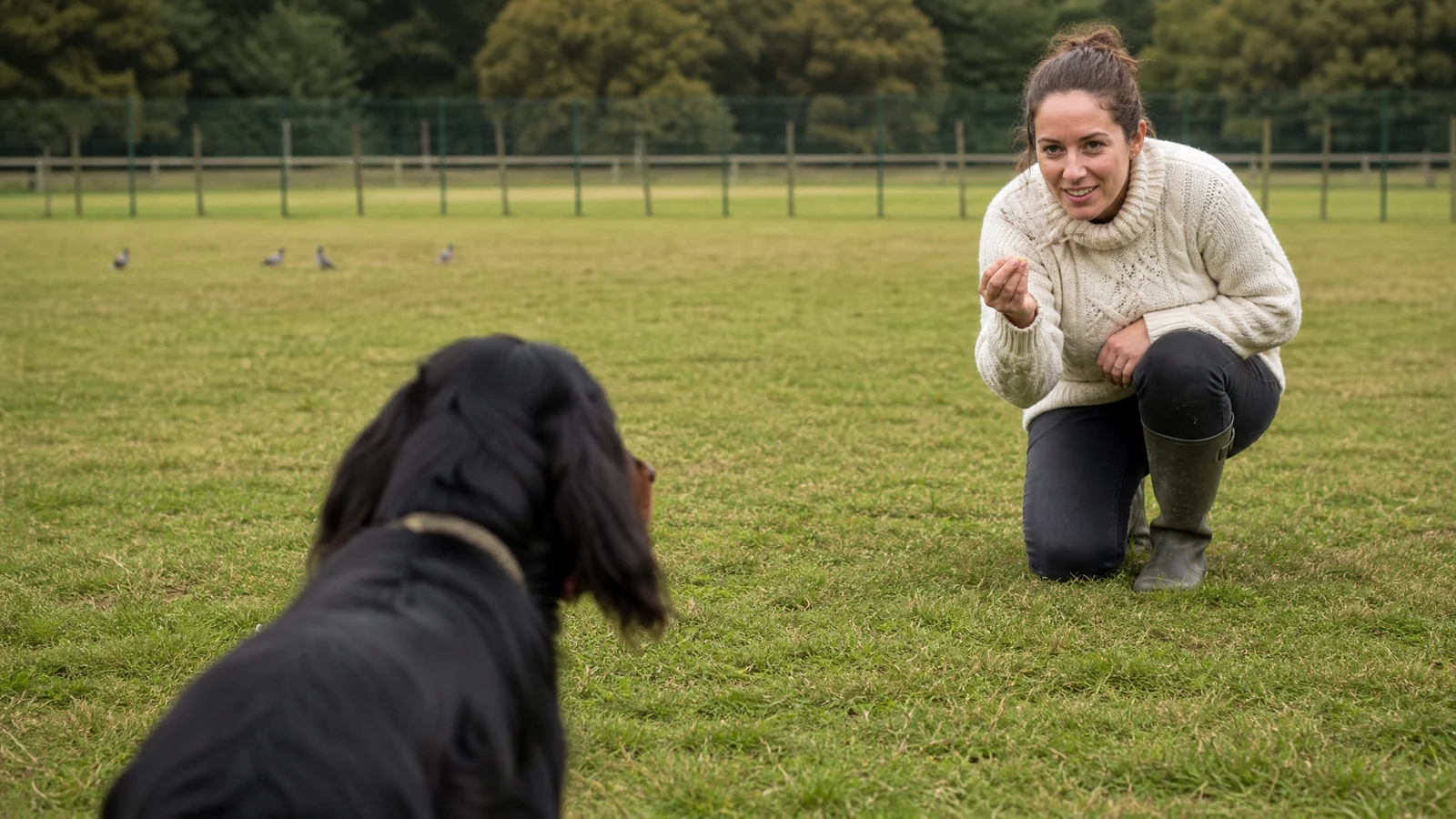
The most common recall mistake with a Gordon Setter is calling again and again, louder each time, after the nose has already taken over. By the third call the word is background noise, and your dog has just practiced ignoring you. The fix is quieter: call once, reward small steps that are easy to get right, and keep a long line on until the habit holds up against real scent.
This matters more for Gordons than for most breeds, because a strong nose and a slow-maturing mind can carry a dog toward traffic in seconds. Done well, you keep a bright, affectionate companion who still gets to enjoy the world. In this article, we'll go through why the nose beats a called name, how the method bends for apartment living, young children, a second dog and an owner who is out all day, and a two-week plan to start.
Why Gordon Setter Recall Slips Once the Nose Switches On
The breed club's advice is blunt: Gordons should never be allowed to roam freely, because they tend to put their noses to the ground and the hunting instinct may lead them after a bird or squirrel across a busy highway. We have trained this breed for many years, and we would go further. A Gordon with a lovely recall at home still needs a line anywhere near a road.
Why the Trail Outranks Your Voice
The breed is described as athletic and outdoorsy, bold, confident, and resolute in the field, and that resolve starts at the nose. Once a scent is strong, attention narrows and your voice competes with a signal your dog's body ranks first. They are not defying you. They are choosing between two rewards, and the trail is winning.
Age adds a second layer. History has it that the Duke would not shoot over his setters until they were 5 years old, because they were very wild when young and slow in maturing. Expect a long adolescence. Puppies who fly back at every call may blink at it later, once the nose gets louder. That dip means the trail got more valuable, not that your dog forgot.
Reading the Nose Before It Wins
A call that comes early is far easier to answer than one that comes late, so watch your dog's body and use these if-then checks on every walk:
- If the head is down and the body moves in a steady, committed line, the scent has taken over. Skip the call, walk up calmly and gather your dog with a treat.
- If your dog lifts their head toward a bird or squirrel, you have a short window to call once, cheerfully, and pay well.
- If your dog checks back with you unasked, mark it and reward it every time, since that habit supports everything below.
- If you called and your dog did not turn, do not repeat the word. Move closer, make the next try easy and pay it.
None of this makes the breed dull. They are very smart, learn quickly and live to please, though they can be stubborn, as we explain in our Gordon Setter trainability FAQ. Recall here is built the patient way: raise reward value before difficulty, change one thing at a time, and let a long line carry the risk.
The same instinct drives other habits, covered in the instinct behind common problems. The next sections apply the method to households with different weak points.
Apartment Life and Recall on Rented Fenced Ground
In an apartment, the usual diagnosis is that recall gets practiced too rarely and tested in the worst places, such as the front door or the sidewalk edge. Gordons adapt to a variety of living situations as long as they are assured of their family's love, but an athletic, outdoorsy dog still needs exercise and a plan. If you cannot give freedom every day, give structure every day, and book freedom where a fence supplies it.
Short Sessions in Halls and Courtyards
Hallways make a good first classroom because they are enclosed and full of scent. Call from around a corner or from the far end of the hall, say the cue once, mark the turn and pay at your leg. If neighbors' doors, strollers or an elevator ding make your dog miss, you asked for too much too soon, so shorten the distance.
Add a door habit at the same time. Teach your dog to wait at the apartment door and the elevator, release them with a cue, then call them back once the door is open. Several quick repetitions spread through the day beat one long session. Pulling toward smells in the hall belongs to our Gordon Setter leash training guide.
Long Line, Then Booked Fenced Space
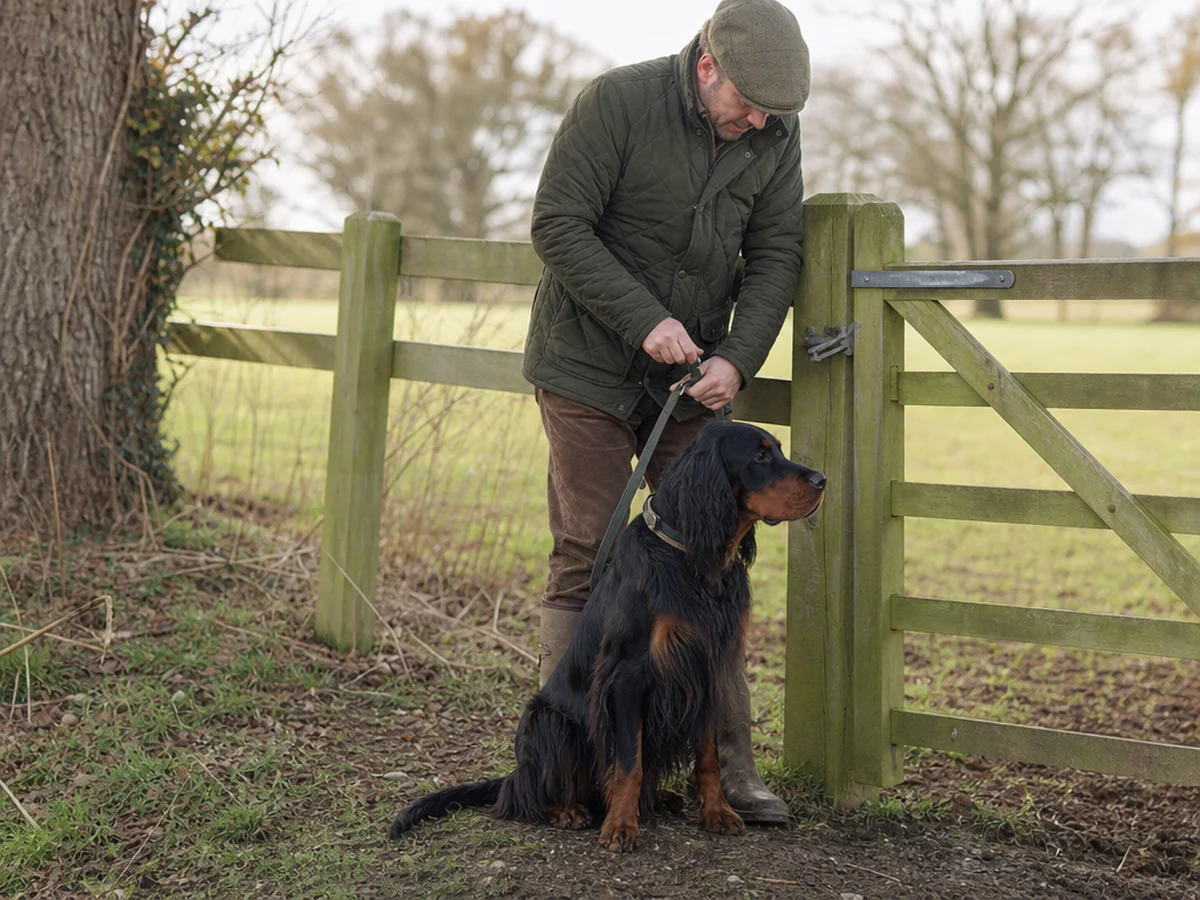
When the hall is easy, move to quiet outdoor ground. With a long training line, your dog can roam a little without being fully loose, and this breed needs that middle step for a long time. Clip it to a well-fitted harness, keep it clear of your legs and gather slack as your dog returns.
Let your dog sniff, call while their head is still up, mark, pay and release them back to the smell. That release is the point. Coming to you should never mean the fun ends, or your dog will learn to hover just out of reach.
For true off-leash time, rent or book enclosed ground: a private fenced field, a securely gated dog area or an indoor arena. Check the fence condition, the gates and how many other dogs are present. Go at quiet times, since Gordons tend to tolerate strangers rather than seek them.
Skip open fields beside roads and park edges that border streets. A quiet road is still a road.
Recall in a Home With Young Children
In a house with young children, recall rarely fails because of the dog. It fails because doors open without warning, several voices call at once, and games teach the dog that running away is the fun part. Children and Gordons are generally a good combination, especially when the dog meets children young, so the job is to keep a good match from teaching the wrong lesson.
An Adult-Only Cue and Door Habits
Start by making the recall word adult-only. A cue that a toddler shouts repeatedly with no result is spent before you begin. Children get their own jobs, like handing over a treat when the dog arrives or asking for a sit. Once your dog answers adults reliably, let a child call from close range with an adult beside them paying the dog.
These household habits protect both the cue and the door:
- Only adults use the recall word for the first weeks, and it is said once.
- Baby gates or closed doors separate the dog from the entrance whenever children are coming and going.
- The dog goes through any outside door only after a release cue, with a treat for waiting.
- Children never chase the dog. A dog who runs off with a sock or toy is met calmly and traded for a treat.
- Running games happen in a closed room or fenced yard and stop the moment the dog walks away.
Games, Teasing and Retreat
One breed trait deserves attention. If a child keeps teasing, a Gordon will tend to remove themselves from the child's reach rather than growl. That is polite, but it can look like selective hearing. Never call a retreating dog back into the same child. Give your dog a resting place the children leave alone, and call them only toward something good.
Reward-based training does not mean your dog gets to do whatever they like. What helps most is structure, routine and guidelines, and in a busy house that means the same word, the same payoff and the same door rules from every adult.
A Two-Dog House Sharing One Recall Word
In a house with two dogs, the usual diagnosis is that one dog's recall is carrying the other. Whoever turns first collects the treat, the slower dog learns little, and when one dog bolts after a squirrel the other follows at once. Your single cue now has to beat two noses plus the sight of a running friend, so each dog needs the skill alone before you ask for it together.
Teaching Each Dog Alone
Put one dog behind a gate with a chew while the other works through the indoor and yard steps with the shared word. Then call both from close range, say the cue once, and pay each dog the instant they arrive. If one dog hesitates, give that dog the better treat for arriving at all.
Fixing the Group Chase Effect
Two dogs create their own problems, and each has a practical answer, as this table shows:
| What you see | What to do |
|---|---|
| One dog always arrives first | Pay the first dog briefly and the slower dog richly |
| One dog dashes and the other follows | Call both early, before the dash, with each dog on a line held by a separate person |
| The slower dog waits to see what the faster one does | Practice with the slower dog alone until they turn on the first call |
| The two start playing chase instead of coming | Call each dog separately from a different spot and pay each one |
The better recaller is a trap, because their reliability makes you relax. Never take both dogs off the line anywhere unfenced on the strength of one. Even in a fenced space, test the weaker dog alone often, since a dog who follows a friend has not shown a recall of their own.
The Gordon Setter Whose Owner Works All Day
Gordons are closely bonded to their family, but they are fine alone when the family is away, so a long workday is not the main problem. The problem is what happens when you get home. A dog with stored-up energy meets a walk where the call has to compete with every smell outside, and the nose wins. Your plan is to spend that energy in ways that build recall instead of working against it.
Compact Morning and Evening Sessions
Before work, run a few quick reps in the hall or yard with your best treats, then a short scent game. In a simple nose work game, you hide smelly treats in some of several open cardboard boxes and let your dog sniff them out, so the finding rewards them. That gives the breed's best talent a job you control.
In the evening, read your dog. If they are wound up, sniff first on a long line, then do reps. If they are calm and fed, do reps first while attention is high, then release them to sniff as the reward. Either way, end the session on a win.
A Walker Who Uses Your System
A walker or sitter can undo a week of work in one afternoon by using a different word or letting the dog loose. Give them the same cue, the same long line, the same treats and a plain rule: the line stays on, the word is said once, and anywhere unfenced is line-only. Walk one route together first so they see your timing.
Ask for a note on any near miss so you can drop back a step. If alone time itself is shaky, build it first with our crate and separation guide, because an anxious dog is hard to teach anything.
Fourteen Days of Gordon Setter Recall Practice
Treat these two weeks as a first layer, not a finished recall. A slow-maturing breed will not complete the job in fourteen days, but you can build the habit and learn what your dog has actually earned. Each week has one goal, and you step back whenever your dog starts missing.
Week one is indoor and yard repetitions with high-value rewards. In the first days, call from a short distance inside, once, mark the turn and pay with something special. Midweek, call from other rooms with household noise going on, then move to a fully fenced, quiet yard. End the week with mild distractions there, and release your dog to sniff after each arrival.
Week two moves to a long line, with distance and distraction added one at a time. Start in a low-scent spot, call while the head is up and pay. Then lengthen the distance or pick a place with more smells, never both on the same day. If your dog misses more than they hit, go back to week-one conditions for the next session instead of calling louder.
At the end of week two, review what your dog has earned:
- If your dog turns on the first call in the yard with a mild distraction, the line can get longer in quiet places.
- If they still miss around scent, keep the current distance and keep the line short and on.
- If every miss happened near one trigger, such as birds, practice there only at a distance until your reward wins.
- If everyone in the household uses the same word, keep it. If not, fix that before anything else.
Keep regular vet visits on your calendar, and mention it if a dog who used to respond suddenly stops, since comfort or hearing problems can look like stubbornness. The rule for this breed holds well past day fourteen: a Gordon's recall is built and managed, never assumed. The long line stays on, and anywhere a road, a bird or a squirrel could take the nose out of your reach stays line-only or fenced until your dog has earned more.
This is general information, not medical advice. Frequent training treats add to your dog's daily food, and a sudden change in how your dog responds can have a physical cause, so check with your veterinarian about treat amounts and any change you notice.
 Training basicsHow to Potty Train a Gordon Setter Puppy
 Training basicsHow to Train a Gordon Setter: The Complete Guide
 Training basicsGordon Setter Leash Training: Stop Pulling and Lunging