 Gordon Setter
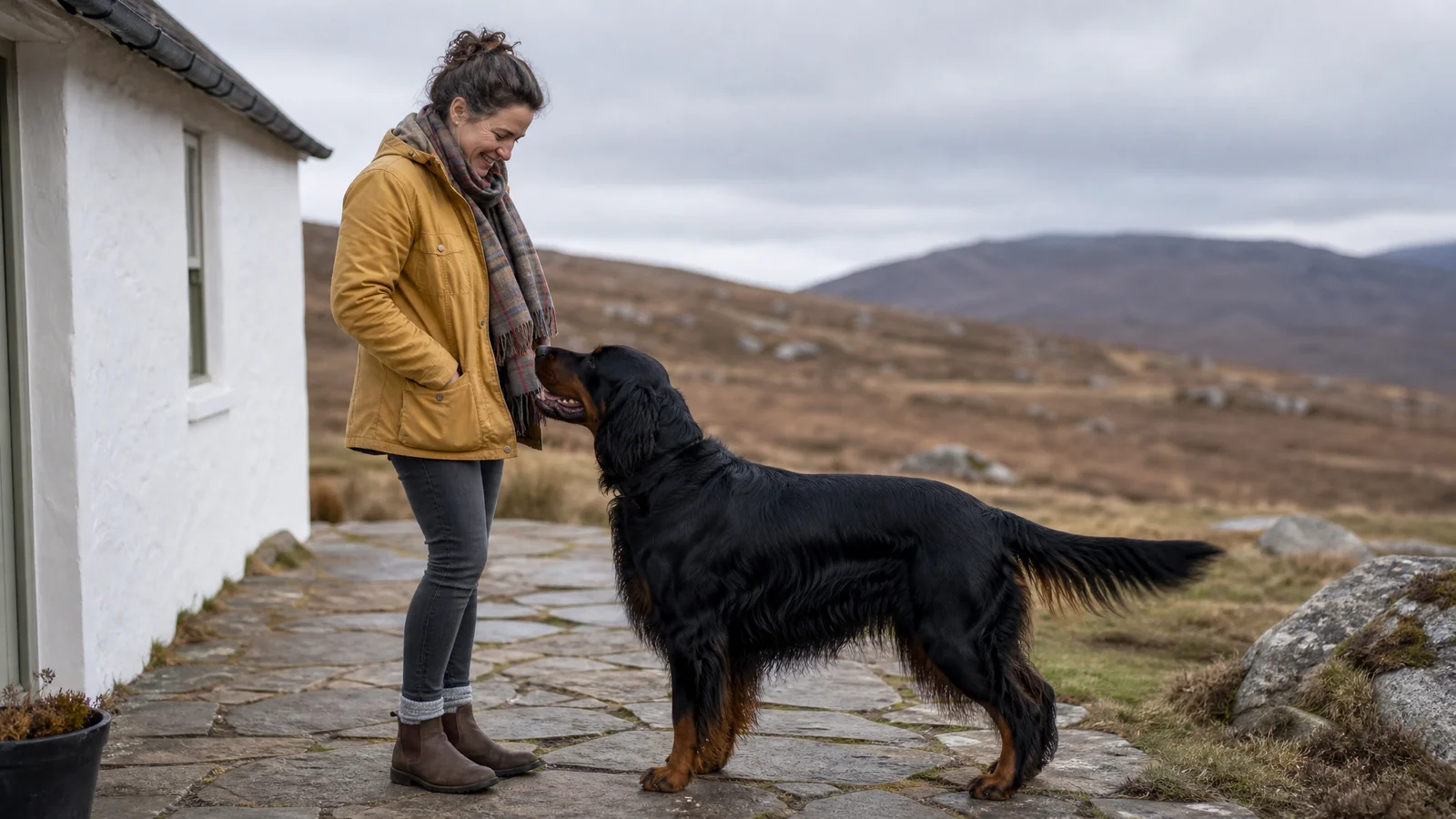
A Gordon Setter may reach a visitor carrying the energy of the doorbell, a run down the hallway and a familiar voice. By the time front paws leave the floor, the greeting is only the last part of the sequence. Waiting to react at that moment misses the accumulating excitement and asks the guest to solve a training problem at arm's length.
In this guide, you will lower the greeting load before contact, reward grounded approaches and give familiar people a simple way to stop while the dog can still think. Children and reluctant guests get a separate safety plan. We will also distinguish jumping on people from counter surfing so two behaviors that use the same tall body receive different routines.
Measure the Gordon Setter Jumping Load
List what happens in the minute before jumping. The dog may hear a car, race to a window, bark at the knock and slide across a smooth floor before the door opens. An owner may repeat cues while reaching for a collar. A visitor may lean in, speak loudly and raise both hands. Each event adds motion or social pressure.
Observe three arrivals without using them as tests. Keep the dog behind a gate and record the first visible change, the point when food is no longer interesting and how long recovery takes. Dogs Trust jumping advice notes that excitement, anxiety, frustration and learned attention can all contribute. The body language should guide the plan.
- Record whether the dog can turn away from the entry for a tossed reward.
- Notice loose curves and wiggling separately from stiffness, retreating or frantic grabbing.
- Write down which people, voices, clothing or movements change the response.
- Note whether exercise immediately before a visit settles the dog or increases arousal.
A sudden change in greetings can have a physical contributor. Keep regular veterinary visits and speak with your veterinarian about new sensitivity, pain, confusion or behavior that appears abruptly. Training plans work better when discomfort and illness have been considered.
Give the load a simple low, medium or high rating. Low means the dog can eat, turn and respond behind the barrier. Medium means movement is fast but still interruptible. High means the dog cannot disengage or shows fear. Practice greetings only in the low range, and use separation and professional guidance for repeated high responses.
Keep the first helper familiar and calm. Stop while the dog can still turn away, because one clean repetition is enough evidence for the next plan.
Lower-Energy Setup Before Jumping
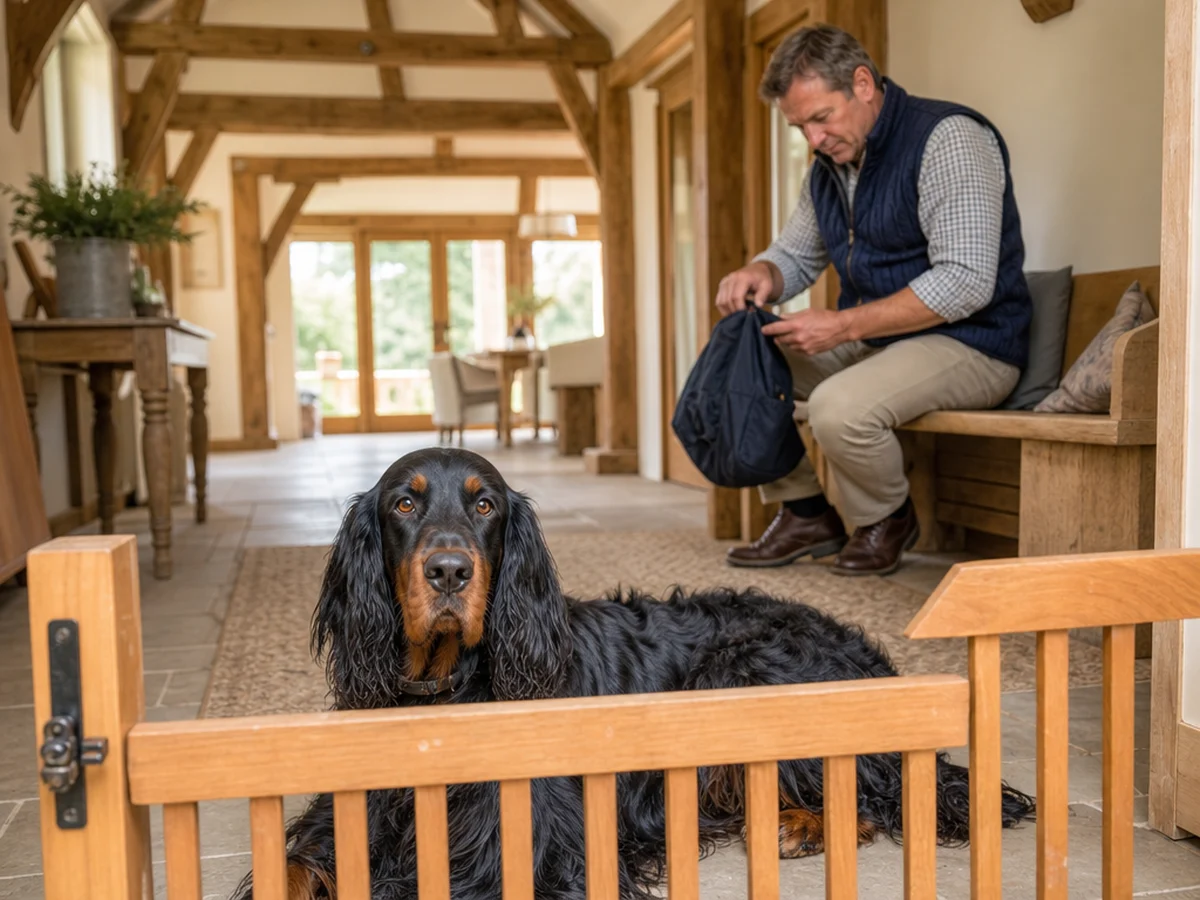
Change the approach before asking for a polite hello. Put the dog behind a secure gate or in another comfortable room before the visitor arrives. Provide water and a familiar settling activity. Ask the visitor to enter, place belongings down and sit or stand sideways before the dog comes closer.
Practice the Sound Without a Person
Use a quiet recording of the knock or doorbell while the dog is several feet from the door. Play it once, scatter food away from the entry and stop. Increase volume across sessions only while the dog can eat and turn. The sound should predict moving away from the threshold, not sprinting toward it.
Practice a Person Without a Greeting
Have a helper enter while the dog remains behind the barrier. The helper ignores the dog and sits down. Reward looking and then turning back toward the handler. End without contact. This separates “a person arrived” from “social access happens immediately.”
Do not exhaust the dog before rehearsals. A sniffing walk and ordinary needs may help, but intense fetch or chaotic play can add more arousal. The site's Gordon Setter socialization guide can help plan comfortable exposure without making every sighting an interaction.
Prepare the human side as carefully as the dog's side. Put treats by the barrier, clear the entry of bags and shoes and tell the helper where to stand. A rehearsal should not begin with the handler searching a cupboard while the visitor improvises. Predictable positions lower movement for everyone.
End after two or three quiet entries. Repeated door openings can build fatigue and anticipation even when each repetition looks successful. A short session preserves the calm pattern and gives you useful information about what to change next time.
Grounded Gordon Setter Greetings Replace Jumping
Begin with one familiar helper and the dog on a loose leash or behind a gate. The helper approaches only while all four paws remain on the floor. The handler delivers the marker, then places food near the dog's front feet. If paws lift, the helper turns and steps away without speaking, touching or pushing.
This makes human access the consequence of the grounded choice. Humane World guidance combines management with reinforcement of an alternative. A sit can be useful, but do not make it the only acceptable posture. Standing with four paws down is safer than a frantic sit that launches upward immediately.
Keep contact short. The helper touches the shoulder or chest for one second, then pauses. If the dog stays grounded and moves closer with a loose body, another second can follow. If the dog jumps or moves away, contact stops. Three calm seconds are more useful than a long greeting that ends in repeated failure.
Reward the Return to the Floor
Reward the return to the floor even if a jump happened. The helper should already be moving away, so the handler can mark grounded paws and feed low without reopening contact immediately. This prevents the landing itself from launching another approach. After a pause, decide whether the dog is ready for one easier greeting or should finish.
Vary posture gradually. Practice with the helper seated, then standing still, then taking one step. A waving arm, a hug between people and someone carrying groceries are later lessons. Change one social detail while the distance and barrier remain familiar.
Familiar People and Gordon Setter Jumping
Familiar people often produce the biggest response because they have a history of exciting greetings. Give them one instruction before the door opens: approach for grounded paws and step away when paws lift. They should keep hands close to the body and avoid bending over the dog.
The Returning Family Member
The person coming home can enter behind a gate, put bags away and wait for the dog to take food from the floor before approaching. If jumping starts, they step back through the gate. The reunion is delayed, not canceled, and quiet behavior makes it resume.
The Enthusiastic Friend
Ask the friend to sit sideways and toss a reward away from their knees. When the dog returns, the friend waits for four paws down before touching. If they cannot follow the rule consistently, keep the barrier closed and let the visit proceed without a greeting.
Everyone should use the same consequence, but they do not need to reward at an identical pace. A person with limited balance may never greet a free-moving dog. A calm wave from behind the barrier can be the full interaction, and that boundary deserves the same respect as the dog's choice to leave.
Post a two-line reminder near the entry: “Approach for four paws down. Step away when paws lift.” Long explanations are hard to remember during a reunion. The handler remains responsible for the leash, barrier and rewards while the arriving person follows only those two rules.
Rehearse the rule without the dog once. A helper who can step away smoothly is less likely to freeze, push or accidentally turn jumping into play.
Safe Jumping Rules for Children and Guests
Children should not serve as practice helpers for a large, excited dog. Use a closed door or sturdy gate and active adult supervision. Give the child a route that does not pass the barrier closely. Toys and food stay on the child's side so the dog has no reason to reach through.
Reluctant visitors do not need to offer a hand or tolerate a greeting. Tell them the plan before arrival and provide a dog-free seat and path. AVSAB's humane training statement supports environmental management and reinforcement rather than intimidation. Safety can be created without forcing either participant into contact.
If the dog barks, freezes, retreats, growls or repeatedly lunges as people approach, stop greeting practice. Increase distance and seek qualified behavior help, starting with a veterinary check. Fearful behavior needs a plan for emotion and safety, not simply stricter four-paws rules.
Plan the end of the visit too. Movement rises when guests stand, collect coats and say goodbye. Move the dog to the prepared gated area before coats and bags are gathered, then give the same settling option used at arrival. A calm entrance does not guarantee a calm departure.
Outdoors, decline surprise greetings when there is no room to step away. Cross the street, make a turn or tell the person that the dog is training. Protecting practice is more useful than apologizing after a jump, and no stranger is owed contact with the dog.
Jumping and Counter Surfing Need Separate Plans
Jumping on a person usually seeks access, attention or relief from emotion. Counter surfing seeks food or an interesting object. Both involve height, yet the relevant reward and prevention are different. Treating them as one vague rule about “being down” makes it harder to see what is teaching each behavior.
| Situation | Prevent Rehearsal | Reward Instead |
|---|---|---|
| Visitor entry | Gate and delayed access | Four paws down as person approaches |
| Family reunion | Brief separation while arousal falls | Grounded return for short contact |
| Kitchen counter | Clear surfaces and block the room | Mat behavior away from food |
Use the separate Gordon Setter counter-surfing plan for kitchen shifts, leave it and food storage. A dog can improve at greetings while continuing to search worktops, or learn a strong mat while still jumping on a beloved friend. Progress should be measured in the correct setting.
Keep records separate as well. For greetings, count approaches that remained grounded and contacts ended calmly. For counters, record access failures and completed mat shifts. Combining them into one score hides whether the social routine or the food-access routine actually needs repair.
Fade the Gordon Setter Greeting Setup
Reduce support one element at a time. The helper can stand instead of sit, the gate can open while the leash remains on or the greeting can occur nearer the entry after the visitor is settled. Keep a retreat route and restore the easier setup when paws repeatedly lift or the dog stops taking food.
Judge progress by earlier choices: turning from the doorbell, waiting while a person enters, approaching in a curve and ending contact before jumping. Those decisions show that the greeting load is becoming manageable. A reliable Gordon Setter hello is not silent obedience at the threshold. It is a short, optional interaction that people can pause and the dog can leave with four paws still on the floor.
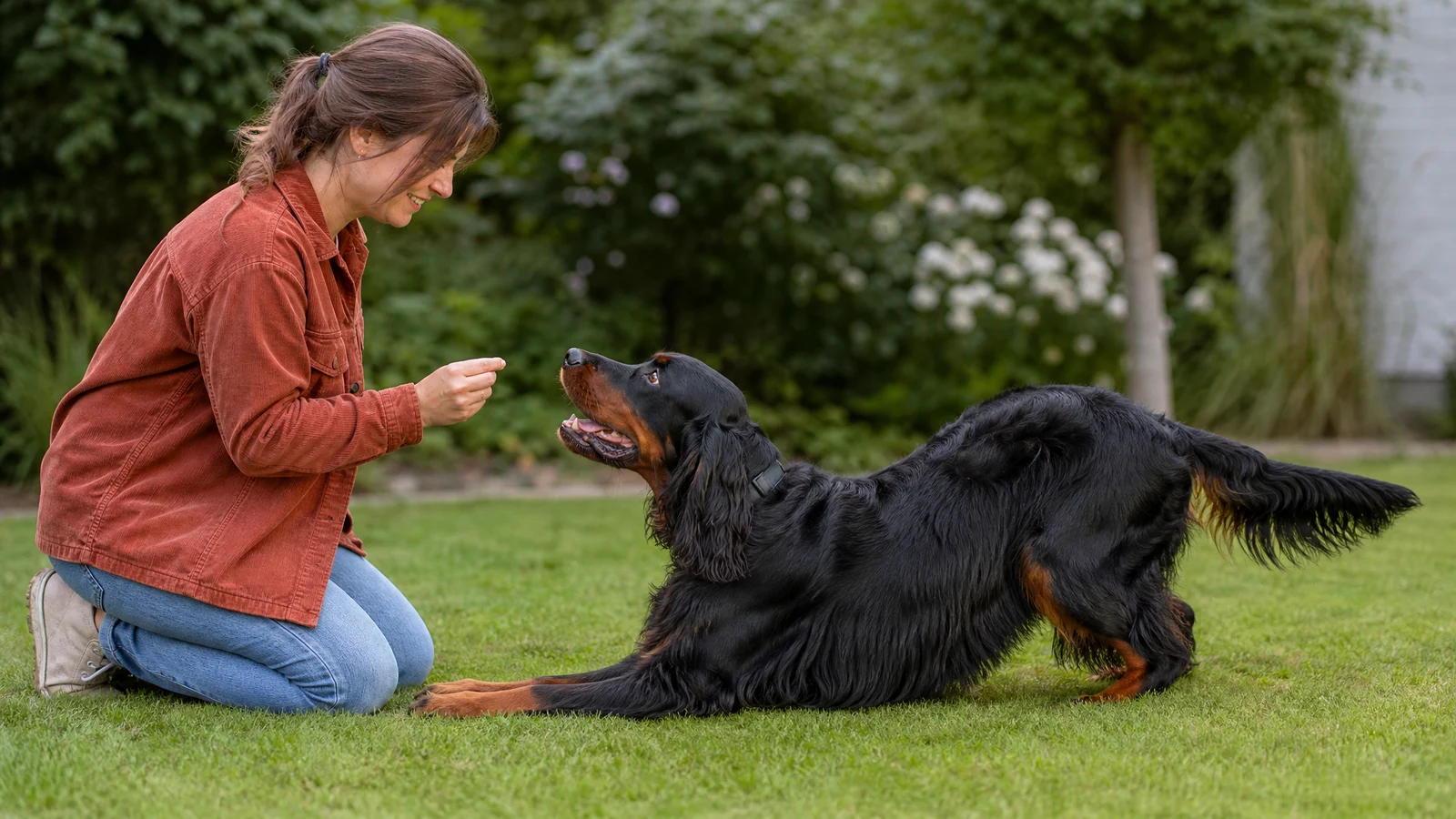 Training basicsAre Gordon Setters Easy to Train? Temperament and Trainability FAQ
 BehaviorCommon Gordon Setter Behavior Problems and the Instinct Behind Each
 Training basicsCrate Training a Gordon Setter and Preventing Separation Anxiety