 Gordon Setter
10 Gordon Setter training topics
Every common Gordon Setter challenge, with first steps and guides to read.
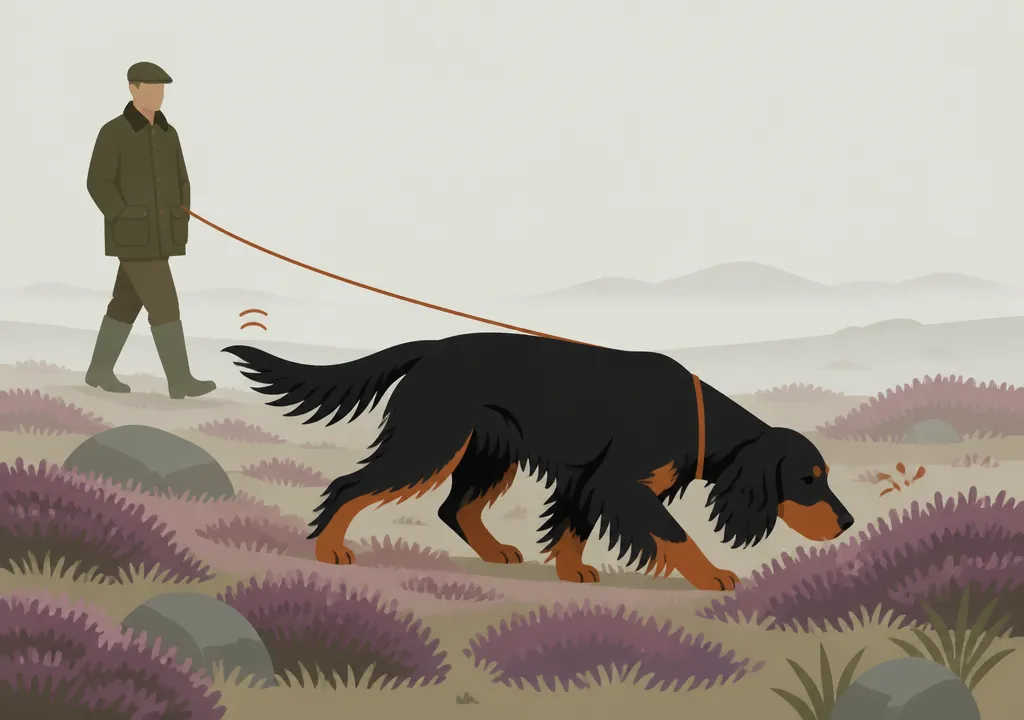
Nose on the ground
Walks that let a setter use that nose.
A Gordon Setter can spend a walk reading the ground while the handler keeps asking for forward motion from several feet behind. That attention is not wasted or deliberately rude. The breed was developed for field work, and the AKC breed profile describes a substantial sporting dog capable of sustained work outdoors. A planned search gives that equipment a beginning, a question and a finish.
In this guide, you will build Gordon Setter nose work as a small course rather than scatter food whenever the dog looks restless. We will set a safe search area, establish a start ritual, move from indoor finds to outdoor scent and lay one short track. You will also learn what to ask a class instructor and how to bring an excited searcher back to ordinary household life.
Read the full guide: Nose Work and Tracking for Gordon Setters
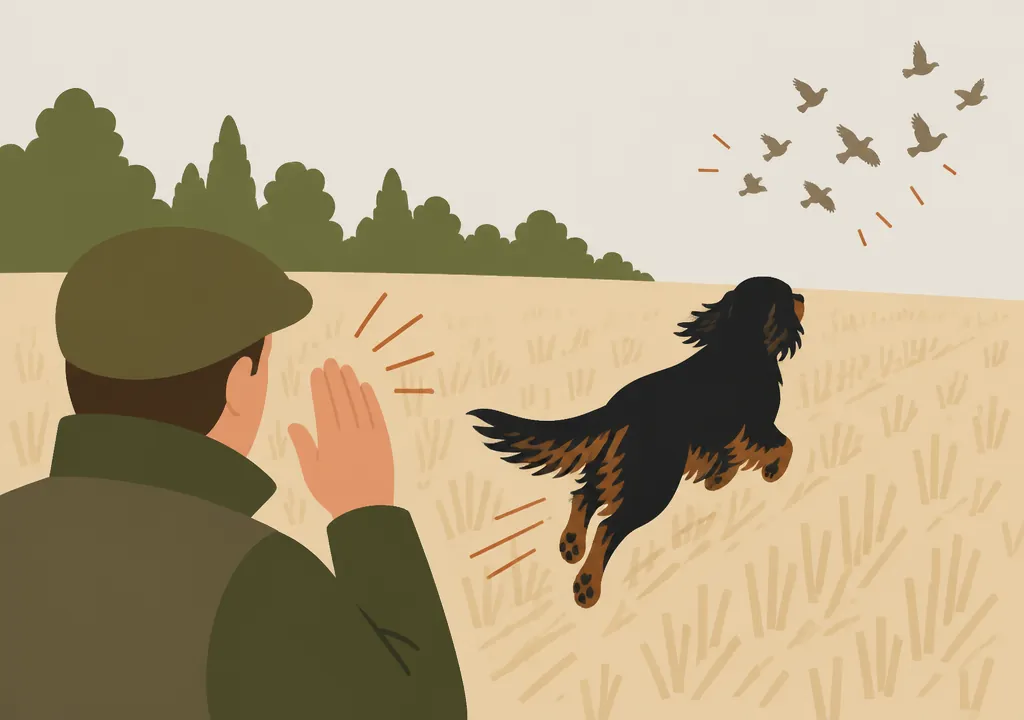
Recall in the field
Come back, even from the birds.
Calling again, louder each time, is the most common Gordon Setter recall mistake, since by the third call the word is noise. Call once, reward small easy steps and keep a long line on.
The full guide explains why the nose beats a called name and ends with a two-week plan.
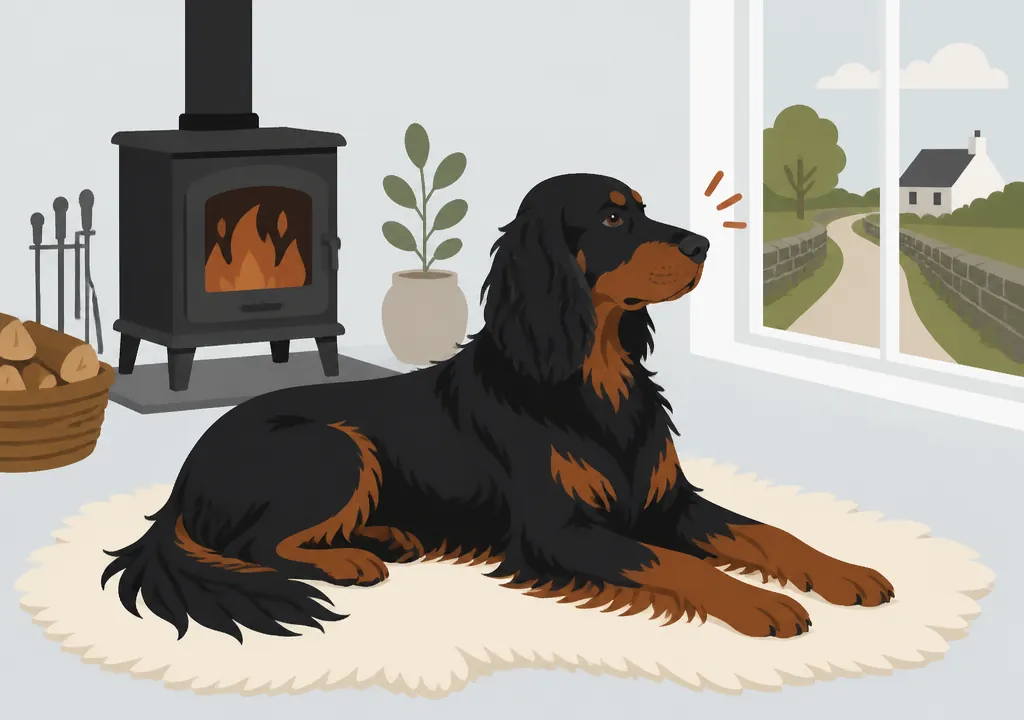
Time alone
Calm alone time for a loyal dog.
Some Gordons rest on the crate bed while the family is out, others pace and cry until someone returns. Owners giving steady, moderate activity describe a dog content to relax, and handling decides whether energy and stubbornness become problems.
The full guide builds crate comfort and calm alone time step by step.
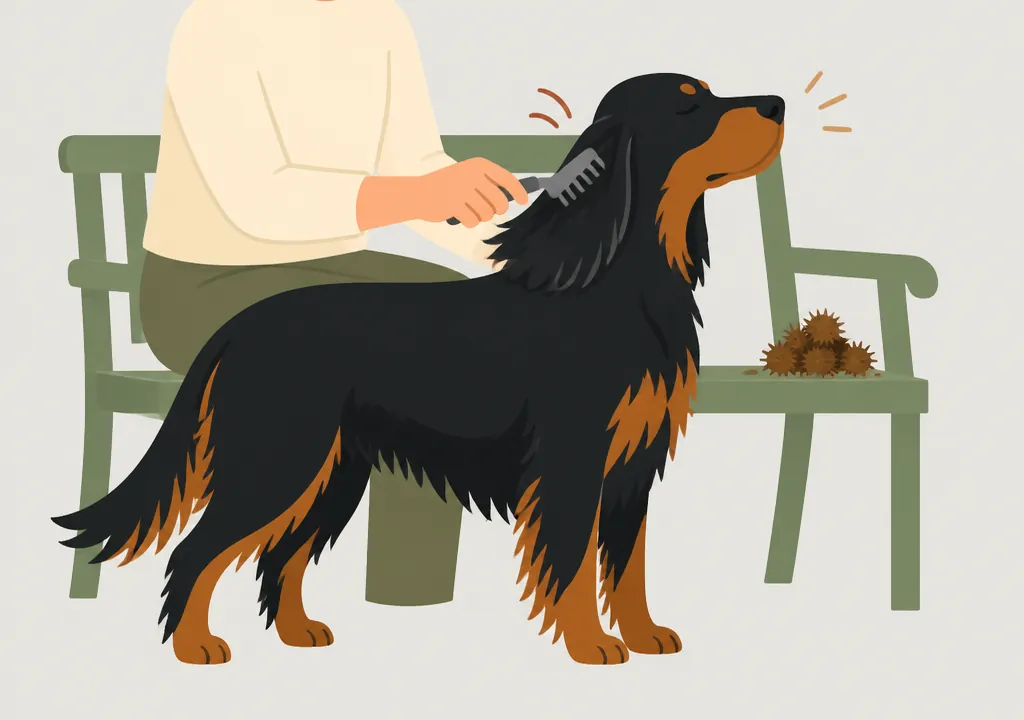
Brushing and feathers
Make coat care calm and easy.
A quick pass over a Gordon Setter's back can leave the coat looking polished while tangles tighten at the ear base, along the armpits and through the long leg and belly feathering. Those are the places where motion, dampness and fine hair meet. Effective Gordon Setter grooming therefore follows a body route instead of stopping when the visible surface looks tidy.
In this guide, you will map that route, choose secure footing and work through feathering, ears and feet without turning care into a wrestling match. Each area will be paired with a start cue and a real pause. We will also separate routine brushing from trimming decisions and show when a groomer or veterinarian should take over.
Read the full guide: Grooming a Gordon Setter: Feathering, Trimming and Handling
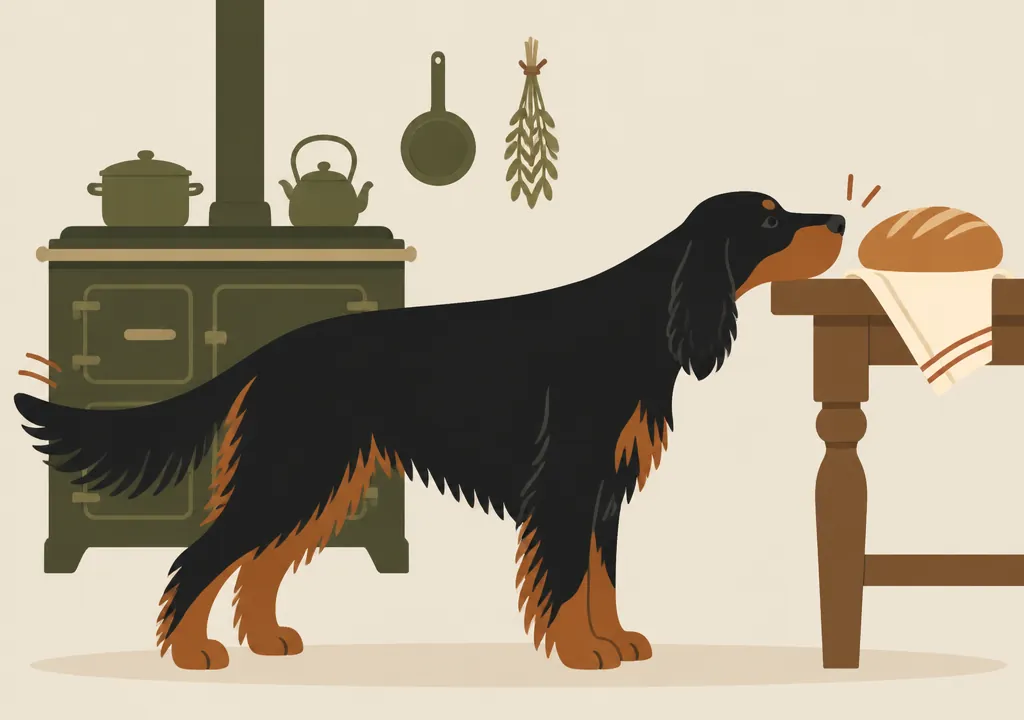
Counter surfing
Long legs, tempting kitchen.
One forgotten sandwich can teach a Gordon Setter more about counter surfing than several interrupted attempts teach about staying down. The reward arrives immediately, smells powerful and appears at the dog's natural head height. Scolding after the food is gone cannot undo that result, and a keen nose will keep checking the place where it worked.
In this guide, you will run food preparation as a kitchen shift with a clear opening, a mat job, separate leave-it practice and a release. The first task is removing every payoff. The training then gives the dog useful work while people cook, serves food and clean up, without testing manners against an unsafe or irresistible counter.
Read the full guide: Why Gordon Setters Raid Kitchen Counters and What to Teach Instead
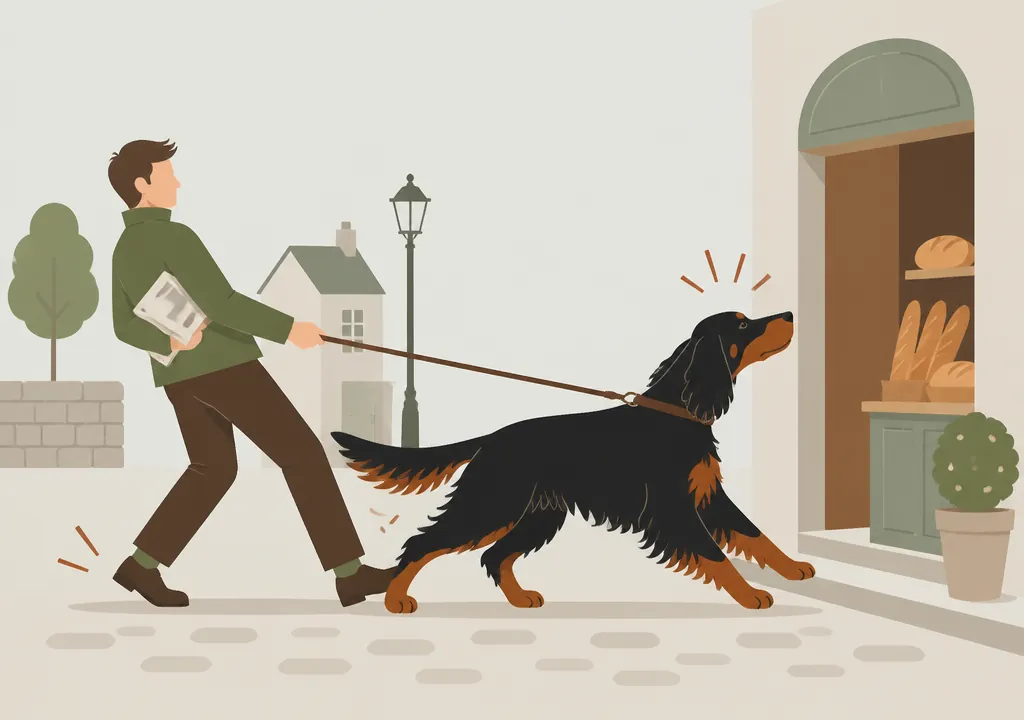
Pulling on the leash
Loose leash walks with a strong dog.
Leash training a Gordon Setter starts the week the puppy comes home and often runs past the first birthday, since the adult weighs 45 to 80 pounds and matures slowly. Focus is the real work for a nose-down dog.
The full guide ends pulling with rewards and plans walks around focus.
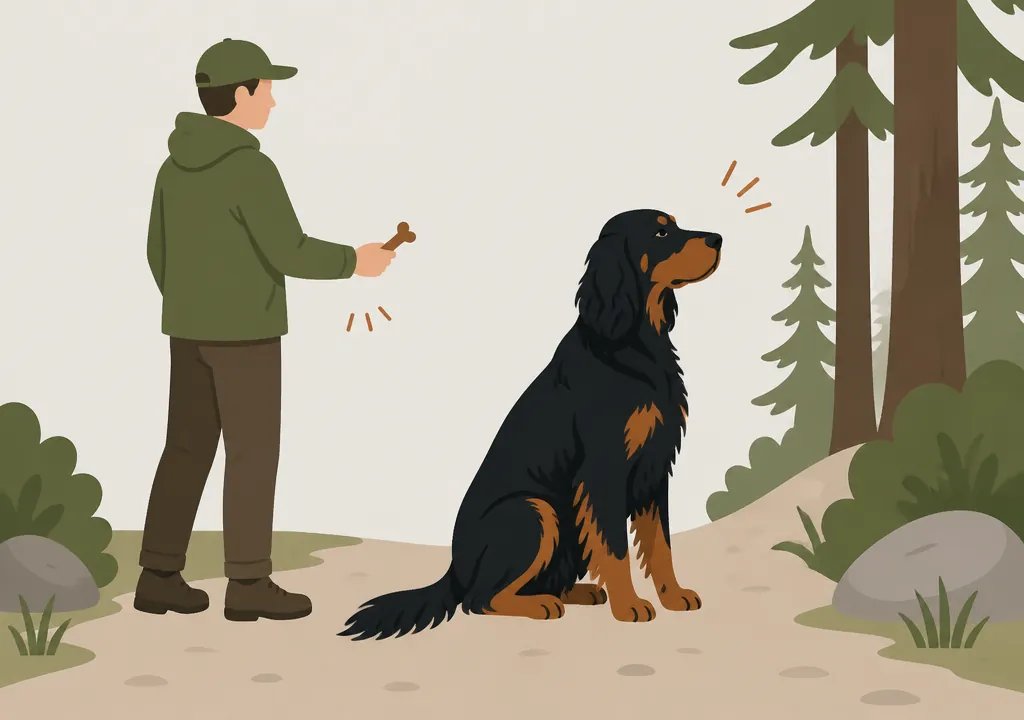
A stubborn streak
Find rewards that motivate a thinker.
Sit lands in the kitchen, then on the sidewalk the Gordon Setter acts as if the word was never spoken. That is temperament, not defiance, quick to learn, easily pulled off by a smell and slow to grow up.
The full guide shows which rewards keep a thinker working with you.
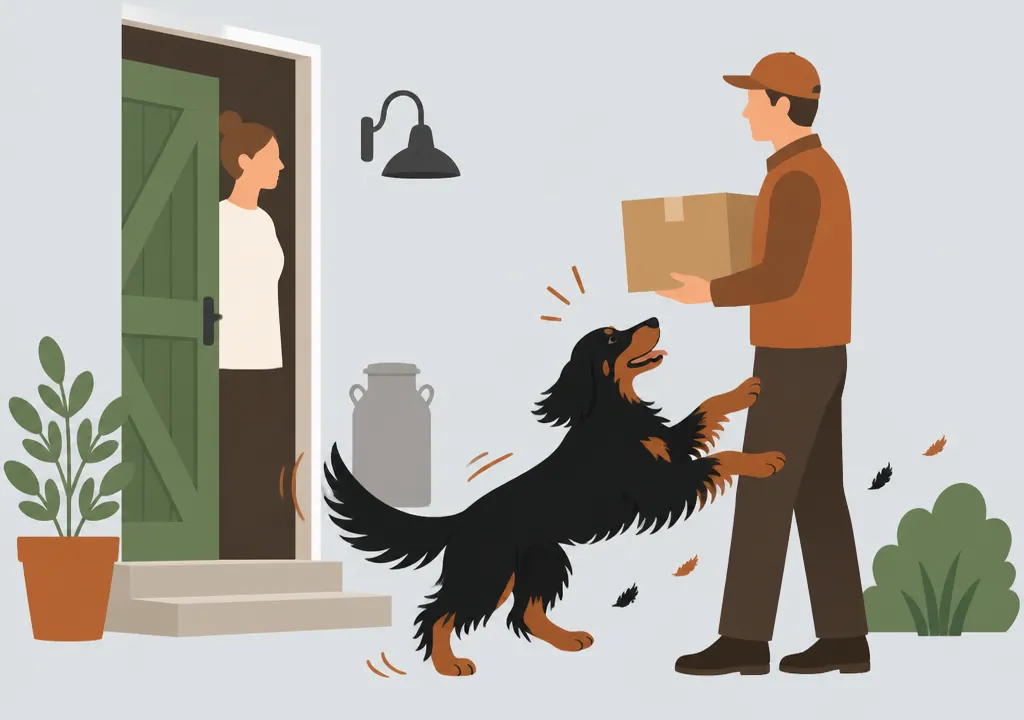
Overexcited greetings
Calm hellos at the front door.
A Gordon Setter may reach a visitor carrying the energy of the doorbell, a run down the hallway and a familiar voice. By the time front paws leave the floor, the greeting is only the last part of the sequence. Waiting to react at that moment misses the accumulating excitement and asks the guest to solve a training problem at arm's length.
In this guide, you will lower the greeting load before contact, reward grounded approaches and give familiar people a simple way to stop while the dog can still think. Children and reluctant guests get a separate safety plan. We will also distinguish jumping on people from counter surfing so two behaviors that use the same tall body receive different routines.
Read the full guide: Stopping a Gordon Setter From Jumping Up and Counter Surfing
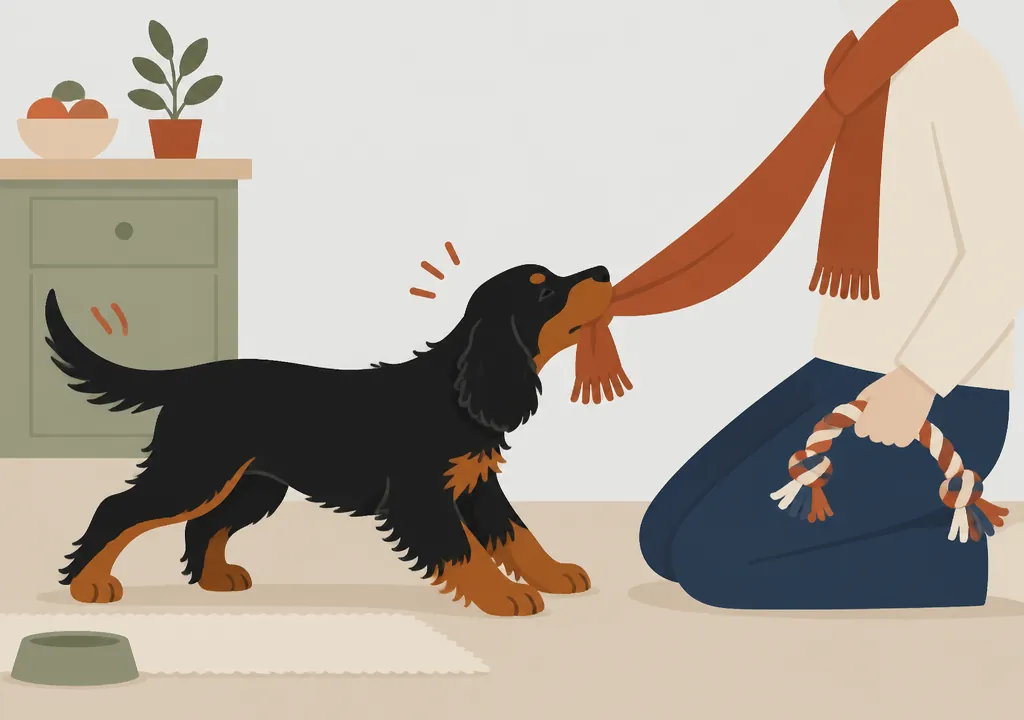
Puppy mouthing
Soft mouths from day one.
Waiting for a Gordon Setter puppy to grow out of mouthing fails. The breed scores 5 of 5 for energy, and a wound-up puppy barely hears a no, so meet the energy and give the mouth a job.
The full guide covers chew outlets, calm-down routines and body cues before a bite.
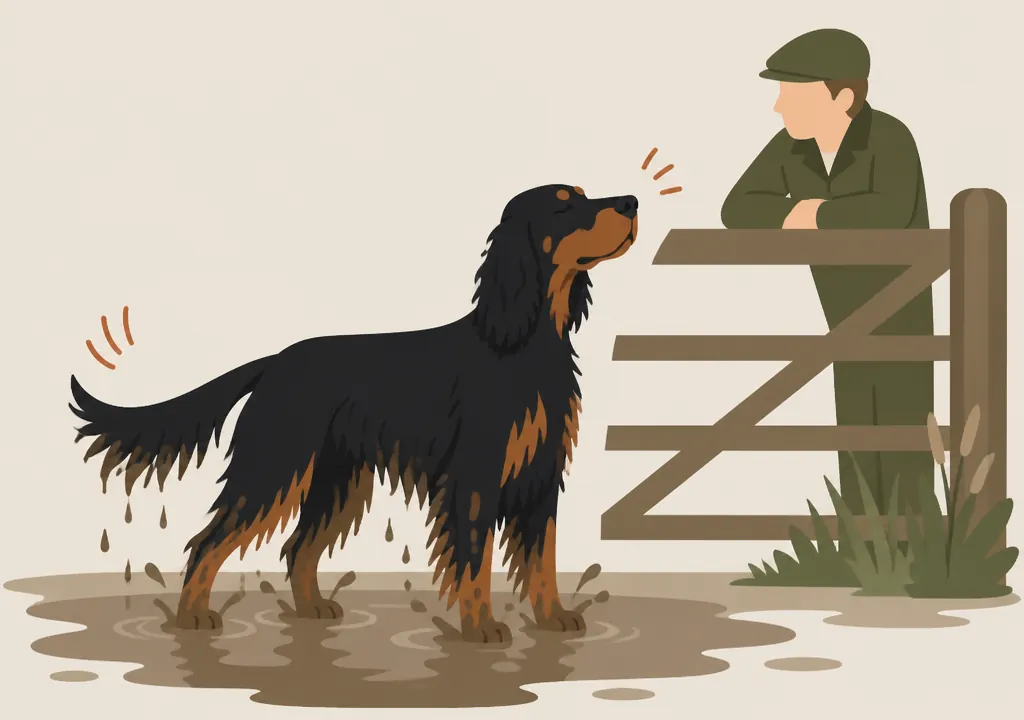
The long teenage phase
Setters mature slowly, so patience pays.
Most advice says a puppy is trained in a year, but the Gordon Setter club calls them very wild when young and slow in maturing. A one-year plan ends in firmer methods this soft-natured breed resents.
The full guide plans the first two years in stages, eight weeks to maturity.