 Gordon Setter
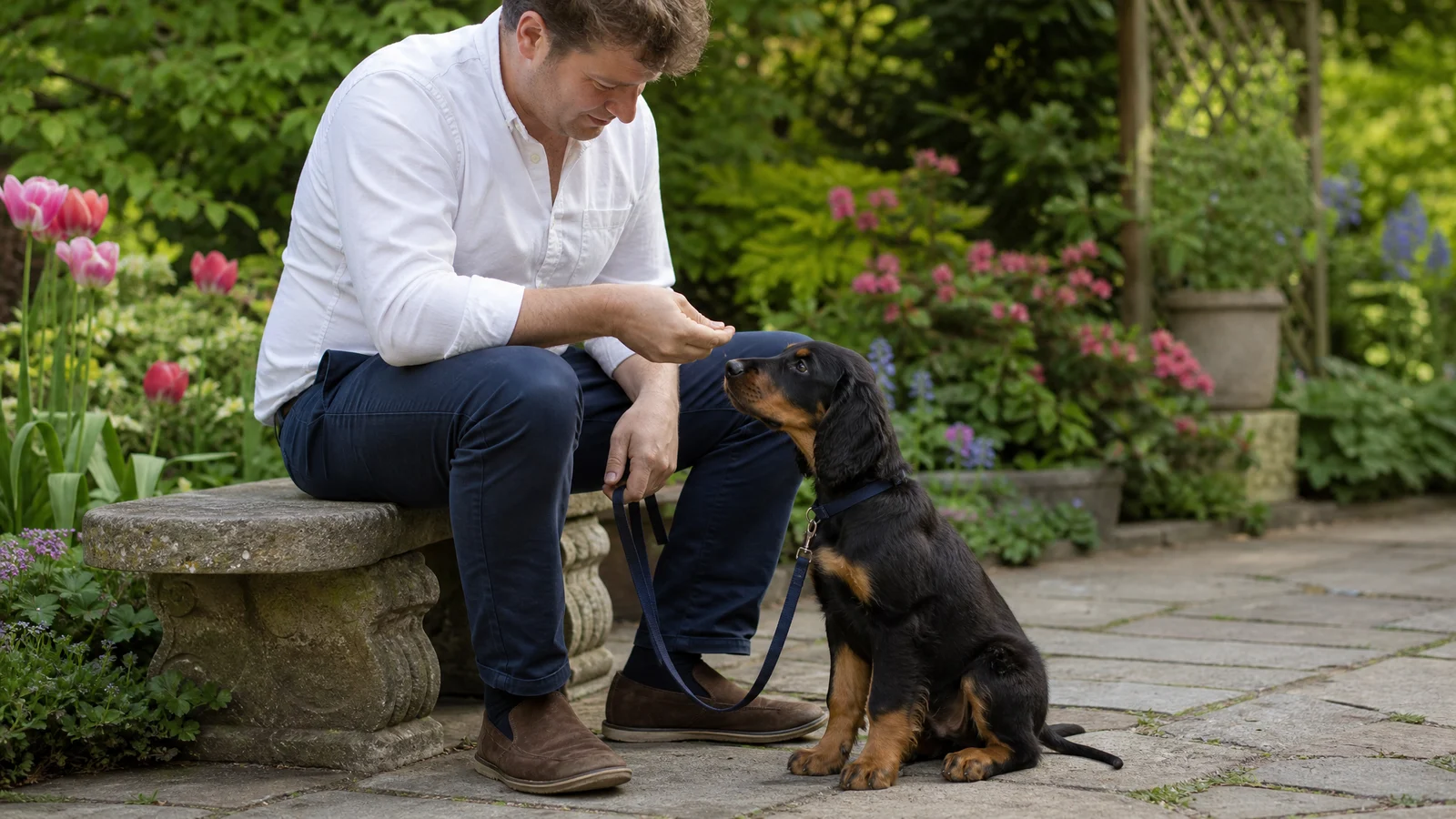
How long until the puppy is trained? Most advice says about a year, and for many breeds that is close enough. For a Gordon Setter it falls short. The club's history says the Duke of Gordon would not shoot over his setters until they were 5 years old, because they were "very wild when young and slow in maturing."
Plan around a one-year finish line and you pay for it later. You expect a finished dog, meet a bouncy adolescent, and start reaching for firmer methods that this soft-natured breed resents. Plan in stages and you get a bright, devoted companion who keeps learning for years.
This guide covers Gordon Setter puppy training from socialization at 8 weeks old to the long, goofy stretch beyond age two. Each section judges one factor and gives a verdict on socialization timing, session length, classes, maturity pace and the rules worth holding steady.
Early Socialization Timing in Puppy Training
The earliest weeks at home give you the easiest training you will ever have. Between 3 and 14 weeks of age, puppies take in new sights, sounds and people most readily, and the AKC recommends early socialization so Gordons grow into well-mannered companions. That advice suits a breed that is devoted to the household and not overly friendly to strangers. A wary adult is much harder to widen than a puppy.
Weeks 8 to 16
Verdict: do a lot, in small and pleasant doses. Gordons tend to tolerate attention from people they do not know rather than seek it, so aim for calm neutrality instead of an eager greeter. Let visitors come in one at a time, stand quietly and toss a treat, and let the puppy decide how close to go.
Add one new surface, sound or place per outing, such as tile, stairs, a short car ride, the vacuum or a busy sidewalk watched from a distance. Pair each with treats and leave while the puppy is still cheerful. Not every person or dog you pass is a greeting, and teaching a puppy to walk past calmly is a skill of its own.
Months 4 to 8
Verdict: keep going, but change the shape of the work. The puppy is bigger and bolder, and the job shifts from first exposure to widening and upkeep. Revisit the people and places from the early weeks, then add busier streets, new buildings, and people in hats, uniforms or carrying packages. Make one outing each week new on purpose so meeting novelty calmly stays a habit.
Children and Gordons are a good combination, especially when the dog meets them young. A teased Gordon tends to remove themselves from the child's reach rather than growl, so children must learn to respect the dog's place as a household member. Supervise every meeting and let the puppy walk away whenever they choose.
Puppy Training Session Length
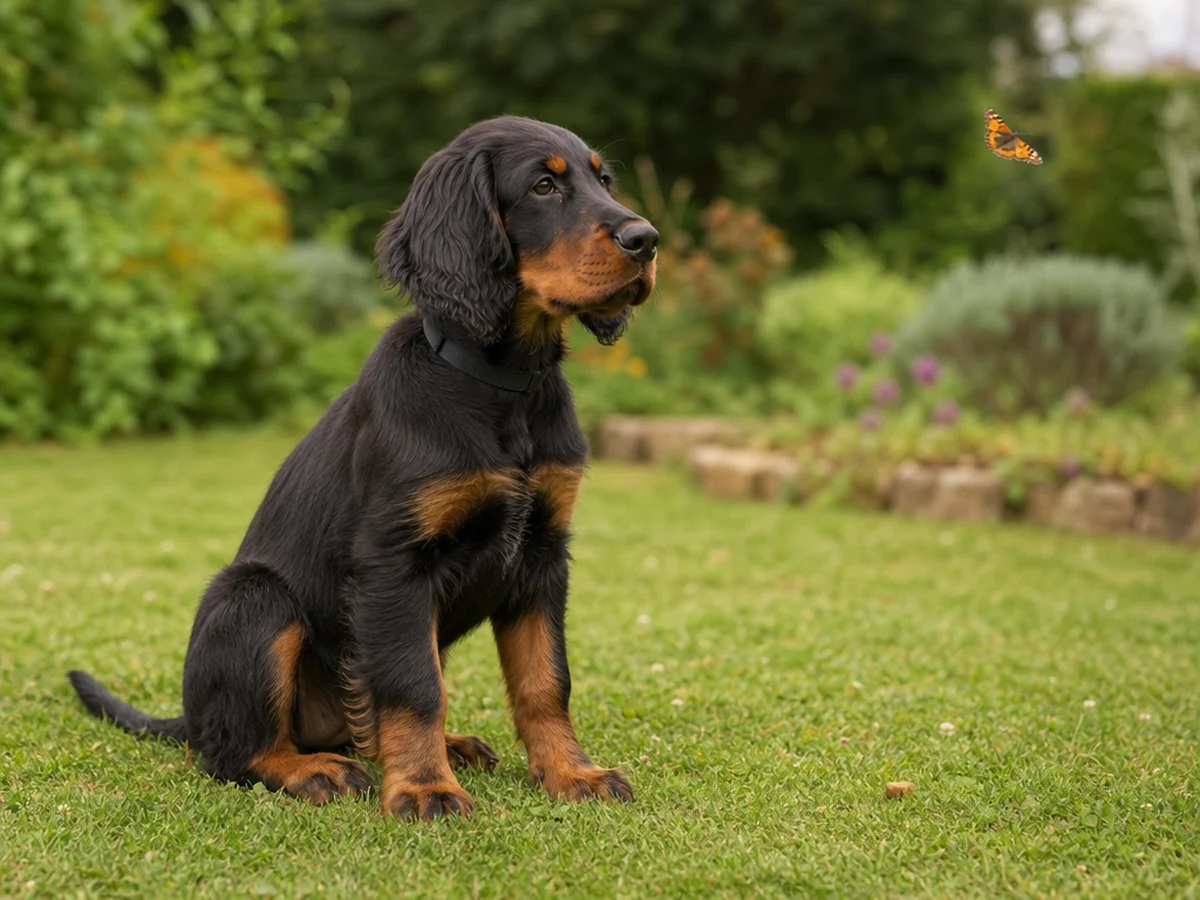
A bird dog's attention works differently from that of a dog bred to watch a handler. A Gordon is built to work with the nose down, scanning ground and air, so a scent or a flicker of movement can erase a cue the puppy knew a moment ago. They are very smart, learn quickly, and are strong-minded enough to stand the rigors of training. The habit of holding focus grows with age and cannot be rushed.
Sessions at 8 Weeks
At this age a session is a game lasting a few moments, ended as soon as the puppy glances away. Name recognition, a marker word followed by a treat, and calm handling of paws, ears, mouth and the long feathering are plenty. Run many of them through the day, tucked between meals, naps and toilet trips. Extra short sessions cost only time, while one overlong session can teach a puppy that training is tiring.
Sessions at 6 Months
Adolescence raises energy and lowers focus, and this is where many plans slip. Keep sessions short, but move them around the house, the yard and quiet streets so cues do not belong to one room. When a cue vanishes, lower the distractions and raise the value of the reward before asking again.
Exercise first often helps, since a pleasantly tired adolescent listens better. Ask your veterinarian how much running suits a growing dog, and keep regular vet visits on the calendar.
Sessions at 1 Year
By a year sessions can stretch a little, but the dog still thinks like a teenager. Mix in scent games, tricks and settling practice so the work stays varied. Gordons do not respond well to heavy-handed obedience, and calm, rewarding training that changes from day to day suits them far better. Verdict: short and frequent beats long and thorough at every age, and length should be earned by the dog's attention rather than the calendar.
Puppy Training Classes for a Gordon Setter
A good class earns its place for a sensitive, scent-distracted setter. It gives a distractible puppy practice focusing around other dogs, gives you a coach, and turns early socialization into a structured hour. A poor one lets puppies swarm and flood a shy dog, which costs far more than skipping class. Verdict: enroll, but audition the class first.
Timing matters. AVSAB's class guidance says puppies can generally start at 7–8 weeks, once they have had a first round of vaccines a full 7 days ahead of day one and an initial deworming. Ask the instructor for their health requirements before you sign up. When you visit, look for these things:
- Puppies are grouped by age and size, so a large, bouncy Gordon is not bowling over a tiny puppy.
- The instructor uses treats, praise and play only, which matters for a breed that wilts under pressure.
- A reserved puppy may watch from a distance and is never pushed into the middle of the group.
- Play breaks are short and supervised, with calm moments between them.
- Exercises include settling, name games and walking past other puppies, not only free play.
Walk away from any class that promises a finished dog in a few weeks. That promise is wrong for this breed and sets you up for disappointment in adolescence.
This is general information, not veterinary advice. Check with your veterinarian about vaccines, deworming and when your puppy is ready to join a class.
Gordon Setter Maturity Pace
Most plans ignore how slowly this dog actually grows up. That old description, very wild when young and slow in maturing, is a planning tool and not a complaint. It tells you to expect a long adolescence and to build patience into the schedule. A Gordon may stay a bit of a puppy forever, yet with proper techniques young Gordons can be trained without breaking their spirit.
The table sets out a realistic picture for each stage. Treat the ages as a map, since dogs vary.
| Stage | What to expect | What to plan |
|---|---|---|
| 8 weeks to 6 months | Quick learning, short focus, mouthing and racing | Many tiny sessions, wide exposure, gates and chews |
| 6 months to 1 year | Forgotten cues, testing, big bursts of energy | Re-teach in new places, exercise before training |
| 1 year to 2 years | An adult body with a teenage mind | Generous rewards, a long line for any freedom |
| Past 2 years | Gradual settling, with silly moments that never fully leave | Upkeep, harder distractions, earned trust |
The cost of misjudging this shows up after the first birthday. A dog who looks grown but acts young is easy to label stubborn, yet Gordons are stubborn and also very soft, loving and eager to please. Verdict: stretch your expectations for finished behavior well past age one. Raise the difficulty only after a skill holds in several places, and let the dog's maturity decide when, not the calendar.
Puppy Training Through Wild Months
During the stretch when the dog seems to forget everything, your rules matter more than your techniques. Verdict: hold them steady and resist escalating, because a sensitive dog responds to clarity and not force. Decide which rules are fixed before the wild months arrive, and write them down so the whole family agrees.
Safety comes first. A Gordon should never roam freely, since a nose on the ground and a hunting instinct can lead them after a bird or squirrel across a busy highway. Fenced yards, a long line elsewhere and doors that close are not up for negotiation at any age.
Manners come second, and they should match what you want at full size. If you will not want an adult leaning on guests, do not allow a puppy to jump on them today. Everyone in the house should share the same cue words and house rules, because mixed messages are harder on a soft-natured breed.
When a cue lapses, go back one step, lower the distractions and pay well. Repeating it louder only teaches that cues are optional. For wild mouthing and chewing, see our guide to Gordon Setter puppy biting and chewing, and for the method behind these rules, read the complete training guide. Consistency scales with the dog, while escalation only teaches a puppy to avoid you.
Gordon Setter Puppyhood Runs Long
The timeline stretches beyond two years, so judge progress by direction and not by the calendar. We have trained this breed for many years, and a slow-maturing Gordon can have a lovely day and an awful one in the same week. Compare this month with last month instead. Your plan is working when you see these changes:
- The puppy resets faster after a distraction, a startle or a wild burst.
- Greetings are calmer, and a reserved dog relaxes around visitors sooner.
- Settles on a mat last longer, and short stretches alone do not bother them.
- Lapsed cues return after a quick refresher rather than a full re-teach.
Bring in a reward-based trainer or your veterinarian when you notice any of the signs below. A sudden behavior change calls for a vet visit first, in case pain or illness is behind it.
- Fear that grows instead of easing, such as hiding, trembling or refusing places the dog once tolerated.
- A dog who freezes, stares or growls over a bowl, a bone or a favorite resting spot.
- No progress across several months despite steady, reward-based practice.
Most Gordons need patience, not pressure. Give the puppy years instead of months, keep sessions short and rewards good, and a long adolescence turns into a loyal, affectionate companion.
 Training basicsRecall for a Gordon Setter: Birds, Squirrels and the Nose
 Training basicsHow to Potty Train a Gordon Setter Puppy
 Training basicsHow to Train a Gordon Setter: The Complete Guide