 Gordon Setter
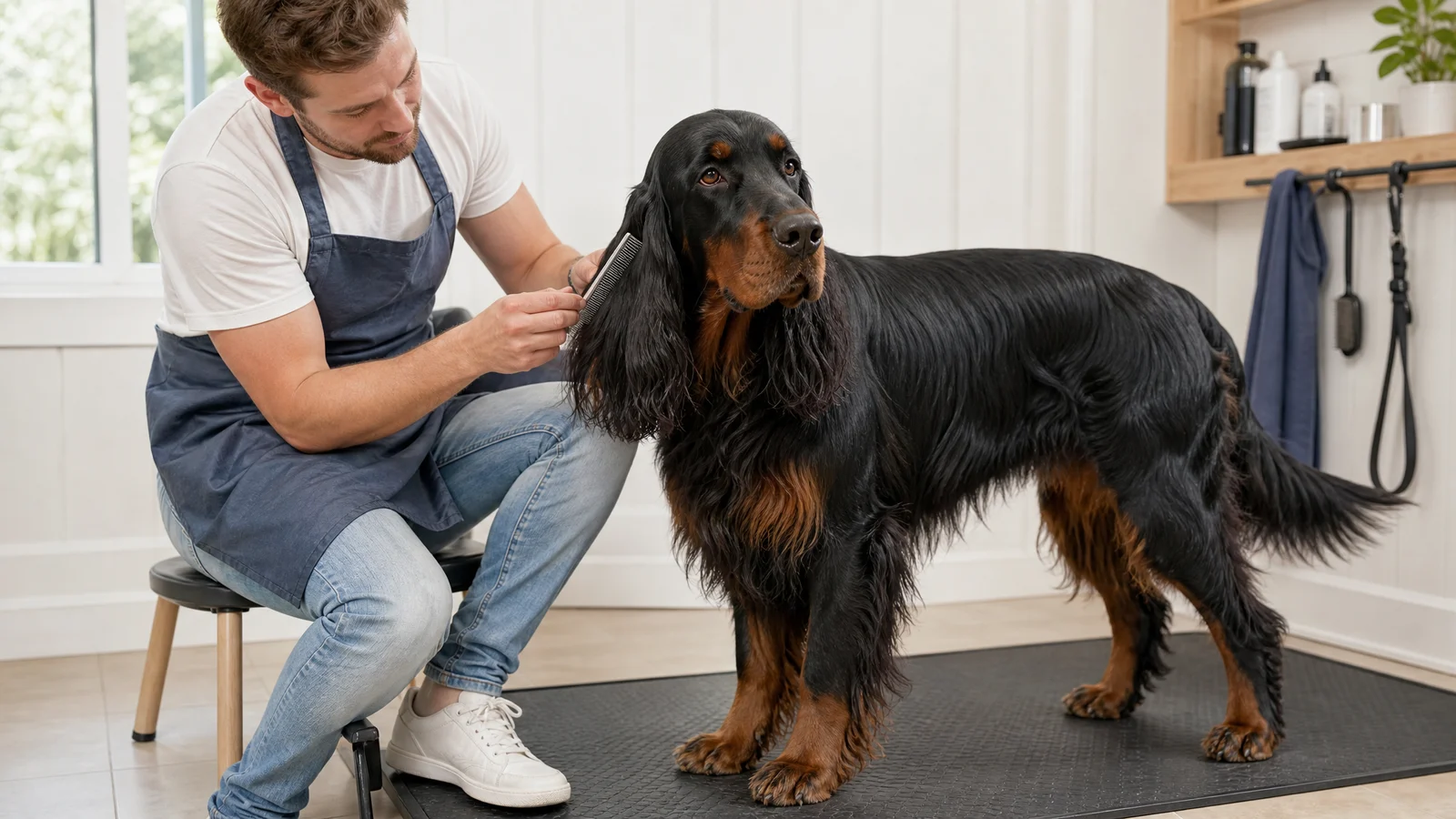
A quick pass over a Gordon Setter's back can leave the coat looking polished while tangles tighten at the ear base, along the armpits and through the long leg and belly feathering. Those are the places where motion, dampness and fine hair meet. Effective Gordon Setter grooming therefore follows a body route instead of stopping when the visible surface looks tidy.
In this guide, you will map that route, choose secure footing and work through feathering, ears and feet without turning care into a wrestling match. Each area will be paired with a start cue and a real pause. We will also separate routine brushing from trimming decisions and show when a groomer or veterinarian should take over.
Map a Gordon Setter Grooming Route
A fixed route helps you find small changes and prevents sensitive areas from being saved for the moment everyone is tired. Begin at the shoulders, travel along one side, check the chest and belly feathering, then finish with ears, tail and feet. The order can change, but it should be predictable enough that the dog knows what comes next.
The American Kennel Club's Gordon Setter profile shows the breed's characteristic feathering. Hair length and density still vary by individual, season and lifestyle. Photograph the coat when it is clean and comfortable, then note the zones where burrs, moisture or friction produce repeat tangles.
| Coat Zone | What to Check | Handling Position |
|---|---|---|
| Ears and neck | Small knots, debris, odor or redness | Dog facing forward, ear supported |
| Chest and belly | Friction mats and damp feathering | Standing on nonslip footing |
| Legs and feet | Burrs, packed hair and sore skin | Foot lifted only as high as comfortable |
| Tail and rear | Tangles and material caught after toileting | Dog standing, tail handled gently |
Run your fingers through each zone before using a tool. A sudden flinch, guarded patch, skin change or new sensitivity is information, not disobedience. Stop working over the area and ask your veterinarian about pain, inflammation, infection or another physical cause instead of brushing harder.
Make a simple route card for anyone else who handles the dog. Mark comfortable zones in green, areas that need shorter turns in yellow and places awaiting professional advice in red. Update it after care rather than relying on memory.
Grooming Tools and Safe Footing
Prepare the station before inviting the dog over. A rubber-backed mat gives the feet traction, and good light lets you see skin rather than guessing beneath dark coat. Place tools within your reach but outside the dog's path. A leash may prevent wandering, but it should not be used to hold the neck tight or trap a worried dog.
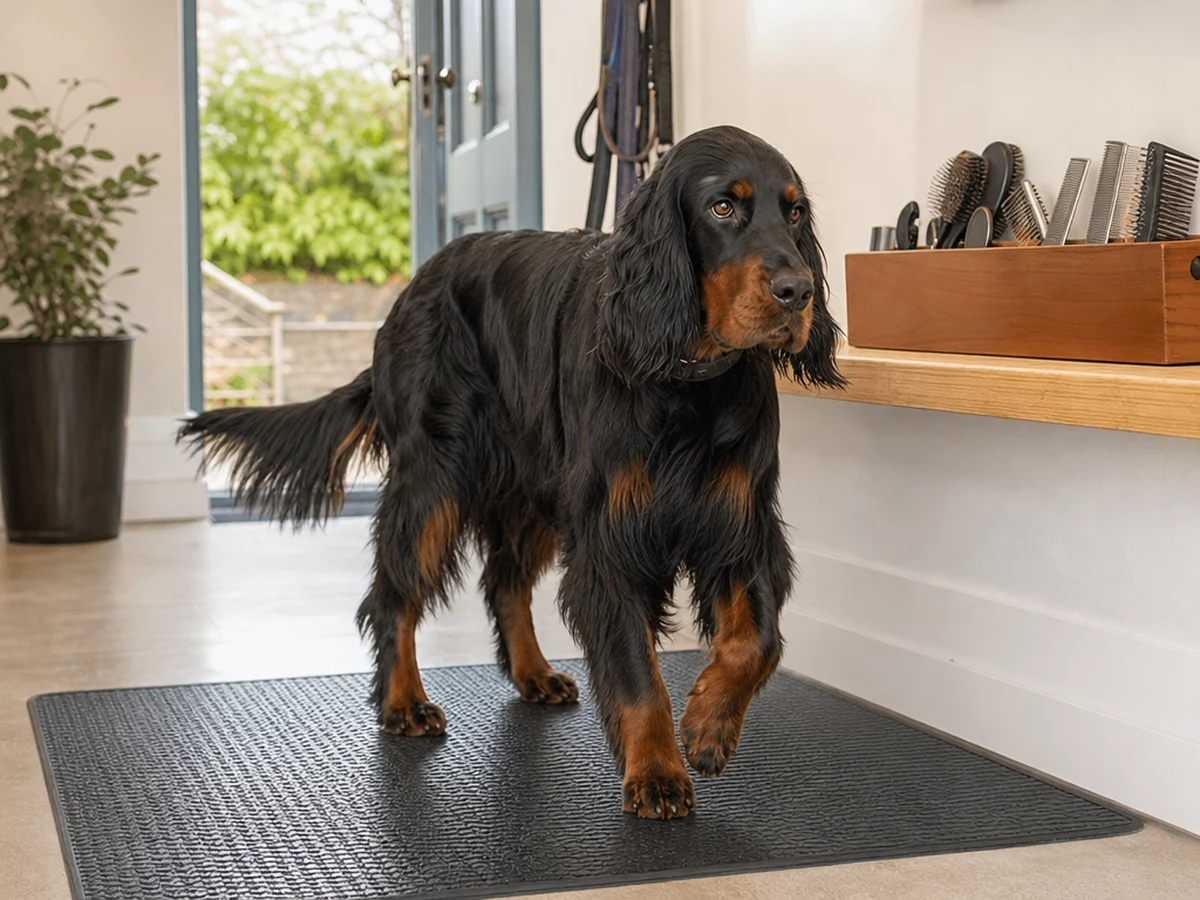
Choose tools for this individual coat with help from an experienced groomer. A pin brush or suitable slicker can work through longer hair, while a metal comb checks whether the section is clear to the skin. A tool that skims over the top may make a mat look smooth without separating it underneath.
- Use a nonslip mat large enough for the whole dog to stand naturally.
- Keep a brush, comb, small towel, high-value rewards and waste container at hand.
- Inspect every tool for bent pins, sharp edges and trapped dirt before it touches the coat.
- Put scissors and clippers away until a planned trimming session with safe handling skills.
RSPCA grooming guidance recommends gradual introductions to equipment and professional settings. Let the dog see and sniff a new tool, then reward a brief touch with the back of it before attempting a full stroke. Sound, pressure and movement are separate difficulties.
Clean tools after use and store them dry. A grooming tote keeps the setup predictable, but medication, sharp tools and cleaning liquids should remain secured where the dog and children cannot reach them.
Brushing Gordon Setter Feathering
Divide feathering into sections small enough to hold loosely without pulling the skin. Support the hair near its base, begin at the ends and work toward the body. Once the brush passes comfortably, follow with the comb. If the comb catches, return to a smaller section rather than dragging through the knot.
Brush pressure should move hair without grazing skin. Keep strokes short around the armpits, groin and behind the ears, where skin is thin and the dog may have learned to expect a tug. Reward after a few comfortable strokes and release the section. Longer sessions are not better when technique deteriorates.
Clear Outdoor Debris
For mud or plant material, let the coat dry when that is safe and practical, then crumble or brush out loose debris. Do not pull a burr through a large section of hair. Separate strands around it and work from the outside. If material is embedded near skin or the dog cannot tolerate removal, arrange professional help.
Check the comb at the end of each zone rather than waiting until the entire dog is brushed. It should pass from the outer hair toward the skin without a sudden stop. That small quality check keeps a smooth surface from hiding a knot underneath.
The same reward-based foundations used in general Gordon Setter training apply here: make the wanted position possible, mark cooperation and keep difficulty low enough for learning. Grooming is care, but it is also repeated handling practice.
Young dogs can learn these foundations alongside the Gordon Setter puppy timeline. Keep the care lesson brief enough that ordinary play, sleep and house training are not displaced by one long grooming demand.
Ear and Foot Handling During Grooming
Ears and feet deserve their own short sessions because they combine unusual touch with limited movement. Work on them before they urgently need cleaning or nail care. The goal is not to make a dog endure endless contact. It is to create a predictable sequence the dog can comfortably repeat.
Supporting the Ears
Touch the outside of one ear, reward and move your hand away. Next, lift the ear flap for a second while supporting its weight, then release before the dog pulls back. Gradually look at the visible ear and touch surrounding hair. Do not insert tools or cleaners into the canal unless your veterinarian has shown you what this dog needs.
Strong odor, discharge, swelling, persistent head shaking or pain needs veterinary attention. Brushing the ear feathering cannot treat an ear problem, and continuing to manipulate a sore ear can teach defensive handling. Keep regular veterinary visits and bring notes about any change you have seen.
Holding the Feet
Begin with a hand moving down the leg, reward at the ankle and stop. At a later session, raise one paw barely off its resting surface and return it gently. Build duration in seconds while keeping the leg under the dog's body. Pulling a foot far sideways can make a large dog lose balance and resist for a physical reason.
When the dog is comfortable, separate one toe, touch a nail with a closed tool and reward. Nail trimming itself should be divided into manageable pieces. If nails are overgrown, cracked or painful, ask a veterinarian or qualified groomer for a safe plan rather than trying to solve the whole job in one session.
Practice both sides of the body. A dog may accept the right front foot while struggling to balance on it during work on the left. Change your own position, lower the lift and use the mat to keep the standing feet secure.
A Gordon Setter Grooming Pause Signal
A pause signal gives the dog a safe way to say that the current step is too much. Choose a simple behavior you can notice, such as turning the head away from the tool or lifting the chin from your open palm. Practice it before grooming: present the tool, wait for the signal, remove the tool and offer a reward.
Dogs Trust handling advice emphasizes gradual practice and attention to comfort. Honor the signal consistently. After a brief pause, offer the starting position again. If the dog returns willingly, try an easier stroke. If the dog leaves, the session ends.
A pause is not the only sign that matters. Lip licking, a closed tense mouth, weight shifting away, a lifted paw, sudden panting or refusal of food can appear earlier. Best Friends guidance on grooming tolerance recommends working below the point of strong distress.
Necessary care sometimes cannot wait for a complete training plan. Keep regular veterinary visits, and tell the veterinarian or groomer what the dog can currently do, which areas are difficult and what signals precede a struggle. Professional support or modified handling can protect welfare while cooperative skills are still developing.
Trimming Decisions and Professional Grooming
Trimming should solve a clear care problem or meet a chosen coat-maintenance goal. Hair around feet may collect debris, and untidy feathering may need shaping, but cutting a tight mat near skin is risky. Skin can be drawn into the mat where it is difficult to see. Clippers and scissors require handling skills beyond ordinary brushing.
Ask a groomer what they plan to trim, how they will protect the coat and how the dog will be supported. Share the pause signal, comfortable positions and known sensitive zones. A short introductory visit can let the dog enter, stand on a safe surface and meet staff without a full appointment happening at once.
Request a written maintenance plan after the appointment. It should name the tools, coat zones and practical interval the groomer recommends for this dog. Ask what they observed during drying, feet and ear work so the next home session can begin below that difficulty.
Discuss coat condition honestly. A groomer needs to know about recent skin trouble, ear treatment, mobility changes and any history of panic or snapping. Keep regular veterinary visits and consult the clinic about new lumps, sores, pain, odor, discharge or abrupt handling changes before treating them as cosmetic issues.
A Repeatable Gordon Setter Grooming Rhythm
Set frequency by the coat in front of you, not by a universal calendar. A dog running through wet cover may need a brief debris check after every outing, while a full route can happen on a separate schedule. Record which zones tangled, how long the dog stayed comfortable and where the pause signal appeared.
The next session should answer one practical question: can you clear a smaller section with less pulling, lift one foot comfortably or transfer the routine to another trusted person? A sustainable Gordon Setter grooming rhythm keeps the coat and skin visible, gives the dog understandable choices and gets professional help before a small care problem becomes an urgent restraint problem.
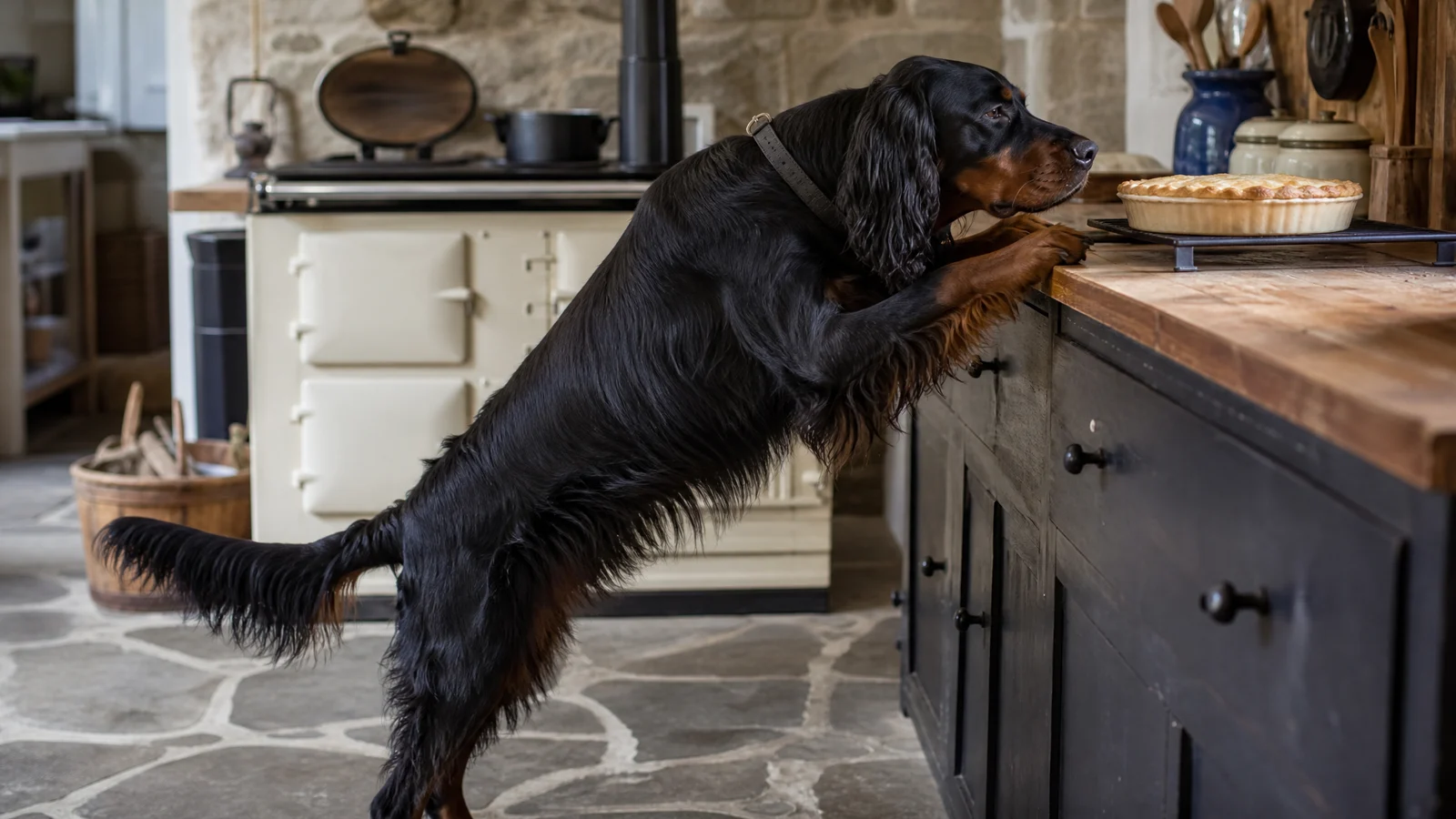 BehaviorWhy Gordon Setters Raid Kitchen Counters and What to Teach Instead
 BehaviorStopping a Gordon Setter From Jumping Up and Counter Surfing
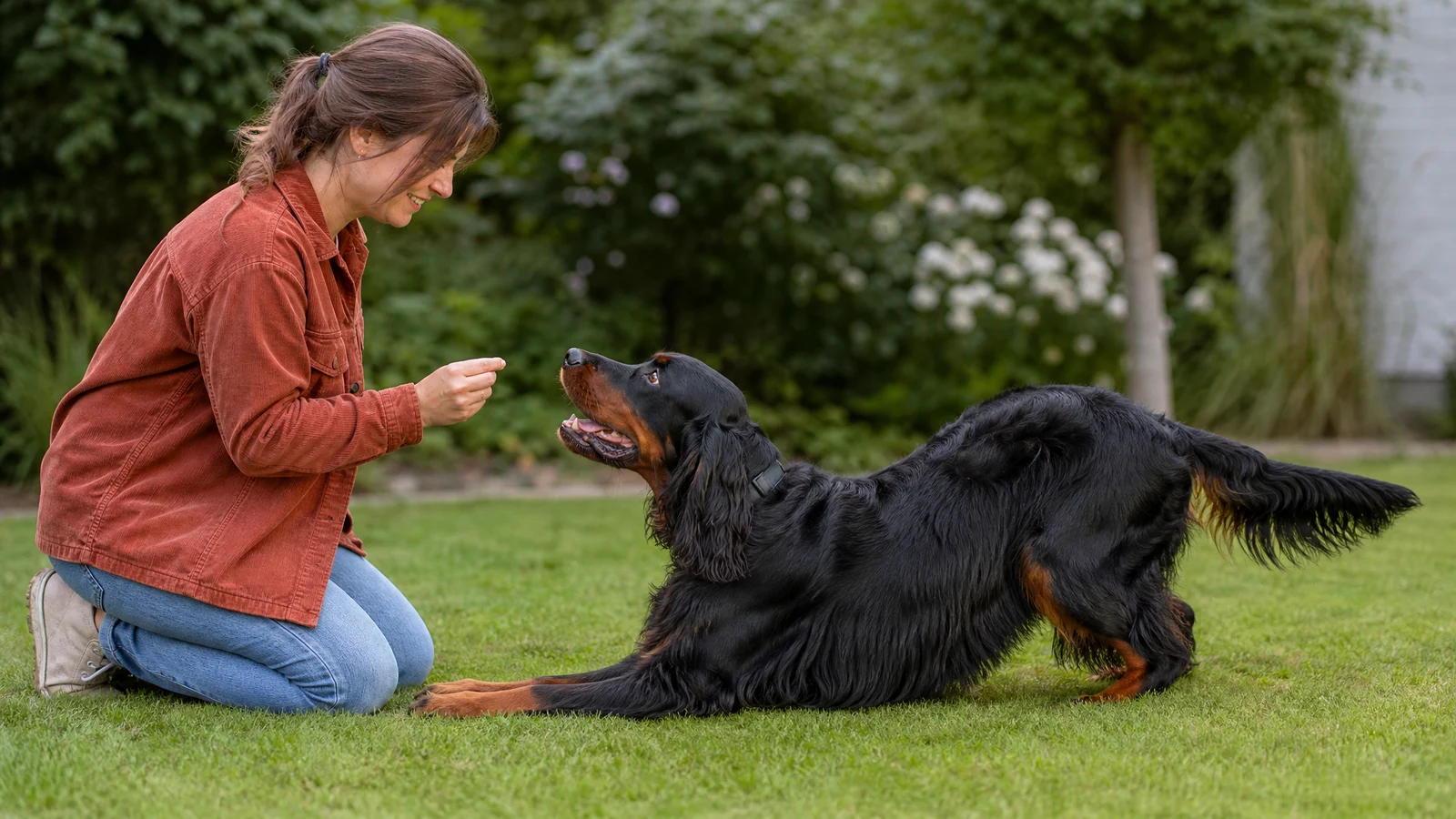 Training basicsAre Gordon Setters Easy to Train? Temperament and Trainability FAQ