 Gordon Setter
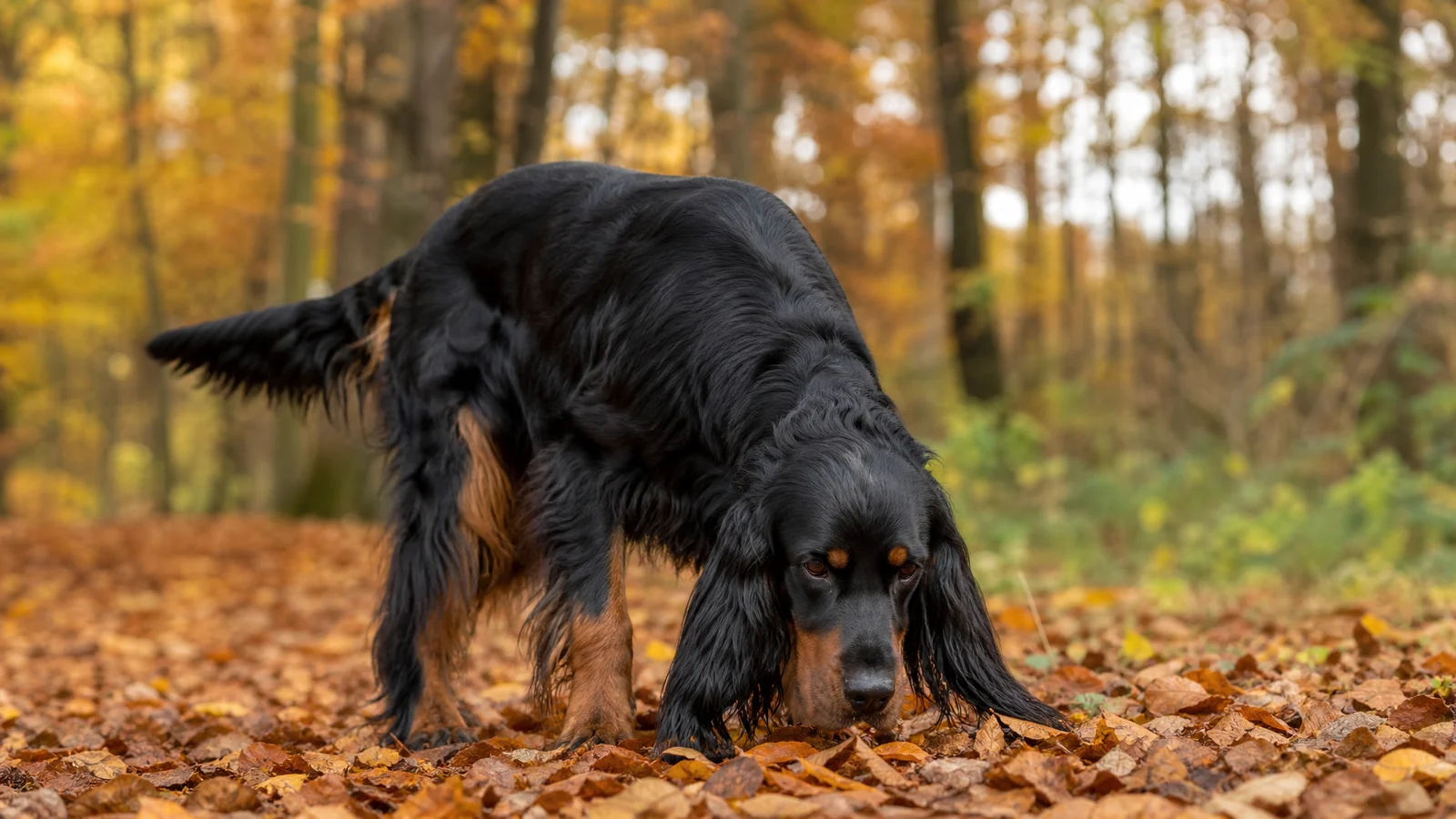
A Gordon Setter can spend a walk reading the ground while the handler keeps asking for forward motion from several feet behind. That attention is not wasted or deliberately rude. The breed was developed for field work, and the AKC breed profile describes a substantial sporting dog capable of sustained work outdoors. A planned search gives that equipment a beginning, a question and a finish.
In this guide, you will build Gordon Setter nose work as a small course rather than scatter food whenever the dog looks restless. We will set a safe search area, establish a start ritual, move from indoor finds to outdoor scent and lay one short track. You will also learn what to ask a class instructor and how to bring an excited searcher back to ordinary household life.
A Safe Gordon Setter Nose Work Area
The first search should be easy enough that the dog can solve it without climbing, swallowing packaging or sweeping objects off a shelf. Clear one quiet room and close doors to spaces that are not part of the game. Put other pets away, remove food that could cause conflict and check that every hide can be reached with four paws on the floor.
Use plain pieces of the dog's normal food or another familiar reward for beginner searches. Strong new foods can upset a stomach, and tiny fragments hidden in rugs are difficult to collect. Count the pieces before you begin so you know when the area is clear. Water should remain available after the search.
| Search Area | Useful First Hide | Remove First |
|---|---|---|
| Living room | Beside a chair leg | Cords, cups and children's toys |
| Hallway | Along an open wall | Shoes, bags and a slippery runner |
| Fenced yard | At the edge of short grass | Garden chemicals and sharp tools |
A harness and ordinary leash can mark search time without giving the dog unrestricted access. Outdoors, use a secure fenced area or a long line held by an adult. Nose work does not make an unfenced space safe, and a Gordon Setter following an interesting trail may travel farther than the handler expects.
Keep children out of the working space until the dog understands the game. Reaching for a reward at the same moment can create crowding, and moving feet can become more interesting than the hide.
A Start Ritual for Every Search
A start ritual keeps random floor scavenging separate from the game you have arranged. Bring the dog to the edge of the area, pause, show an open hand and say one search cue such as “find it.” The cue should predict permission to investigate, not pressure to perform. At first, let the dog watch you place one piece of food a few feet away.
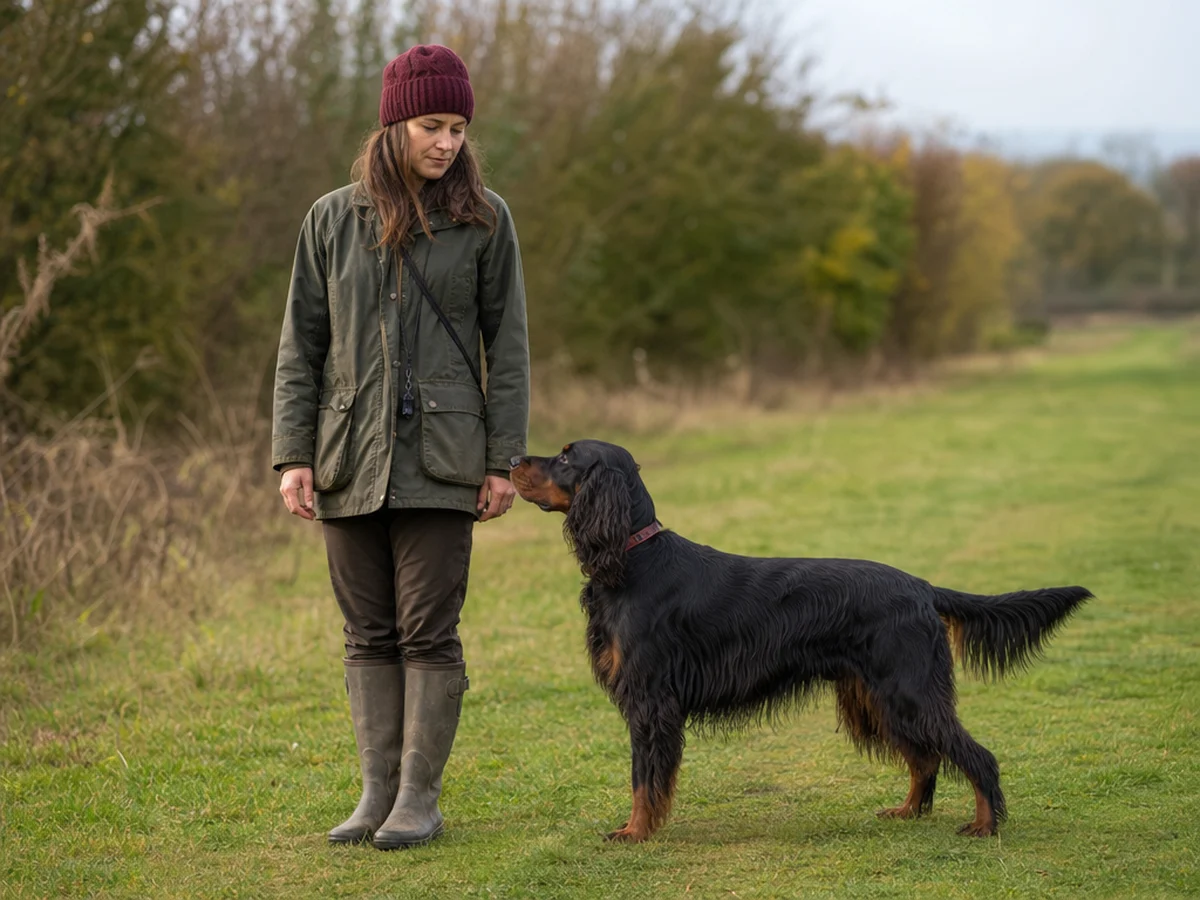
When the dog reaches it, stay quiet and let the nose finish the answer. Calling, pointing and repeating the cue can turn the exercise into following human gestures. Dogs Trust find-it guidance begins with very easy searches, then increases difficulty gradually. That order lets the search itself become clear.
Repeat three or four visible placements, then put the dog behind a gate while you place the next piece. Return to the same edge, pause and give the same cue. If the dog cannot begin, make the hide obvious again. The useful change is one small increase in difficulty, followed by a successful independent find.
Use the ritual outside the game too. If food falls while you cook, block access and pick it up without giving the search cue. That distinction keeps permission specific and protects the household from accidental scavenging practice.
Gordon Setter Nose Work Indoors
Room searches teach persistence without asking the dog to manage wind, wildlife or a large area. Start with three hides spread far apart at nose level or lower. Keep them out of containers for now. Walk into the room behind the dog on a loose leash and allow a broad sweep rather than steering directly to each reward.
Build a Search Pattern
Some Gordons rush to the middle and miss the edges. Begin near one wall and move slowly around the room while the dog chooses where to investigate. This is support, not a formal heel. When the dog turns back to an already searched area, wait. A second look may locate scent that airflow carried away from the actual hide.
After several successful sessions, raise one hide onto a low stable ledge and place another partly behind a furniture leg. Alter a single feature for that session. A new room, a higher hide and a closed container introduced together can leave the handler unsure which part caused difficulty.
Know When the Room Is Too Hard
Fast scratching, repeated jumping, whining at the handler or abandoning the room can mean the search is too difficult or arousal is too high. Make the next hide visible and end after the find. Do not keep adding food to rescue a long unsuccessful search, because the dog may learn that frantic activity makes new food appear.
Indoor searches can sit beside the site's broader Gordon Setter training plan. They work especially well on days when weather limits a walk, but they do not replace toilet outings, social time, comfortable rest or suitable physical activity.
Outdoor Nose Work With a Gordon Setter
Outside, moving air breaks scent into a wider problem. Begin in a small fenced patch or on a long line, with the dog able to see you place food in short grass. Stand back from the hide and notice whether the dog follows the exact route you walked or approaches from the side where scent is traveling.
Make the next session different in one planned way. You might hide the food before bringing the dog out, use slightly taller grass or work when a light breeze is present. Avoid recently treated lawns, hot sidewalks and areas containing discarded food. Check the ground yourself before the dog begins.
Weather changes the problem even in the same yard. Wind can carry odor past the hide, damp ground may hold it differently and warm sun can produce new air movement around walls. Let the dog investigate the scent path instead of insisting on a straight approach. The route to source is part of the answer.
RSPCA scent-work guidance treats searching as structured mental activity. Structure matters for a setter because unrestricted outdoor investigation can quickly become a wildlife chase. Keep the working area defined, reward returns to you and finish while the dog can still disengage.
Tracking One Short Scent Trail
Tracking asks the dog to follow a path instead of finding separate hidden rewards. Lay the first trail on quiet grass with no sharp turns. The person who lays it should walk normally, place food at close intervals and leave a larger reward at the end. Mark the route for yourself without putting flags where the dog can simply follow them.
- Have another adult hold the dog out of sight while you walk a straight trail of roughly twenty easy paces.
- Place a small food piece in several of your footsteps, then leave the final reward at the end and walk away at an angle.
- Bring the dog to the first step, give the familiar search cue and follow behind on a loose long line.
- If the dog leaves the trail, stop moving. Allow a small circle rather than pulling the nose back to the ground.
- At the end, reward calmly, offer water and walk away from the track before removing search equipment.
Lay a fresh beginner trail rather than repeating the same line until the ground is covered in overlapping scent. Over later sessions, reduce the food between steps, add one gentle turn or let the trail rest a little longer before the dog starts. Change one variable, record the result and return to the easier version when accuracy falls apart.
This exercise strengthens the search habit, not off-leash reliability. The safety rules in Gordon Setter recall training still apply around birds, squirrels and roads. Use the line anywhere following a trail could carry the dog beyond a secure boundary.
Avoid laying tracks across public paths where another dog or person may interrupt. Early trails need no aged scent, complicated corners or unknown track layers. The beginner's useful question is whether the dog can keep working calmly while the handler follows without steering.
Choosing a Nose Work Class
A good class protects choice and teaches the handler to read the dog rather than rushing toward difficult hides. Ask how many dogs work at once, where waiting dogs rest and whether an individual can search without another dog crowding the area. A Gordon who finds the room exciting may need visual barriers or time in the car between turns.
AKC scent work eventually uses specific target odors, but a beginner does not need home-brewed odor kits before learning safe search mechanics. Ask an instructor how odors are stored and handled, how alerts are developed and what happens when a dog shows stress. Avoid anyone who corrects a dog for missing a hide or physically forces a nose toward source.
- Look for short turns, secure search spaces and enough recovery time between them.
- Tell the instructor about food sensitivities, mobility limits and reactions around unfamiliar dogs.
- Ask whether the class goal is enrichment, trial preparation or both, since the training plan may differ.
- Observe one session if possible and notice whether handlers receive useful feedback about airflow and body language.
A class should make home practice clearer. If each session leaves the dog frantic for hours or the handler unsure how to repeat an exercise safely, pause and discuss an easier setup. Enjoyment is valuable evidence, but comfortable recovery is part of the evidence too.
Keep regular veterinary visits on the calendar. Ask your veterinarian about a sudden loss of interest in searching, new reluctance to lower the head, unusual fatigue, breathing trouble or a sharp change in movement before treating it as a training problem.
Closing Each Gordon Setter Search
The finish ritual matters because scent work can leave a driven dog still hunting after the planned hides are gone. Return to the starting edge, say a consistent finish phrase and place two or three visible rewards on the ground. Then remove the search harness, offer water and move to a calm activity in another space.
Record only what will shape the next course: the area, number and type of hides, one difficulty and how quickly the dog settled afterward. Those notes prevent every session from becoming harder by accident. A useful Gordon Setter search ends with the dog successful enough to stop, the room cleared of food and one sensible next change waiting for another day.
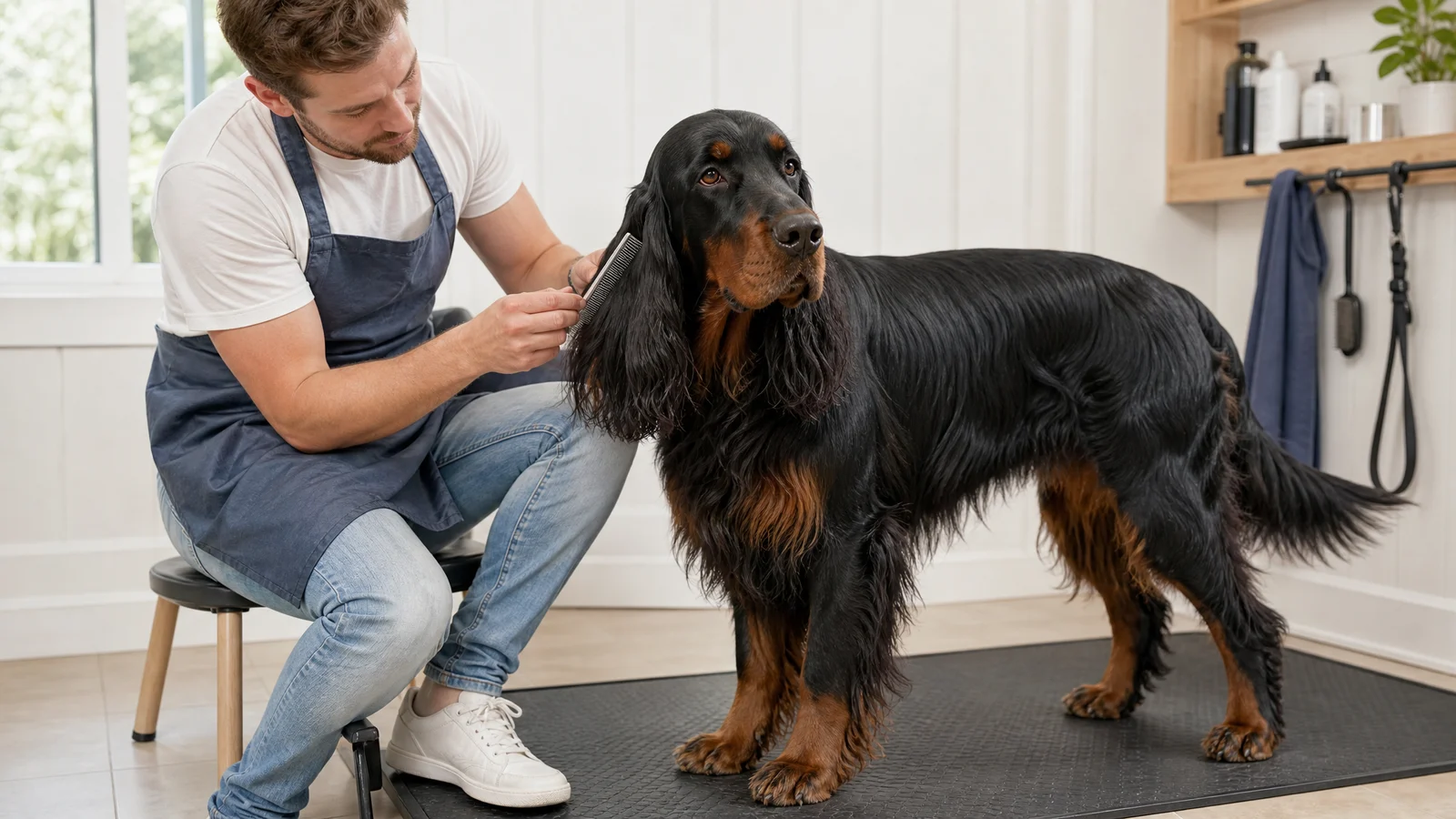 CareGrooming a Gordon Setter: Feathering, Trimming and Handling
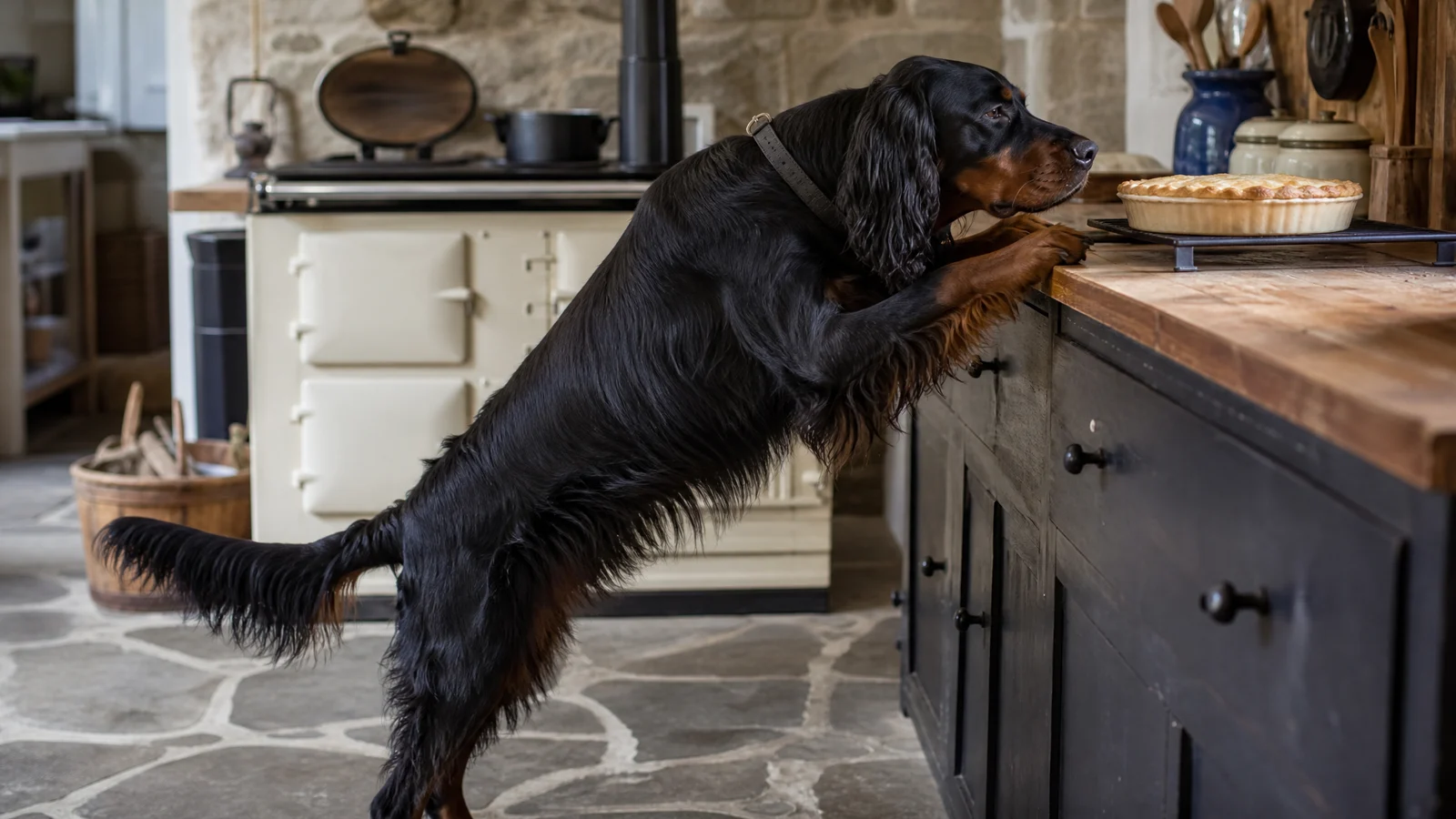 BehaviorWhy Gordon Setters Raid Kitchen Counters and What to Teach Instead
 BehaviorStopping a Gordon Setter From Jumping Up and Counter Surfing